Changes to Login and User Dashboard
We are testing a change on the front page where Community Builder will start taking over the user dashboard and activity feed instead of EasySocial. EasySocial has been giving us some compatibility issues after the upgrade, so this is part of making the site more stable going forward.
Ancient massacre suggests war predated settlements
-
 Topic Author
- User
-

Less
More
23 Jan 2016 01:28 #223634
by
Ancient massacre suggests war predated settlements was created by
There's not much I can add to the NPR article. Except that I found it astonishing to note that war seems to predate settlements, human civilization itself. My son and I heard this article on the radio this afternoon and had a great conversation about it. How it seems there has been warfare as long as there have been humans.
Is it just in our nature? Will we ever be free of it? I don't know. This old soldier hopes so.
Link to article
Is it just in our nature? Will we ever be free of it? I don't know. This old soldier hopes so.
Link to article
Please Log in to join the conversation.
-
- User
-
Less
More
23 Jan 2016 03:13 #223640
by
Replied by on topic Ancient massacre suggests war predated settlements
More surprised that they thought these things didn't happen before settlement. It would utterly contrast my experience with the rest of the natural world if that were the case.
In our nature? Yes.
In our nature? Yes.
Please Log in to join the conversation.


23 Jan 2016 03:35 - 23 Jan 2016 03:35 #223642
by Locksley
We are all the sum of our tears. Too little and the ground is not fertile, and nothing can grow there. Too much, the best of us is washed away. -- J. Michael Straczynski, Babylon 5
Replied by Locksley on topic Ancient massacre suggests war predated settlements
Well, they'd need to find more definitive cases to really push back the theory of warfare was we understand it only developing with settled communities. There may be more than what that article suggested, but there seem to be too many factors to consider, making it a very interesting curiosity, but not a completely groundbreaking discovery (if you'll pardon the archaeologist humor). 
I think that our species is looking at a long, long time before individual violence becomes a rarity, but I hold out hope that large-scale violence can be eliminated on a shorter time-frame.
I think that our species is looking at a long, long time before individual violence becomes a rarity, but I hold out hope that large-scale violence can be eliminated on a shorter time-frame.
We are all the sum of our tears. Too little and the ground is not fertile, and nothing can grow there. Too much, the best of us is washed away. -- J. Michael Straczynski, Babylon 5
Last edit: 23 Jan 2016 03:35 by Locksley.
The following user(s) said Thank You: Edan
Please Log in to join the conversation.

23 Jan 2016 05:38 - 23 Jan 2016 07:14 #223649
by Adder
Replied by Adder on topic Ancient massacre suggests war predated settlements
Animal instincts are said to sit at the seat of our humanity, with our brain's being built up from the stages of physical evolution into what they are now - so strip away all things 'human' and that might be all thats left...
...and hunting as packs for various resources is analogous to warfighting IMO; water sources, food, females, safe harbours, territory, materials etc. It could be argued that free market capitalism mitigates the need for fighting over stuff, but thats another topic
:pinch:
So 'social evolution' could be the task before humanity, due to globalization. Being attuned to oneself in such a way we can be relatable with others in the best way possible. I reckon human's can evolve beyond egoistic worldviews of self, group or nation, but there is always going to be a number of 'diseased' (in this context) individuals who fall into cycles of conflict which can spread to recruit vulnerable individuals or groups and reach the point of confrontation.
Maybe that is what defines a system of morals, what is acceptable in society and where the boundaries are. Buddhism's focus on the self seems most useful to me, to work up things to avoid;
...and hunting as packs for various resources is analogous to warfighting IMO; water sources, food, females, safe harbours, territory, materials etc. It could be argued that free market capitalism mitigates the need for fighting over stuff, but thats another topic
:pinch:
So 'social evolution' could be the task before humanity, due to globalization. Being attuned to oneself in such a way we can be relatable with others in the best way possible. I reckon human's can evolve beyond egoistic worldviews of self, group or nation, but there is always going to be a number of 'diseased' (in this context) individuals who fall into cycles of conflict which can spread to recruit vulnerable individuals or groups and reach the point of confrontation.
Maybe that is what defines a system of morals, what is acceptable in society and where the boundaries are. Buddhism's focus on the self seems most useful to me, to work up things to avoid;
https://en.wikipedia.org/wiki/Kleshas_(Buddhism)Kleshas in Buddhism, are mental states that cloud the mind and manifest in unwholesome actions. Kleshas include states of mind such as anxiety, fear, anger, jealousy, desire, depression, etc. Contemporary translators use a variety of English words to translate the term kleshas, such as: afflictions, defilements, destructive emotions, disturbing emotions, negative emotions, mind poisons, etc.
In the contemporary Mahayana and Theravada Buddhist traditions, the three kleshas of ignorance, attachment, and aversion are identified as the root or source of all other kleshas. These are referred to as the three poisons in the Mahayana tradition, or as the three unwholesome roots in the Theravada tradition.
Last edit: 23 Jan 2016 07:14 by Adder.
The following user(s) said Thank You: Locksley,
Please Log in to join the conversation.


23 Jan 2016 09:51 #223671
by ren
Convictions are more dangerous foes of truth than lies.
Replied by ren on topic Ancient massacre suggests war predated settlements
The greatest warriors of all time were nomads. So... We already kinda knew settlements weren't necessary for war: In fact we knew that having no settlements made armies more effective.
Convictions are more dangerous foes of truth than lies.
The following user(s) said Thank You: rugadd,
Please Log in to join the conversation.
23 Jan 2016 10:07 #223673
by Gisteron
There is, admittedly, a benefit to morale of any given party if its members do not have to worry for their families back home, but the sheer stability a home provides by supplying food, water, shelter, treatment of injury, repairs and resupply of gear, all free of a need for violent acquisition thereof, would surely far outweigh that, would it not? Now, I don't know how to measure the "greatness" of a warrior, or the effectiveness of any single warrior at that. However, while nomadic armies may have endured for longer times in potentially more hostile environments, I'd guess that organized national armies sworn to the lords of their home lands were, on average, far more successful at actually defeating their targets rather than mere enduring.
Better to leave questions unanswered than answers unquestioned
Replied by Gisteron on topic Ancient massacre suggests war predated settlements
Citation, please.ren wrote: The greatest warriors of all time were nomads. So... We already kinda knew settlements weren't necessary for war: In fact we knew that having no settlements made armies more effective.
There is, admittedly, a benefit to morale of any given party if its members do not have to worry for their families back home, but the sheer stability a home provides by supplying food, water, shelter, treatment of injury, repairs and resupply of gear, all free of a need for violent acquisition thereof, would surely far outweigh that, would it not? Now, I don't know how to measure the "greatness" of a warrior, or the effectiveness of any single warrior at that. However, while nomadic armies may have endured for longer times in potentially more hostile environments, I'd guess that organized national armies sworn to the lords of their home lands were, on average, far more successful at actually defeating their targets rather than mere enduring.
Better to leave questions unanswered than answers unquestioned
Please Log in to join the conversation.
-
- User
-
Less
More
23 Jan 2016 13:40 #223710
by
Replied by on topic Ancient massacre suggests war predated settlements
I just think of early humans who are born into such an extreme environment of pure survivalism. Where when the sun starts to go down, you get scared because you can't see and there are beasts out there hunting you. So then during the day you're building defenses, stockpiling food and supplies, at night you're all huddled together waiting for the sun savior. However I think it depends on where exactly they were, some places may have not been so bad so that's why there's different religious philosophies and myths. In one area you may just fear the cold night, or in another it was actually nice at night like in a desert with brutal days.
Then you've got tribes who figured out different ways to get nutrition, like who cracked the first nut. Or you've got the first tribes who captured fire from a lightning strike or something. Other advances at that time which were significant would naturally create competition maybe one tribe needed more people to gather their newly found sources of nutrition, or people to keep the fires going which of course some would naturally come to them to just be warm at night or be fed but then I'm sure some could've been taken as slaves. Wandering tribes would run into more or less powerful tribes and conflict could arise by who claims right to this land, who wants this source of nutrition or that comfort.
That's how the first political and priest classes came to be, the secret knowledge of the fire, or food, or whatever it was. People would flock to these types because they had the power to see in the darkness, to keep warm, to stay fed, etc. That is where it all began, follow it along today the same people are in power - those who possess the hidden knowledge whether it's the Vatican, banking and financial institutions manipulating the local or global economy, high power political roundtable groups that influence government policies, even you or I if we invent something completely revolutionizing or have the idea that sparks a movement. They all have their own special niche's that give and has given them the award to better survival naturally or by taking advantage of the proletariat. I think most of violence and wars today are all based on this competition between the two, all the terrorism, economic crisis and political conflicts are simply theatre while much simpler things happening behind the scenes that caused them.
Of course much of it can still be the process of this "natural selection" of those who figured things out first or just groups of people who decide to change or seek out something different by whatever means however moral. Then there's also natural disasters that create a crisis that fuels the urge to survive by any means necessary and some come out on top and move on with this vantage and others fall.
"Only the dead have seen the end of war." -Santayana
I think the quote is right. No matter what, however small or big there will always be war between humans and humans, humans and the self, humans and animals, humans and nature. They could build a Brave New World with no money, guns, drugs, there's still going to be mental issues inherent in human psychology as well as conflicts implicit in nature.
Then you've got tribes who figured out different ways to get nutrition, like who cracked the first nut. Or you've got the first tribes who captured fire from a lightning strike or something. Other advances at that time which were significant would naturally create competition maybe one tribe needed more people to gather their newly found sources of nutrition, or people to keep the fires going which of course some would naturally come to them to just be warm at night or be fed but then I'm sure some could've been taken as slaves. Wandering tribes would run into more or less powerful tribes and conflict could arise by who claims right to this land, who wants this source of nutrition or that comfort.
That's how the first political and priest classes came to be, the secret knowledge of the fire, or food, or whatever it was. People would flock to these types because they had the power to see in the darkness, to keep warm, to stay fed, etc. That is where it all began, follow it along today the same people are in power - those who possess the hidden knowledge whether it's the Vatican, banking and financial institutions manipulating the local or global economy, high power political roundtable groups that influence government policies, even you or I if we invent something completely revolutionizing or have the idea that sparks a movement. They all have their own special niche's that give and has given them the award to better survival naturally or by taking advantage of the proletariat. I think most of violence and wars today are all based on this competition between the two, all the terrorism, economic crisis and political conflicts are simply theatre while much simpler things happening behind the scenes that caused them.
Of course much of it can still be the process of this "natural selection" of those who figured things out first or just groups of people who decide to change or seek out something different by whatever means however moral. Then there's also natural disasters that create a crisis that fuels the urge to survive by any means necessary and some come out on top and move on with this vantage and others fall.
"Only the dead have seen the end of war." -Santayana
I think the quote is right. No matter what, however small or big there will always be war between humans and humans, humans and the self, humans and animals, humans and nature. They could build a Brave New World with no money, guns, drugs, there's still going to be mental issues inherent in human psychology as well as conflicts implicit in nature.
Please Log in to join the conversation.
-
- User
-
Less
More
23 Jan 2016 23:19 - 23 Jan 2016 23:20 #223786
by
Well said. I'd also extend this to murder, rape, theft and all manner of crime. If evolution is true then these things exist and are so wide spread through out the natural word for a reason.
Replied by on topic Ancient massacre suggests war predated settlements
Lightstrider wrote: "Only the dead have seen the end of war." -Santayana
Well said. I'd also extend this to murder, rape, theft and all manner of crime. If evolution is true then these things exist and are so wide spread through out the natural word for a reason.
Last edit: 23 Jan 2016 23:20 by .
Please Log in to join the conversation.
24 Jan 2016 02:11 #223816
by ren
Mongolian empire. Those guys were untouchable because they slept in tents and lived on horses. They built the greatest empire of all time, and killed on such a scale it caused climate change.
Convictions are more dangerous foes of truth than lies.
Replied by ren on topic Ancient massacre suggests war predated settlements
Gisteron wrote:
Citation, please.ren wrote: The greatest warriors of all time were nomads. So... We already kinda knew settlements weren't necessary for war: In fact we knew that having no settlements made armies more effective.
There is, admittedly, a benefit to morale of any given party if its members do not have to worry for their families back home, but the sheer stability a home provides by supplying food, water, shelter, treatment of injury, repairs and resupply of gear, all free of a need for violent acquisition thereof, would surely far outweigh that, would it not? Now, I don't know how to measure the "greatness" of a warrior, or the effectiveness of any single warrior at that. However, while nomadic armies may have endured for longer times in potentially more hostile environments, I'd guess that organized national armies sworn to the lords of their home lands were, on average, far more successful at actually defeating their targets rather than mere enduring.
Mongolian empire. Those guys were untouchable because they slept in tents and lived on horses. They built the greatest empire of all time, and killed on such a scale it caused climate change.
Convictions are more dangerous foes of truth than lies.
Please Log in to join the conversation.
24 Jan 2016 11:57 #223863
by Gisteron
Better to leave questions unanswered than answers unquestioned
Replied by Gisteron on topic Ancient massacre suggests war predated settlements
If by being greater or more effective you mean spraying more blood per unit of land, I suppose you do have a point. I have no standard of greatness to go by, so that's fine. My standard of effectiveness is another one though, but alright, I'm willing to adopt yours to grant that the Mongols were indeed highly effective and - arguably - great.
Better to leave questions unanswered than answers unquestioned
Please Log in to join the conversation.
24 Jan 2016 14:54 #223885
by ren
It's not my definition....
Convictions are more dangerous foes of truth than lies.
Replied by ren on topic Ancient massacre suggests war predated settlements
Gisteron wrote: If by being greater or more effective you mean spraying more blood per unit of land, I suppose you do have a point. I have no standard of greatness to go by, so that's fine. My standard of effectiveness is another one though, but alright, I'm willing to adopt yours to grant that the Mongols were indeed highly effective and - arguably - great.
It's not my definition....
Attachment h92f480d.png not found
Convictions are more dangerous foes of truth than lies.
Attachments:
The following user(s) said Thank You: rugadd
Please Log in to join the conversation.
-
- User
-
Less
More
24 Jan 2016 15:20 #223888
by
Replied by on topic Ancient massacre suggests war predated settlements
Okey.. lets talk about words.. You all know I have a passion for books and words, so where to begin?
Dutch words ''groot'' means big, or huge.. similar to English. But it is not used like in the phrase ''feeling great''.. We have other words for that.. even have words like my favorite the Dutch word ''gezellig'', could be close to ''feeling great'' and the word ''apartheid''. Both words do not have a equal in English. Other way it can also be.. Language is so beautiful.. :blush:
,,Definition depends on usage of the word, not on origin.''
Force be with you all,
~ Aqua
Dutch words ''groot'' means big, or huge.. similar to English. But it is not used like in the phrase ''feeling great''.. We have other words for that.. even have words like my favorite the Dutch word ''gezellig'', could be close to ''feeling great'' and the word ''apartheid''. Both words do not have a equal in English. Other way it can also be.. Language is so beautiful.. :blush:
,,Definition depends on usage of the word, not on origin.''
Force be with you all,
~ Aqua
Please Log in to join the conversation.
24 Jan 2016 18:06 #223913
by Gisteron
Better to leave questions unanswered than answers unquestioned
Replied by Gisteron on topic Ancient massacre suggests war predated settlements
Alright, so the Mongols then at one point had the greatest, i.e. the most notably large in size empire or a notably largest one in size. Fair enough. They were also the greatest warriors of all time, so they were themselves also notably large warriors, so it stands to reason they were either the tallest or the fattest or both. There are of course other metrics to go by, but I think when we speak of "size", it is fair to narrow it down to these two. Now, I didn't ask for what you meant by great, rather what you meant by effective, but that's on you now. This is what happens when you don't read the things you go on quoting. You've just made me think of this here intimidating sight:
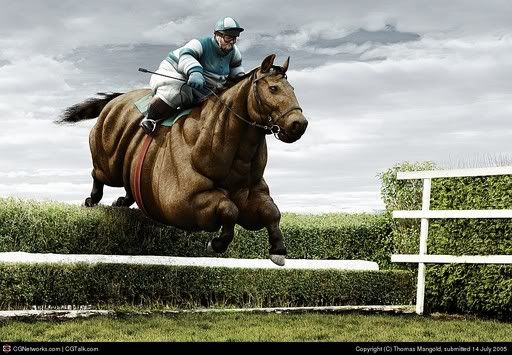

Better to leave questions unanswered than answers unquestioned
The following user(s) said Thank You: rugadd,
Please Log in to join the conversation.
24 Jan 2016 18:50 #223919
by ren
Convictions are more dangerous foes of truth than lies.
Replied by ren on topic Ancient massacre suggests war predated settlements
Aaaah. So that's why they call it "the great war". All those guys in the trenches were obese. It makes so much sense now.
I talked of great warriors, not of great corpulence.
I talked of great warriors, not of great corpulence.
Convictions are more dangerous foes of truth than lies.
The following user(s) said Thank You: rugadd
Please Log in to join the conversation.
24 Jan 2016 19:00 #223922
by Gisteron
Better to leave questions unanswered than answers unquestioned
Replied by Gisteron on topic Ancient massacre suggests war predated settlements
Yes, and great by the definition you chose to use means notably large in size. You brought it up. I was explicitly fine with not pursuing the greatness thing any further. You even quoted me being fine with it. And then went on saying what you mean by great. And by that meaning, corpulent is the kind of great you say those warriors were. I wash my hands in innocence. This chuckle worthy image is on you.

Better to leave questions unanswered than answers unquestioned
The following user(s) said Thank You: rugadd
Please Log in to join the conversation.
24 Jan 2016 19:16 #223924
by rugadd
rugadd
Replied by rugadd on topic Ancient massacre suggests war predated settlements
Are you splitting hairs so you don't have to be seen as agreeing with ren?
rugadd
Please Log in to join the conversation.
- OB1Shinobi
-
- Offline
- Banned
-

Less
More
- Posts: 4394
24 Jan 2016 21:34 - 24 Jan 2016 23:15 #223941
by OB1Shinobi
People are complicated.
Replied by OB1Shinobi on topic Ancient massacre suggests war predated settlements
certainly there was (what we can classify as) war prior to "civiization"
civilization happened as a result of agriculture (and is not necessarily better imo)
unless you consider the trees we lived in as primates to be "civilization", 99% of our history we were nomadic
from: http://www.independent.co.uk/news/world/world-history/state-of-nature-how-modern-humans-lived-as-nomads-for-99-per-cent-of-our-history-1604967.html
"People lived in this state of nature from the time of their first appearance as Homo habilis, or even as far back as the Australopithecus – Lucy's people – dating back at least 3 million years. "
also, this vid is about ten minutes, summarizes our nomadic history and the "agricultural revolution"
https://www.khanacademy.org/partner-content/crash-course1/crash-course-world-history/what-happens-when-you-stay-put/v/crash-course-world-history-01
also
CHIMPS AND WAR
http://www.theatlantic.com/technology/archive/2010/06/does-chimp-warfare-explain-our-sense-of-good-and-evil/58643/
"The chimp warfare described by this study, and previously by famed primatologist Jane Goodall, includes all the behaviors that we as humans consider to be the very worst: killing, torture, cannibalism, rape, and perhaps even genocide.[and also infanticide]
.......
The idea of chimp genocide may sound strange, but they are one of only three animals that has been observed wiping out entire social groups. The other two are wolves and humans. Given that humans and chimps are so closely related, and our genocidal records so pronounced, it stands to reason that this common behavior may be more than just coincidental."
COMPARISON TO BONOBOS
http://www.npr.org/sections/13.7/2012/05/07/152197388/do-bonobos-and-chimpanzees-offer-a-path-to-understanding-human-behavior
"Often mistaken for chimpanzees, bonobos are slightly smaller, with longer black hair atop their heads and pink lips. Unlike male-dominated chimp culture, it's the female bonobos that rule their communities. In these matriarchal societies, alliances are strong and females gang up together on males who step out of line.
..............
Though bonobos can get feisty at times, on the whole their culture is markedly different. When conflicts arise, tensions are more often eased through sex than aggression.
............
In their controlled experiments, Hare and Woods have noted marked differences in the way chimpanzees and bonobos react to strangers of their own species. A chimp treats the other as an outsider or rival. If food is available, he will hoard it for himself. However, under the same circumstances, a bonobo will treat the stranger as if he is already part of the same group. If his new companion is locked out of his enclosure containing food, the bonobo finds a way to open the door in order to share his meal. And in case you're wondering, there might be some sex involved between them as well."
civilization happened as a result of agriculture (and is not necessarily better imo)
unless you consider the trees we lived in as primates to be "civilization", 99% of our history we were nomadic
from: http://www.independent.co.uk/news/world/world-history/state-of-nature-how-modern-humans-lived-as-nomads-for-99-per-cent-of-our-history-1604967.html
"People lived in this state of nature from the time of their first appearance as Homo habilis, or even as far back as the Australopithecus – Lucy's people – dating back at least 3 million years. "
also, this vid is about ten minutes, summarizes our nomadic history and the "agricultural revolution"
https://www.khanacademy.org/partner-content/crash-course1/crash-course-world-history/what-happens-when-you-stay-put/v/crash-course-world-history-01
also
CHIMPS AND WAR
http://www.theatlantic.com/technology/archive/2010/06/does-chimp-warfare-explain-our-sense-of-good-and-evil/58643/
"The chimp warfare described by this study, and previously by famed primatologist Jane Goodall, includes all the behaviors that we as humans consider to be the very worst: killing, torture, cannibalism, rape, and perhaps even genocide.[and also infanticide]
.......
The idea of chimp genocide may sound strange, but they are one of only three animals that has been observed wiping out entire social groups. The other two are wolves and humans. Given that humans and chimps are so closely related, and our genocidal records so pronounced, it stands to reason that this common behavior may be more than just coincidental."
COMPARISON TO BONOBOS
http://www.npr.org/sections/13.7/2012/05/07/152197388/do-bonobos-and-chimpanzees-offer-a-path-to-understanding-human-behavior
"Often mistaken for chimpanzees, bonobos are slightly smaller, with longer black hair atop their heads and pink lips. Unlike male-dominated chimp culture, it's the female bonobos that rule their communities. In these matriarchal societies, alliances are strong and females gang up together on males who step out of line.
..............
Though bonobos can get feisty at times, on the whole their culture is markedly different. When conflicts arise, tensions are more often eased through sex than aggression.
............
In their controlled experiments, Hare and Woods have noted marked differences in the way chimpanzees and bonobos react to strangers of their own species. A chimp treats the other as an outsider or rival. If food is available, he will hoard it for himself. However, under the same circumstances, a bonobo will treat the stranger as if he is already part of the same group. If his new companion is locked out of his enclosure containing food, the bonobo finds a way to open the door in order to share his meal. And in case you're wondering, there might be some sex involved between them as well."
People are complicated.
Last edit: 24 Jan 2016 23:15 by OB1Shinobi.
Please Log in to join the conversation.
- Lykeios Little Raven
-
- Offline
- Banned
-
- Question everything lest you know nothing.
25 Jan 2016 02:04 #223981
by Lykeios Little Raven
Warfare, as far as I understand it, evolved with humans. Many animals show an inclination toward warfare. I feel it comes from the need to better a given species. In the crucible of battle adaptations could be tested. I don't know if we'll ever evolve beyond this.
Thank you for sharing, Des.
“Now I do not know whether I was then a man dreaming I was a butterfly, or whether I am now a butterfly, dreaming I am a man.” -Zhuangzi
“Though, as the crusade presses on, I find myself altogether incapable of staying here in saftey while others shed their blood for such a noble and just cause. For surely must the Almighty be with us even in the sundering of our nation. Our fight is for freedom, for liberty, and for all the principles upon which that aforementioned nation was built.” - Patrick “Madman of Galway” O'Dell
Replied by Lykeios Little Raven on topic Ancient massacre suggests war predated settlements
Desolous wrote: There's not much I can add to the NPR article. Except that I found it astonishing to note that war seems to predate settlements, human civilization itself. My son and I heard this article on the radio this afternoon and had a great conversation about it. How it seems there has been warfare as long as there have been humans.
Is it just in our nature? Will we ever be free of it? I don't know. This old soldier hopes so.
Link to article
Warfare, as far as I understand it, evolved with humans. Many animals show an inclination toward warfare. I feel it comes from the need to better a given species. In the crucible of battle adaptations could be tested. I don't know if we'll ever evolve beyond this.
Thank you for sharing, Des.
“Now I do not know whether I was then a man dreaming I was a butterfly, or whether I am now a butterfly, dreaming I am a man.” -Zhuangzi
“Though, as the crusade presses on, I find myself altogether incapable of staying here in saftey while others shed their blood for such a noble and just cause. For surely must the Almighty be with us even in the sundering of our nation. Our fight is for freedom, for liberty, and for all the principles upon which that aforementioned nation was built.” - Patrick “Madman of Galway” O'Dell
The following user(s) said Thank You:
Please Log in to join the conversation.