Godless Morality
-
 Topic Author
- User
-

Less
More
15 Mar 2015 16:12 #184302
by
Godless Morality was created by
Something which appeared on my Facebook Feed: Godless Morality, by Peter Singer
http://www.project-syndicate.org/commentary/godless-morality#DEypma60BqhQmhdd.99
Part of the message is hidden for the guests. Please log in or register to see it.
http://www.project-syndicate.org/commentary/godless-morality#DEypma60BqhQmhdd.99
Part of the message is hidden for the guests. Please log in or register to see it.
Please Log in to join the conversation.
- RyuJin
-
- Offline
- Master
-

- Council Member
-

- Ordained Clergy Person
-

- The Path of Ignorance is Paved with Fear
Less
More
- Posts: 5923
15 Mar 2015 16:50 #184304
by RyuJin
1. permissible
2.obligatory
3.permissible or forbidden depending upon the person's consent...
Quotes:
Out of darkness, he brings light. Out of hatred, love. Out of dishonor, honor-james allen-
He who has conquered doubt and fear has conquered failure-james allen-
The sword is the key to heaven and hell-Mahomet-
The best won victory is that obtained without shedding blood-Count Katsu-
All men's souls are immortal, only the souls of the righteous are immortal and divine -Socrates-
I'm the best at what I do, what I do ain't pretty-wolverine
J.L.Lawson,Master Knight, M.div, Eastern Studies S.I.G. Advisor (Formerly Known as the Buddhist Rite)
Former Masters: GM Kana Seiko Haruki , Br.John
Current Apprentices: Baru
Former Apprentices:Adhara(knight), Zenchi (knight)
Replied by RyuJin on topic Godless Morality
Consider the following three scenarios. For each, fill in the blank space with “obligatory,” “permissible,” or “forbidden.”
1. A runaway boxcar is about to run over five people walking on the tracks. A railroad worker is standing next to a switch that can turn the boxcar onto a side track, killing one person, but allowing the five to survive. Flipping the switch is ______.
2. You pass by a small child drowning in a shallow pond, and you are the only one around. If you pick up the child, she will survive and your pants will be ruined. Picking up the child is _______.
3. Five people have just been rushed into a hospital in critical condition, each requiring an organ to survive. There is not enough time to request organs from outside the hospital, but there is a healthy person in the hospital’s waiting room. If the surgeon takes this person’s organs, he will die, but the five in critical care will survive. Taking the healthy person’s organs is
1. permissible
2.obligatory
3.permissible or forbidden depending upon the person's consent...
Warning: Spoiler!
There is passion, yet there is peace
Through passion I gain strength and knowledge
Through strength and knowledge I gain victory
Through victory I gain peace and harmony
Through peace and harmony my chains are broken
There is no death, there is the force and it shall free me
Through passion I gain strength and knowledge
Through strength and knowledge I gain victory
Through victory I gain peace and harmony
Through peace and harmony my chains are broken
There is no death, there is the force and it shall free me
Quotes:
Warning: Spoiler!
Out of darkness, he brings light. Out of hatred, love. Out of dishonor, honor-james allen-
He who has conquered doubt and fear has conquered failure-james allen-
The sword is the key to heaven and hell-Mahomet-
The best won victory is that obtained without shedding blood-Count Katsu-
All men's souls are immortal, only the souls of the righteous are immortal and divine -Socrates-
I'm the best at what I do, what I do ain't pretty-wolverine
J.L.Lawson,Master Knight, M.div, Eastern Studies S.I.G. Advisor (Formerly Known as the Buddhist Rite)
Former Masters: GM Kana Seiko Haruki , Br.John
Current Apprentices: Baru
Former Apprentices:Adhara(knight), Zenchi (knight)
The following user(s) said Thank You:
Please Log in to join the conversation.
- OB1Shinobi
-
- Offline
- Inactive
-

Less
More
- Posts: 4394
15 Mar 2015 17:14 - 15 Mar 2015 17:21 #184305
by OB1Shinobi
People are complicated.
Replied by OB1Shinobi on topic Godless Morality
when in the course of human events it becomes necessary for one or more individuals to dissolve the political, social, or religious bands which have connected them another and to assume their own seperate and equal station to which the laws of nature and natures god entitle them, a decent respect for the understanding of mankind requires that they should declare the cause which impel them to this seperation.
we hold these truths to be self evident.
that all are created equal, and are endowed by their creator with certain unalienable rights, among these
LIFE
LIBERTY
THE PURSUIT OF HAPPINESS
it is to secure these rights that authoritive institutions are created among humanity, deriving their just powers from the consent of the governed, and whenever any form of authority becomes destructive of these ends, it is the right of the individual/s to alter or abolish it, and to develop new institutions, laying their foundations on such principles, and organizing their powers in such form as to them shall seem most likely to effect their safety and happiness.
--
i got the same answers
1 is permissable because either choice can be justified and its understood that nither should be imposed
2 he!! no i got these at HOT TOPIC you must be crazy she better learn to swim
3 is forbidden because the way its written implies that the individual is required to submit their life
we hold these truths to be self evident.
that all are created equal, and are endowed by their creator with certain unalienable rights, among these
LIFE
LIBERTY
THE PURSUIT OF HAPPINESS
it is to secure these rights that authoritive institutions are created among humanity, deriving their just powers from the consent of the governed, and whenever any form of authority becomes destructive of these ends, it is the right of the individual/s to alter or abolish it, and to develop new institutions, laying their foundations on such principles, and organizing their powers in such form as to them shall seem most likely to effect their safety and happiness.
--
i got the same answers
1 is permissable because either choice can be justified and its understood that nither should be imposed
2 he!! no i got these at HOT TOPIC you must be crazy she better learn to swim
3 is forbidden because the way its written implies that the individual is required to submit their life
People are complicated.
Last edit: 15 Mar 2015 17:21 by OB1Shinobi.
Please Log in to join the conversation.
15 Mar 2015 18:43 #184312
by TheDude
First IP Journal | Second IP Journal | Apprentice Journal | Meditation Journal | Seminary Journal | Degree Jorunal
TM: J.K. Barger
Knighted Apprentices: Nairys | Kevlar | Sophia
Replied by TheDude on topic Godless Morality
I put together a sloppy proof a while ago about how God as we think of it defeats the notion of moral absolutism.
1. If God exists, he either does or does not have attributes.
2. If God does not have attributes, then he cannot have knowledge of the attributes good and evil.
3. If one does not have knowledge of the attributes good and evil, then they cannot make judgments about what is good or evil.
4. All things would be objectively inferior to an almighty God.
5. Therefore, if God had no attributes, nothing would have any knowledge of or be able to make judgments about good and evil.
6. Therefore, if God does not have attributes, there is no objective standard of morality.
7. If God had attributes and those attributes were evil, he would have no just authority over what is good and what is evil.
8. Nothing can be superior to God in authority if he exists.
9. Therefore, if God had evil attributes, there would be no basis for judgment over what is good and what is evil.
10. If God had attributes, those attributes must be good in order to give him any moral authority.
11. (Because God is the source of all things) Evil attributes can exist IF AND ONLY IF:
A. God wills things to be evil, or
B. God wills evil things to exist.
12. A supremely good being would neither will things to be evil nor will evil things to exist.
13. Therefore, if God is good, evil things do not exist.
14. Therefore, there are no moral issues as all things are good.
If the person still insists that evil things exist:
15. Evil things exist.
16. Therefore, God is not good (from 13).
17. If objective moral standards exist, then God is not good; God is not evil; God does not lack attributes.
18. Therefore, if objective moral standards exist, then God does not exist (from 1, 17).
Obviously this could use work, but it seemed a relevant place to post and get opinions.
1. If God exists, he either does or does not have attributes.
2. If God does not have attributes, then he cannot have knowledge of the attributes good and evil.
3. If one does not have knowledge of the attributes good and evil, then they cannot make judgments about what is good or evil.
4. All things would be objectively inferior to an almighty God.
5. Therefore, if God had no attributes, nothing would have any knowledge of or be able to make judgments about good and evil.
6. Therefore, if God does not have attributes, there is no objective standard of morality.
7. If God had attributes and those attributes were evil, he would have no just authority over what is good and what is evil.
8. Nothing can be superior to God in authority if he exists.
9. Therefore, if God had evil attributes, there would be no basis for judgment over what is good and what is evil.
10. If God had attributes, those attributes must be good in order to give him any moral authority.
11. (Because God is the source of all things) Evil attributes can exist IF AND ONLY IF:
A. God wills things to be evil, or
B. God wills evil things to exist.
12. A supremely good being would neither will things to be evil nor will evil things to exist.
13. Therefore, if God is good, evil things do not exist.
14. Therefore, there are no moral issues as all things are good.
If the person still insists that evil things exist:
15. Evil things exist.
16. Therefore, God is not good (from 13).
17. If objective moral standards exist, then God is not good; God is not evil; God does not lack attributes.
18. Therefore, if objective moral standards exist, then God does not exist (from 1, 17).
Obviously this could use work, but it seemed a relevant place to post and get opinions.
First IP Journal | Second IP Journal | Apprentice Journal | Meditation Journal | Seminary Journal | Degree Jorunal
TM: J.K. Barger
Knighted Apprentices: Nairys | Kevlar | Sophia
The following user(s) said Thank You: OB1Shinobi
Please Log in to join the conversation.
15 Mar 2015 20:44 #184323
by Gisteron

Better to leave questions unanswered than answers unquestioned
Replied by Gisteron on topic Godless Morality
Correct, pending a definition of 'attribute'.TheDude wrote: 1. If God exists, he either does or does not have attributes.
Non sequitur. Unless you define having something or at least knowledge of X as an attribute, something that has no attributes can still have all kinds of other things, including knowledge of attributes. I have not the attribute of being an octopus, but I do have some knowledge of that attribute.2. If God does not have attributes, then he cannot have knowledge of the attributes good and evil.
Non sequitur. Ignorance of attributes does not make it impossible to judge by those attributes. Hypotheticals where we assume radically different personality types rely on that possibility, though the resulting judgements are unreliable.3. If one does not have knowledge of the attributes good and evil, then they cannot make judgments about what is good or evil.
Non sequitur. No premise until this point implies this. Only assuming that one of God's attributes is absolute superiority would, yet we have not established that God does have any attributes at all or why superiority over any or all things would need to be one of them.4. All things would be objectively inferior to an almighty God.
Non sequitur. Even granting all the previous points including #4, it has not been established that knowledge of the attributes good and evil is superior, inferior or equivalent to ignorance thereof. You would not say of two people who are equal in every regard that one of them is a generally superior being for having more or less overall knowledge of things, would you?5. Therefore, if God had no attributes, nothing would have any knowledge of or be able to make judgments about good and evil.
Black Swan fallacy. Even if neither God nor anybody else had knowledge of the attributes good and evil, that knowledge could still be up for discovery. God having no attributes would not imply that there is not an objective standard of morality, even if it implied all the other conclusions drawn until this point.6. Therefore, if God does not have attributes, there is no objective standard of morality.
What does 'just authority' mean? Also, without one's own knowledge of good and evil, how would you tell the difference between an evil and a good God, or anything inbetween, and how do you know that would make a difference on the properties of their moral authority?7. If God had attributes and those attributes were evil, he would have no just authority over what is good and what is evil.
Non sequitur. God's existence does not imply his superiority in matters of authority. There could easily be a God who has authority equivalent or inferior to someone else's unless you make superiority part of the definition of God in which case point #8 would be a tautology.8. Nothing can be superior to God in authority if he exists.
Non sequitur. The existence of a line and the identifiability of individual points included therein does not depend on the position of the base point. If the basis for judgement over good and evil vanishes with God being evil, it must also vanish with God being something other than evil, including good.9. Therefore, if God had evil attributes, there would be no basis for judgment over what is good and what is evil.
See above. It is neither necessary that God have moral authority nor are attributes of any sort necessary or sufficient for that authority unless you define the terms in such a way as to fill in the logical gaps and render the entire argument obsolete in that it'd be tautologous.10. If God had attributes, those attributes must be good in order to give him any moral authority.
The premise that God be the source of all things has not been established. There have been gods conceived of who were not creator-gods or only creators of certain things. There can easily be a God who is not the source of all things. Granting that premise however, the concluded equivalence does still not follow. It would follow that evil things could only exist if God willed evil to be or to become, i.e. God would, as the source of all things, be a necessary condition for evil; he would not however be a sufficient one. You have yet to establish that God willing evil to become or to be is enough for it to be so. It could easily be the case that God wants evil but does not make it happen or that he has not the power to make it happen. It is also thinkable that God wills no evil but that it comes about through him or that he is incapable of willing it for some reason and that it still could come about as a direct or indirect consequence of his doing.11. (Because God is the source of all things) Evil attributes can exist IF AND ONLY IF:
A. God wills things to be evil, or
B. God wills evil things to exist.
How do you know that? How can you even know that? I cannot speak for a supremely good being so I have no way of accepting this premise and consequently anything that follows from it.12. A supremely good being would neither will things to be evil nor will evil things to exist.
You have not established that God is incapable of mistakes or that he could identify and eliminate evil if it arises. Nothing about goodness makes it impossible to spawn evil things with the best of intentions.13. Therefore, if God is good, evil things do not exist.
What if God isn't good? You can't draw a conclusion from a conditioned premise. Indeed, if all things are good, how would we know? All things including God might as well be evil and the picture would look no different to us mortals. I could now also make a fallacious appeal to consequences, but I'll refrain from that for now. Even if all things fell on one side of the issue, that would not mean the issue did not exist. And of course there is a plethora of logical gaps all over the argument until now...14. Therefore, there are no moral issues as all things are good.
Which they couldn't, if the argument was valid, let alone sound.If the person still insists that evil things exist:
Correct. Provided the truth of #13, that would follow. Since, however, #13 is already on shaky grounds as a conclusion of an invalid and unsound argument... moving on.15. Evil things exist.
16. Therefore, God is not good (from 13).
Why is it not perfectly conceivable that there be a good God or an evil God and objective moral standards that are completely independant of it? How do you know morality cannot transcend God?17. If objective moral standards exist, then God is not good; God is not evil; God does not lack attributes.
Non sequitur. Since #17 ignores the possibility of morality-God independence, it is perfectly conceivable that God be good, evil, neither or both with no consequence to the state of morality. If God is neither, he can be completely without attributes or have wholly different attributes from these without a violation of #1.18. Therefore, if objective moral standards exist, then God does not exist (from 1, 17).
Quite. Thank you for sharing.Obviously this could use work, but it seemed a relevant place to post and get opinions.
Better to leave questions unanswered than answers unquestioned
The following user(s) said Thank You: OB1Shinobi, TheDude
Please Log in to join the conversation.
15 Mar 2015 21:34 - 15 Mar 2015 21:37 #184332
by Adder
Replied by Adder on topic Godless Morality
Sort of goes back to the Carnism thread for me, and how I see the most logical 'morality' to be about compassion v evil as absolute concepts, relegating good and bad to subjective assessments. In that regard evil certainly does exist as a consequence of intent, as does compassion.
I draw the moral imperative into a network of causal chains, to affix responsibility more directly into that causal chain. So from that view (specifially for example, and using the options prescribed) I'd have;
1. A runaway boxcar is about to run over five people walking on the tracks. A railroad worker is standing next to a switch that can turn the boxcar onto a side track, killing one person, but allowing the five to survive. Flipping the switch is forbidden.
2. You pass by a small child drowning in a shallow pond, and you are the only one around. If you pick up the child, she will survive and your pants will be ruined. Picking up the child is obligatory.
3. Five people have just been rushed into a hospital in critical condition, each requiring an organ to survive. There is not enough time to request organs from outside the hospital, but there is a healthy person in the hospital’s waiting room. If the surgeon takes this person’s organs, he will die, but the five in critical care will survive. Taking the healthy person’s organs is forbidden.
Though I'm not suggesting that would be my actual response, the first one is tricky because both parties have found themselves stuck on the track for some unknown reason, and one person might be easier to extricate then the group!! It would depend, and I think the persons intent and capabilities would have to lead in the decision making in the actual circumstances - otherwise the circumstances are already somebodies fault!?
That view sort of removes any association with 'God' having anything to do with morality, but it does seem to perhaps be compatible with 'karma'. It's a bit cold as a concept, so I don't claim it as a rule but I do use it as a basis for a moral code. It links back to the Carnism thread because compassion versus evil then defines how material/plants/animals are assessed as suitable for use as food - and why a measure of its nervous system complexity/potential is used as a measure of potential suffering.
I draw the moral imperative into a network of causal chains, to affix responsibility more directly into that causal chain. So from that view (specifially for example, and using the options prescribed) I'd have;
1. A runaway boxcar is about to run over five people walking on the tracks. A railroad worker is standing next to a switch that can turn the boxcar onto a side track, killing one person, but allowing the five to survive. Flipping the switch is forbidden.
2. You pass by a small child drowning in a shallow pond, and you are the only one around. If you pick up the child, she will survive and your pants will be ruined. Picking up the child is obligatory.
3. Five people have just been rushed into a hospital in critical condition, each requiring an organ to survive. There is not enough time to request organs from outside the hospital, but there is a healthy person in the hospital’s waiting room. If the surgeon takes this person’s organs, he will die, but the five in critical care will survive. Taking the healthy person’s organs is forbidden.
Though I'm not suggesting that would be my actual response, the first one is tricky because both parties have found themselves stuck on the track for some unknown reason, and one person might be easier to extricate then the group!! It would depend, and I think the persons intent and capabilities would have to lead in the decision making in the actual circumstances - otherwise the circumstances are already somebodies fault!?
That view sort of removes any association with 'God' having anything to do with morality, but it does seem to perhaps be compatible with 'karma'. It's a bit cold as a concept, so I don't claim it as a rule but I do use it as a basis for a moral code. It links back to the Carnism thread because compassion versus evil then defines how material/plants/animals are assessed as suitable for use as food - and why a measure of its nervous system complexity/potential is used as a measure of potential suffering.
Last edit: 15 Mar 2015 21:37 by Adder.
Please Log in to join the conversation.
16 Mar 2015 02:35 #184360
by TheDude
I can't address all of these points given the sloppiness of the argument, but I can address this. This is helpful, though, thanks.
Having knowledge and the potential to comprehend or process information are things which I categorize as attributes; a being lacking any and all attributes would not have these attributes, and if this is the case, then the point stands. In addition, I would say that the ability to judge has, as a prerequisite, the ability to comprehend, making the next point fair as well. But, these things being attributes were not in my argument as posted.
I will take some time to refine my points and present more concrete definitions, and that may take me a while, but I do believe that it is possible to make the argument more presentable and valid given enough time.
Thanks for your help.
First IP Journal | Second IP Journal | Apprentice Journal | Meditation Journal | Seminary Journal | Degree Jorunal
TM: J.K. Barger
Knighted Apprentices: Nairys | Kevlar | Sophia
Replied by TheDude on topic Godless Morality
Gisteron wrote: Non sequitur. Unless you define having something or at least knowledge of X as an attribute, something that has no attributes can still have all kinds of other things, including knowledge of attributes. I have not the attribute of being an octopus, but I do have some knowledge of that attribute.
I can't address all of these points given the sloppiness of the argument, but I can address this. This is helpful, though, thanks.
Having knowledge and the potential to comprehend or process information are things which I categorize as attributes; a being lacking any and all attributes would not have these attributes, and if this is the case, then the point stands. In addition, I would say that the ability to judge has, as a prerequisite, the ability to comprehend, making the next point fair as well. But, these things being attributes were not in my argument as posted.
I will take some time to refine my points and present more concrete definitions, and that may take me a while, but I do believe that it is possible to make the argument more presentable and valid given enough time.
I often hear God used as the basis for morality and the ultimate in terms of moral authority, and it was likely with this in mind that I originally put together the argument. I am of the opinion that IF there are objective moral standards, then they do transcend God, but I don't have anything written about that and so I can only present it as an opinion.Why is it not perfectly conceivable that there be a good God or an evil God and objective moral standards that are completely independant of it? How do you know morality cannot transcend God?
Thanks for your help.
First IP Journal | Second IP Journal | Apprentice Journal | Meditation Journal | Seminary Journal | Degree Jorunal
TM: J.K. Barger
Knighted Apprentices: Nairys | Kevlar | Sophia
The following user(s) said Thank You: OB1Shinobi
Please Log in to join the conversation.
16 Mar 2015 06:31 - 16 Mar 2015 06:36 #184376
by Gisteron
Better to leave questions unanswered than answers unquestioned
Replied by Gisteron on topic Godless Morality
Ironically, if God were the ultimate moral authority, morality would be subject to its dictates or nature or something else about it, and would therefore not be objective. Indeed, if there is any basis for it, it is technically a spawn of that basis and subject to it. But not knowing the attributes of God we cannot conclude anything about either it or about morality based on the respectively other, since we know not that there is anything connecting them in the first place.
Being for the most part (though not entirely) a consequentionalist, I don't believe there is an objective morality in the sense that it is completely absolute from all things. Whether there in fact is, I do not know but it also doesn't really matter. Objectivity of a moral system is neither required nor sufficient to either build that system or for it to work. God's existence and its attributes are a completely different question at this point though. The existence of absolute morality would not imply anything about any gods nor would the lack thereof. It is usually the religious or 'spiritual' intellectuals who would tie these two topics together and I for once have yet to hear a reason why. Only one branch of moral realism mentions the explicitly supernatural as a prerequisite for morality, while the rest of moral philosophy in general is rather unconcerned with gods.
Also, I would say that the ability to judge fairly needs comprehension. Again, whenever for a hypothetical we assume the role of, say, a racist, or a fictional hero and consider how they would judge, we lack most of the attributes they have and thus do not comprehend the full situation. We are still able to judge it, even though our judgement, as stated above, will remain unreliable.
Being for the most part (though not entirely) a consequentionalist, I don't believe there is an objective morality in the sense that it is completely absolute from all things. Whether there in fact is, I do not know but it also doesn't really matter. Objectivity of a moral system is neither required nor sufficient to either build that system or for it to work. God's existence and its attributes are a completely different question at this point though. The existence of absolute morality would not imply anything about any gods nor would the lack thereof. It is usually the religious or 'spiritual' intellectuals who would tie these two topics together and I for once have yet to hear a reason why. Only one branch of moral realism mentions the explicitly supernatural as a prerequisite for morality, while the rest of moral philosophy in general is rather unconcerned with gods.
Also, I would say that the ability to judge fairly needs comprehension. Again, whenever for a hypothetical we assume the role of, say, a racist, or a fictional hero and consider how they would judge, we lack most of the attributes they have and thus do not comprehend the full situation. We are still able to judge it, even though our judgement, as stated above, will remain unreliable.
Better to leave questions unanswered than answers unquestioned
Last edit: 16 Mar 2015 06:36 by Gisteron.
The following user(s) said Thank You: TheDude
Please Log in to join the conversation.
-
- User
-
Less
More
16 Mar 2015 08:54 #184377
by
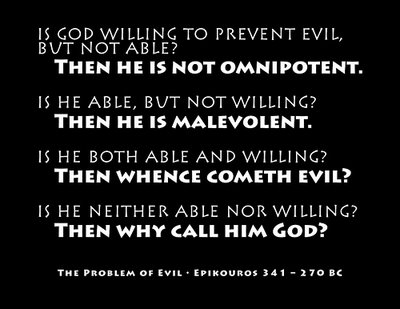
Morality is too often subjective, defined to cater to the emotive. Requiring fear of a God's wrath to abide by a code may be effective, but is not the best reason. We may just choose to believe in a God which suits our lifestyle and aims, or redefine their words to the same effect. True morality comes from within, based on our understanding of the forces that guide universe as a result of the experiences we've endured and given honest contemplation. If the foundation is truth, even when uncomfortable personally, reliance on external mythology personified is not required.
Replied by on topic Godless Morality
Morality is too often subjective, defined to cater to the emotive. Requiring fear of a God's wrath to abide by a code may be effective, but is not the best reason. We may just choose to believe in a God which suits our lifestyle and aims, or redefine their words to the same effect. True morality comes from within, based on our understanding of the forces that guide universe as a result of the experiences we've endured and given honest contemplation. If the foundation is truth, even when uncomfortable personally, reliance on external mythology personified is not required.
Please Log in to join the conversation.
- OB1Shinobi
-
- Offline
- Inactive
-
Less
More
- Posts: 4394
17 Mar 2015 00:18 - 17 Mar 2015 00:21 #184442
by OB1Shinobi
People are complicated.
Replied by OB1Shinobi on topic Godless Morality
my personal interpretation of morality is that it has more to do with overal health and the relationships between individuals within a closed system
the first step to health is determining what health means
in some instances thats easy
in others there is room for interpretation
so my basic current definition of psychological health is the ability to proccess and adapt to new information and the ability to follow through with ones decisions
if one has these characteristics to a functional degree then for the majority of people all of the rest of the characteristics of health can be attained
in a closed system everything affects everything else and imo the single biggest fallacy of modern man is our assumption that we have - or even can - transcend the closed system model
until we can use our minds to create new dimensions and our bodies have the ability to navigate space-time without technological assistance we will remain in the closed system model
from this view morality becomes an issue of the balance between personal freedom and the consequences our actions have on others - not in the "good" or "evil" sense but in the sense of functionality and physiological and psychological health of ourselves and our peers
our actions in a closed system always return to us -not because of some kind of metaphysical karmic mystery but as a simple result of the inherent nature of systems
from this perspective "what goes around comes around" has a whole new level of personal implication and the idea of BEING moral towards the world and society has nothing to do with living up to the demands or expectations of other peoples absurdities - in fact being moral is more often than not something we do in spite of them - and more to do with holism and integration and support of the empowerment of society through the empowerment of the individual and vice versa - an empowered society produces empowered individuals
personal development, social morality, and community service are all individual slices of the same pie
if god does or does not fit into that paradigm is moot point to me - gods existence is not altered by our understandingof it but OUR existence is very much altered by our understanding and that is my first priority
the first step to health is determining what health means
in some instances thats easy
in others there is room for interpretation
so my basic current definition of psychological health is the ability to proccess and adapt to new information and the ability to follow through with ones decisions
if one has these characteristics to a functional degree then for the majority of people all of the rest of the characteristics of health can be attained
in a closed system everything affects everything else and imo the single biggest fallacy of modern man is our assumption that we have - or even can - transcend the closed system model
until we can use our minds to create new dimensions and our bodies have the ability to navigate space-time without technological assistance we will remain in the closed system model
from this view morality becomes an issue of the balance between personal freedom and the consequences our actions have on others - not in the "good" or "evil" sense but in the sense of functionality and physiological and psychological health of ourselves and our peers
our actions in a closed system always return to us -not because of some kind of metaphysical karmic mystery but as a simple result of the inherent nature of systems
from this perspective "what goes around comes around" has a whole new level of personal implication and the idea of BEING moral towards the world and society has nothing to do with living up to the demands or expectations of other peoples absurdities - in fact being moral is more often than not something we do in spite of them - and more to do with holism and integration and support of the empowerment of society through the empowerment of the individual and vice versa - an empowered society produces empowered individuals
personal development, social morality, and community service are all individual slices of the same pie
if god does or does not fit into that paradigm is moot point to me - gods existence is not altered by our understandingof it but OUR existence is very much altered by our understanding and that is my first priority
People are complicated.
Last edit: 17 Mar 2015 00:21 by OB1Shinobi.
Please Log in to join the conversation.
17 Mar 2015 06:34 #184461
by Gisteron
Better to leave questions unanswered than answers unquestioned
Replied by Gisteron on topic Godless Morality
So by your definition then, someone who, say, because of a bodily handicap or societal rules, or the laws of nature, unable to follow through with a decision, is a psychologically unhealthy person? It's just a matter of taste I suppose but perhaps there is some place for a tweak or two there, if I may so boldly suggest...
Also, while we're at it, could you please elaborate on what you mean by 'system' and 'closed system (model)', respectively? For what you are describing with actions returning to their origins one way or another, or indeed the interaction between all pairs of things, is not a necessary characteristic of either systems in general nor of closed systems in particular, as far as I know. It may be a sufficient one though, I'd have to think about that.
Also, while we're at it, could you please elaborate on what you mean by 'system' and 'closed system (model)', respectively? For what you are describing with actions returning to their origins one way or another, or indeed the interaction between all pairs of things, is not a necessary characteristic of either systems in general nor of closed systems in particular, as far as I know. It may be a sufficient one though, I'd have to think about that.
Better to leave questions unanswered than answers unquestioned
Please Log in to join the conversation.
- OB1Shinobi
-
- Offline
- Inactive
-
Less
More
- Posts: 4394
17 Mar 2015 07:26 - 17 Mar 2015 07:27 #184462
by OB1Shinobi
People are complicated.
Replied by OB1Shinobi on topic Godless Morality
first its the ability to proccess information - to absorb understand retain and integrate information as its encountered
to see how that information relates -to integrate the new information into the existing program so to speak
then its the ability to decide based on all existing information -which sometimes would result in new decisions and sometimes not - but requires always the ability to follow through with whatever decision/s was/were made based on the available information
so it learning that eating broccoli is better for your health than cotton candy
then understanding why this translates into what decisions should be made about the ratio of broccoli - cotton candy in ones diet - make the appropriate decision/s based on this, then the ability to follow through with the decision/s
so basically we are healthy to the extent we engage that proccess effectively
-
imagine a city or a large town - imagine that its trapped inside of a giant glass bubble thats floating out in the middle of the ocean
the bubble is airtight and it cannot open
the city has an ecosystem which provides everything it needs to sustain itself IF it uses its resources properly
if it is irresponsible with its resources it will not survive
thats a closed system
it is also a very very small scale model of the actual reality we live in here in the earth bubble system
the earth bubble is obviously much larger than any city but basically its the same thing
we may have the (mostly theoretical) ability to leave the bubble, but only temporarily and only from within the protection of another closed system (the ship) which either has to return, or deliver us to yet another closed system, (like a space station or another planet) or has to provide us with the means of sustainibility itself which would ultimaty make it simply another closed system
from this model of a space ship or a sea bubble we understand that we are limited by our biology to a closed system model and that virtually everything we do has an effect on something else within the system
and
that what happens to the overall system has a direct effect on each of us
we can live with the perception of isolating ourselves from the system
but thats false perception which is only convincing as a condition of how large our system is in relation to our size as individuals
so my understanding of morality is centered on being able to grow and develop and to self actualize as individuals
and cultures/societies
in a way that respects the integrity and cohesion of the system which we inhabit
to see how that information relates -to integrate the new information into the existing program so to speak
then its the ability to decide based on all existing information -which sometimes would result in new decisions and sometimes not - but requires always the ability to follow through with whatever decision/s was/were made based on the available information
so it learning that eating broccoli is better for your health than cotton candy
then understanding why this translates into what decisions should be made about the ratio of broccoli - cotton candy in ones diet - make the appropriate decision/s based on this, then the ability to follow through with the decision/s
so basically we are healthy to the extent we engage that proccess effectively
-
imagine a city or a large town - imagine that its trapped inside of a giant glass bubble thats floating out in the middle of the ocean
the bubble is airtight and it cannot open
the city has an ecosystem which provides everything it needs to sustain itself IF it uses its resources properly
if it is irresponsible with its resources it will not survive
thats a closed system
it is also a very very small scale model of the actual reality we live in here in the earth bubble system
the earth bubble is obviously much larger than any city but basically its the same thing
we may have the (mostly theoretical) ability to leave the bubble, but only temporarily and only from within the protection of another closed system (the ship) which either has to return, or deliver us to yet another closed system, (like a space station or another planet) or has to provide us with the means of sustainibility itself which would ultimaty make it simply another closed system
from this model of a space ship or a sea bubble we understand that we are limited by our biology to a closed system model and that virtually everything we do has an effect on something else within the system
and
that what happens to the overall system has a direct effect on each of us
we can live with the perception of isolating ourselves from the system
but thats false perception which is only convincing as a condition of how large our system is in relation to our size as individuals
so my understanding of morality is centered on being able to grow and develop and to self actualize as individuals
and cultures/societies
in a way that respects the integrity and cohesion of the system which we inhabit
People are complicated.
Last edit: 17 Mar 2015 07:27 by OB1Shinobi.
Please Log in to join the conversation.
17 Mar 2015 13:57 #184474
by Gisteron
Better to leave questions unanswered than answers unquestioned
Replied by Gisteron on topic Godless Morality
Some information I gathered suggests that flying can be a faster method of travelling than walking. So for that purpose I now decide to grow wings... But I am incapable of growing wings. Therefore I am not psychologically healthy.
The earth is not a closed system. If it were, it would be a barren rock by now, devoid of life. Nor is a spaceship a closed system nor any celestial object we came to know about. All of those things, with exception of the spaceship, which ideally only loses net energy for maneuvers, either gain or lose net energy just about all the time, and that is not counting the energy that is constantly coming to a state where it can no longer be utilized which I shan't call entropy at this point, because that term usually applies to proper closed systems. It is not however required of neither a system nor of a closed system that all things interact with all other things. All parts must be interacting with at least one other part of the system but there is no need for the same kind or the same magnitude of interaction to come back to the former part ever. In fact, a thing can act upon another for so long that it eventually no longer were capable to continue and at that point the system would not remain as it was in the beginning but it would have been as much a system until then as one would be where interaction circulated or did so partially.
As for the moral implications, please, consider: If we assume that all systems are ultimately closed and that all action prompts an equal or greater reaction, there would be no amoral, i.e. morally neutral choices possible even in principle. Things like picking one's nose when nobody is watching would have some moral consequences eventhough for all we know they affect no reasoning entity (which, I postulate, is a base assumption we must make before any moral discussion can begin). I suppose that is a coherent model, but again, I think it is somewhat narrow in that it fails to recognize all of the nuances we actually face in our lives, because it leaves no room for properly neutral situations.
The earth is not a closed system. If it were, it would be a barren rock by now, devoid of life. Nor is a spaceship a closed system nor any celestial object we came to know about. All of those things, with exception of the spaceship, which ideally only loses net energy for maneuvers, either gain or lose net energy just about all the time, and that is not counting the energy that is constantly coming to a state where it can no longer be utilized which I shan't call entropy at this point, because that term usually applies to proper closed systems. It is not however required of neither a system nor of a closed system that all things interact with all other things. All parts must be interacting with at least one other part of the system but there is no need for the same kind or the same magnitude of interaction to come back to the former part ever. In fact, a thing can act upon another for so long that it eventually no longer were capable to continue and at that point the system would not remain as it was in the beginning but it would have been as much a system until then as one would be where interaction circulated or did so partially.
As for the moral implications, please, consider: If we assume that all systems are ultimately closed and that all action prompts an equal or greater reaction, there would be no amoral, i.e. morally neutral choices possible even in principle. Things like picking one's nose when nobody is watching would have some moral consequences eventhough for all we know they affect no reasoning entity (which, I postulate, is a base assumption we must make before any moral discussion can begin). I suppose that is a coherent model, but again, I think it is somewhat narrow in that it fails to recognize all of the nuances we actually face in our lives, because it leaves no room for properly neutral situations.
Better to leave questions unanswered than answers unquestioned
Please Log in to join the conversation.
- OB1Shinobi
-
- Offline
- Inactive
-
Less
More
- Posts: 4394
17 Mar 2015 22:08 - 17 Mar 2015 22:16 #184566
by OB1Shinobi
People are complicated.
Replied by OB1Shinobi on topic Godless Morality
by my viewpoint morality has nothing to do with moral judgements of good and evil
it is about interdependence and self actualization within a closed system model - the implications of personal behavior within a system where everyhing affects the overall system (and therefore affects everything within the system)
if this terminology does not meet your criteria then use your own terminology to develop an equivilent model to understand so that you can relate to the idea i am expressing
does it matter so much if i say "closed system" as opposed to "holistic system" or even if i just make up some completely new identifier altogether?
it is not usually difficult to understand other people IF you care to actually understand them rather than just poke holes in their ideas
if someone went through the wing growing proccess you described then yes i would most definitely consider them psychologically unhealthy
the definition i offer of psychological health covers the reasons for that assessment accurately and fairly
also the language i use in sharing that defition in that it is based on my CURRENT understanding, which implies that the definition is open to change
but the first element of psychological health is the ability to proccess information
proccess information
proccess
information
please think about that before you pick it apart
proccess
the
information
integrate the information into the existing program
existing
as in the program which already exists
the program is the total of the information already proccessed
so all the stuff you already know
would still be stuff that you know
if it makes you feel better i will say that we live in a holistic system
everything affects the overall system because everything effects something else within the system and this in turn effects the system
if "everything" is too big a word then substitute it with whatever terminology you feel appropriate to be able to relate to the idea i am expressing
it is only difficult to see the reality of this concept
by those who try really hard to miss it
if you want to critique the models and the language that people use to express their ideas
but refuse to
acknowledge the ideas themselves
then be prepared for the conversation to end
theres such a thing as a baby and such a thing as a bath
you dont have to throw them both away
if i seem impolite or impatient i apologize for that -youre very intelligent person and it may be that i misunderstand because of the limitations of the written word but i constantly get the sense from what you say that youre not really interested in dialogue and exchange of ideas but rather in debate and intellectual competition
im not really interested in competition
so the picking apart of everything i just dont relate to it
thank you for reading
hugsnotdrugs
it is about interdependence and self actualization within a closed system model - the implications of personal behavior within a system where everyhing affects the overall system (and therefore affects everything within the system)
if this terminology does not meet your criteria then use your own terminology to develop an equivilent model to understand so that you can relate to the idea i am expressing
does it matter so much if i say "closed system" as opposed to "holistic system" or even if i just make up some completely new identifier altogether?
it is not usually difficult to understand other people IF you care to actually understand them rather than just poke holes in their ideas
if someone went through the wing growing proccess you described then yes i would most definitely consider them psychologically unhealthy
the definition i offer of psychological health covers the reasons for that assessment accurately and fairly
also the language i use in sharing that defition in that it is based on my CURRENT understanding, which implies that the definition is open to change
but the first element of psychological health is the ability to proccess information
proccess information
proccess
information
please think about that before you pick it apart
proccess
the
information
integrate the information into the existing program
existing
as in the program which already exists
the program is the total of the information already proccessed
so all the stuff you already know
would still be stuff that you know
if it makes you feel better i will say that we live in a holistic system
everything affects the overall system because everything effects something else within the system and this in turn effects the system
if "everything" is too big a word then substitute it with whatever terminology you feel appropriate to be able to relate to the idea i am expressing
it is only difficult to see the reality of this concept
by those who try really hard to miss it
if you want to critique the models and the language that people use to express their ideas
but refuse to
acknowledge the ideas themselves
then be prepared for the conversation to end
theres such a thing as a baby and such a thing as a bath
you dont have to throw them both away
if i seem impolite or impatient i apologize for that -youre very intelligent person and it may be that i misunderstand because of the limitations of the written word but i constantly get the sense from what you say that youre not really interested in dialogue and exchange of ideas but rather in debate and intellectual competition
im not really interested in competition
so the picking apart of everything i just dont relate to it
thank you for reading
hugsnotdrugs
People are complicated.
Last edit: 17 Mar 2015 22:16 by OB1Shinobi.
Please Log in to join the conversation.
18 Mar 2015 07:12 - 18 Mar 2015 07:28 #184645
by Gisteron
Better to leave questions unanswered than answers unquestioned
Replied by Gisteron on topic Godless Morality
The holes in your concepts are not my fault. You asked me to be prepared for the conversation to end, basically because I failed to see the obvious truthiness and perfection of your argument by sheer force of my will. If my humble inquiry for clarification or refinement are too much, I shall indeed be prepared to end the conversation, just please don't tell me that it was I who was uninterested in it, thank you very much.
There is nothing inherently sick about the wish to grow wings. It is in principle possible in that some other animals managed that pretty well and in that we have quite some knowledge about how to move DNA about such as to provoke wing development in beings that under most other aspects would still be very much human. It is also possible to attach prosthetic wings and connect them with our spinal cord such as to make it possible for us to utilize those wings for flight.
There used however to be a day in history where it was, with all information available, deemed impossible for humans to fly and those brave dreamers who came to make it happen by your standard to this day remain psychologically unhealthy because they were apparently unable to "process the information". Same goes for those sick weirdos who came up with a horseless carriage or the wireless phone. By your standard they are psychologically unhealthy. I'm not saying there is anything wrong with that, I'm not attacking that definition. Feel free to keep it, if you want, I am only trying to illustrate why somebody else might find it troublesome, which, of course, doesn't need to worry you.
Now on to the moral framework. Again, there is nothing wrong with one that is either too absolute to account for any nuance nor with one that would not have anything to do with moral judgements. A model that doesn't help us make choices is a useless model, but not a wrong one in any sense. My point was, and please don't paint it as if I didn't understand your idea, that (call it as you might so long as everybody understands what you are talking about) in a closed system, as with any other system, interaction is not necessarily two ways. I did specifically say that the type and the magnitude need not be the same, particularly, not that interaction can be exclusively one-sided (though I wouldn't see why not). For instance: The sun heats the Earth and the Earth heats the sun. The Earth receives something on the order of 1017W of power from the sun. With its Bond albedo, about 37% of it are scattered back into space. Knowing the mean distance to the sun, the amount of power it would be getting back from Earth is more on the order of tenths of microwatts. There are two planets closer to the sun than Earth, and five, mostly larger ones, further away, not to mention a plethora of asteroids, planetoids, and planetary moons. Let's be generous and say that there are ten planets like Earth all in the same distance to the sun as Earth. Now it is no longer tenths but just plain microwatts of power we are talking about. The sun still gets thirty orders of magnitude less than it what gives to the planets, and that is not counting all the energy it radiates out into space never to come to heat anything out there, let alone to be reflected back at it.
It is a crude example, and it is designed to illustrate that by far not everything done one way will come back the same or indeed any other way. There are things we affect very much but we ourselves might not be affected anywhere near as much by them or by any other things. We are going to be affected to a lesser extent or perhaps in a totally different way, but how would you build a moral framework on that? "Everything you do affects something else and you may or may not be affected by it or by something else in this or a totally different way that either is or is not related to it?" It's true, but where do you go from there? How does it help us make choices?
There is nothing inherently sick about the wish to grow wings. It is in principle possible in that some other animals managed that pretty well and in that we have quite some knowledge about how to move DNA about such as to provoke wing development in beings that under most other aspects would still be very much human. It is also possible to attach prosthetic wings and connect them with our spinal cord such as to make it possible for us to utilize those wings for flight.
There used however to be a day in history where it was, with all information available, deemed impossible for humans to fly and those brave dreamers who came to make it happen by your standard to this day remain psychologically unhealthy because they were apparently unable to "process the information". Same goes for those sick weirdos who came up with a horseless carriage or the wireless phone. By your standard they are psychologically unhealthy. I'm not saying there is anything wrong with that, I'm not attacking that definition. Feel free to keep it, if you want, I am only trying to illustrate why somebody else might find it troublesome, which, of course, doesn't need to worry you.
Now on to the moral framework. Again, there is nothing wrong with one that is either too absolute to account for any nuance nor with one that would not have anything to do with moral judgements. A model that doesn't help us make choices is a useless model, but not a wrong one in any sense. My point was, and please don't paint it as if I didn't understand your idea, that (call it as you might so long as everybody understands what you are talking about) in a closed system, as with any other system, interaction is not necessarily two ways. I did specifically say that the type and the magnitude need not be the same, particularly, not that interaction can be exclusively one-sided (though I wouldn't see why not). For instance: The sun heats the Earth and the Earth heats the sun. The Earth receives something on the order of 1017W of power from the sun. With its Bond albedo, about 37% of it are scattered back into space. Knowing the mean distance to the sun, the amount of power it would be getting back from Earth is more on the order of tenths of microwatts. There are two planets closer to the sun than Earth, and five, mostly larger ones, further away, not to mention a plethora of asteroids, planetoids, and planetary moons. Let's be generous and say that there are ten planets like Earth all in the same distance to the sun as Earth. Now it is no longer tenths but just plain microwatts of power we are talking about. The sun still gets thirty orders of magnitude less than it what gives to the planets, and that is not counting all the energy it radiates out into space never to come to heat anything out there, let alone to be reflected back at it.
It is a crude example, and it is designed to illustrate that by far not everything done one way will come back the same or indeed any other way. There are things we affect very much but we ourselves might not be affected anywhere near as much by them or by any other things. We are going to be affected to a lesser extent or perhaps in a totally different way, but how would you build a moral framework on that? "Everything you do affects something else and you may or may not be affected by it or by something else in this or a totally different way that either is or is not related to it?" It's true, but where do you go from there? How does it help us make choices?
Better to leave questions unanswered than answers unquestioned
Last edit: 18 Mar 2015 07:28 by Gisteron.
Please Log in to join the conversation.
- OB1Shinobi
-
- Offline
- Inactive
-
Less
More
- Posts: 4394
18 Mar 2015 16:54 #184693
by OB1Shinobi
People are complicated.
Replied by OB1Shinobi on topic Godless Morality
i acknowledge the lack of perfection in the description i offer
i even allow liberty in rearranging the items of the description so that you might improve or at least agree to understand it
what i cannot do is explain it any more clearly than to just clearly explain it
the people who built airplanes were able to proccess the information
which suggested it was unlikely that they were physiologically able to grow wings
given their genetic disposition
and the science of their day
btw thats an assumption - i am ASSUMING that the idea of growing wings even occurred to any of them.
its a fair assumption, given the topic, but assumption none the less
proccess
information
??
lol
to put it bluntly it means being able to proccess information
like in a proccess
involving information
being proccessed
please proccess this
your ability to proccess this is very much indicative of your psychological health
if you consistantly fail to understand the meanings of those around you
it is due to your failure as a communicator
ten billion chinese cant all be wong
try thinking about it like this
"what if everyone else is actually just as smart as i am
and when they offer a model of something instead of shooting it down
i ask myself "what might i have meant if i had used this model to make my point?"
or
"if i were attempting to convey the idea they are expressing, what model might i use to get that idea across""
you might find your communication with others takes a whole new range of excitement and depth
if i get a chance i will post a link to a site or a video which explains the aquaponics system
that would give you a better explanation of what im talking about
of course if you were interested in actual communication - which requires each of us to be open to each others point
-you in this case dont in fact HAVE a point - only a critique of someone elses point, which is a common theme for you -
you might google the word if youre not already familiar with the model
thanks for reading
hugsaredrugs
i even allow liberty in rearranging the items of the description so that you might improve or at least agree to understand it
what i cannot do is explain it any more clearly than to just clearly explain it
the people who built airplanes were able to proccess the information
which suggested it was unlikely that they were physiologically able to grow wings
given their genetic disposition
and the science of their day
btw thats an assumption - i am ASSUMING that the idea of growing wings even occurred to any of them.
its a fair assumption, given the topic, but assumption none the less
proccess
information
??
lol
to put it bluntly it means being able to proccess information
like in a proccess
involving information
being proccessed
please proccess this
your ability to proccess this is very much indicative of your psychological health
if you consistantly fail to understand the meanings of those around you
it is due to your failure as a communicator
ten billion chinese cant all be wong
try thinking about it like this
"what if everyone else is actually just as smart as i am
and when they offer a model of something instead of shooting it down
i ask myself "what might i have meant if i had used this model to make my point?"
or
"if i were attempting to convey the idea they are expressing, what model might i use to get that idea across""
you might find your communication with others takes a whole new range of excitement and depth
if i get a chance i will post a link to a site or a video which explains the aquaponics system
that would give you a better explanation of what im talking about
of course if you were interested in actual communication - which requires each of us to be open to each others point
-you in this case dont in fact HAVE a point - only a critique of someone elses point, which is a common theme for you -
you might google the word if youre not already familiar with the model
thanks for reading
hugsaredrugs
People are complicated.
Please Log in to join the conversation.
-
- User
-
Less
More
18 Mar 2015 18:29 - 18 Mar 2015 18:32 #184709
by
Replied by on topic Godless Morality
It seems to me that "God" is the origin of all things both in existence and outside of existence so for me at least morality has is more about what is sustainable behavior, while trying to maintain a balance between the self and the whole, as such there can be no static definition of what qualifies as moral. "God" is both destroyer and creator there for we have to look to ourselves to determine right from wrong.
Last edit: 18 Mar 2015 18:32 by . Reason: incompleat thought.
Please Log in to join the conversation.
-
- User
-
Less
More
18 Mar 2015 22:15 #184750
by
Replied by on topic Godless Morality
"Do the gods love it because it is holy?
Or, is it holy because the gods love it?"
Socrates in Euthyphro (paraphrased).
Or, is it holy because the gods love it?"
Socrates in Euthyphro (paraphrased).
Please Log in to join the conversation.
- OB1Shinobi
-
- Offline
- Inactive
-
Less
More
- Posts: 4394
19 Mar 2015 04:39 - 19 Mar 2015 04:47 #184800
by OB1Shinobi
People are complicated.
Replied by OB1Shinobi on topic Godless Morality
as far as how this model helps to make choices
in the broadest sense it means basically that one would follow "the golden rule"
but not because its a clever catch phrase but rather because one understands that the way we treat others creates a sort of mood which can move from person to person and from each single person to several/many people in short order
its easy enough to feel insulated from the effects of our own actions and attitudes when we inhabit a large enough system
but when we think of the dynamics of say a small office its easy to see that how we treat one person at 9AM could very easily set the tone for how we are treated by a totally different person at 2PM
or how i address you right now may come back to me -from you or from someone else altogether - at any time in the future
the internet is unique in that what we say to each other may be preserved indefinitely
its very possible for something a person says in 2005 to be read and considered as indicative of that persons character by someone else in 2015
so from the holistic system model we interpret that intrapersonal dynamics always contain a "message" which is greater than the particular idea being expressed
the "real" message is how we treat each other
and that message comes back to us
technologically this idea applies to the type of waste we create
the idea being that - ultimately - we have to face up to what we do
burying garbage underground or in landfills or dumping it in the oceans - maybe even launching it into space -these are immature solutions to long term issues
the sustainable and intelligent answer is to do everything with the standars that we are willing to let our children play in the midst
if you wouldnt let your kids eat it or play with it then dont make it
theres no good place to bury poison and no "environmentally friendly" way to handle radioactive toxic sludge
this principle applies to the sludge we make psychically and the sludge we make industrially
theres no going backwards
we live in the age that we live in
and no amount of discourse is going to end the production of computers and cell phones (as an example) but the goal should always be in every instance to devise a way of achieving the desired outcome with (ideally) no "sludge" by product
in terms of how we deal with each other this means that "as far as possible without surrender be on good terms with all persons"
it means being able to speak ones truth and stand ones ground but also to have character and acknowledge the value of others and be willing to set aside the old feelings of hostility and replace them with new moments of comradery
always reminding ourselves that we personally are responsible for our lives and for our relationships with others
that we personally are responsible for at least a portion of the overall health of the system
if we put poison out we will get poison back
what we do affects the health of the system and in that understanding we are mindfullof the effect we have
how do we actualize in a way which is respectful of the whole?
thanks for reading
in the broadest sense it means basically that one would follow "the golden rule"
but not because its a clever catch phrase but rather because one understands that the way we treat others creates a sort of mood which can move from person to person and from each single person to several/many people in short order
its easy enough to feel insulated from the effects of our own actions and attitudes when we inhabit a large enough system
but when we think of the dynamics of say a small office its easy to see that how we treat one person at 9AM could very easily set the tone for how we are treated by a totally different person at 2PM
or how i address you right now may come back to me -from you or from someone else altogether - at any time in the future
the internet is unique in that what we say to each other may be preserved indefinitely
its very possible for something a person says in 2005 to be read and considered as indicative of that persons character by someone else in 2015
so from the holistic system model we interpret that intrapersonal dynamics always contain a "message" which is greater than the particular idea being expressed
the "real" message is how we treat each other
and that message comes back to us
technologically this idea applies to the type of waste we create
the idea being that - ultimately - we have to face up to what we do
burying garbage underground or in landfills or dumping it in the oceans - maybe even launching it into space -these are immature solutions to long term issues
the sustainable and intelligent answer is to do everything with the standars that we are willing to let our children play in the midst
if you wouldnt let your kids eat it or play with it then dont make it
theres no good place to bury poison and no "environmentally friendly" way to handle radioactive toxic sludge
this principle applies to the sludge we make psychically and the sludge we make industrially
theres no going backwards
we live in the age that we live in
and no amount of discourse is going to end the production of computers and cell phones (as an example) but the goal should always be in every instance to devise a way of achieving the desired outcome with (ideally) no "sludge" by product
in terms of how we deal with each other this means that "as far as possible without surrender be on good terms with all persons"
it means being able to speak ones truth and stand ones ground but also to have character and acknowledge the value of others and be willing to set aside the old feelings of hostility and replace them with new moments of comradery
always reminding ourselves that we personally are responsible for our lives and for our relationships with others
that we personally are responsible for at least a portion of the overall health of the system
if we put poison out we will get poison back
what we do affects the health of the system and in that understanding we are mindfullof the effect we have
how do we actualize in a way which is respectful of the whole?
thanks for reading
People are complicated.
Last edit: 19 Mar 2015 04:47 by OB1Shinobi.
Please Log in to join the conversation.
- OB1Shinobi
-
- Offline
- Inactive
-
Less
More
- Posts: 4394
21 Mar 2015 05:46 - 21 Mar 2015 05:49 #184983
by OB1Shinobi
People are complicated.
Replied by OB1Shinobi on topic Godless Morality
about "morally neutral" situations; from the model i am presenting "neutrality" isnt quite real
neutral means without bias or inclination one way or another
but every moment of our lives can be said to be either driven by something or in pursuit of something
so there is always an inherent bias
when we look at things from the perspective of evil vs righteous then we can say that something like buttering bread is a morally neutral activity
when we shift the emphasis by exchanging the word "morality" for the word "health"
then we have a pretty different perspective from which to consider the value of this moment of buttering bread
we ask why, and how much, and what are the accompanying parameters?
is this in fact healthy in this particular case?
so morality in the biblical sense is moot from this view
in fact we could say that ones morality is mostly useful as an indicator of ones health
this is where we start reaching that moment where the exact meaning of health may be up for some degree of interpretation
assuming that we can arrive at a uniform and standard for health
we can see how at every moment of our lives, what we do, why we do it, and how we do it, are all things which serve to both/either indicate and/or influence our health
thoughts and behaviors have cummulative effects
every moment is relevant
--
as for things not comingback to us
im going to use an extreme example because extremes serve to clearly illustrate ideas
a while back we had what was known as the d.c. sniper crisis
there were these two people driving around shooting random citizens and nobody had any idea who they were or why they were doing it
they were eventually caught, and one was executed by lethal injection and the other was given llike ten life sentences or something.
now its clear how their actions came back to them
but if we look at life in terms of traditional morality then things like this have a huge potential of leaving us confused and resentful towards god and life and the universe
what if they had never been caught?
suppose they had "gotten away with it"
first it can still be said that they would have had to deal with some of the consequences of their deeds
but because they were not publically dealt with we would have to console ourselves with platitudes like "god works in mysterious ways" and have faith in "karma" that "the vibrations" will come back to them
if we switch to the framework of health, and think of them as being infected
and consider that their behavior was not only a symptom of their illness
but also a facilitator of further infection (that is to say that by acting out on the illness they were spreading it deeper into themselves as well as spreading it to others)
then we surmise that no matter where they go or what they do they will never escape themselves amd their infection
and because it has spread so fully within them, its only going to be a matter of time (and at this point probably not very much) before they create the circumstances of their own destruction
they cant help it, the infection doesnt give them a choice
the infection demands that they act out on it
and acting out on it spreads it further, both internally and externally
theoretically they could recover but its unlikely
if they had the means of doing so under their own resources it is fair to say they would never have deteriorated so far to begin with
both health and illness have momentum
the momentum we choose (what we are in pursuit of) is also the momentum that pushes us forward (what we are driven by)
from this model, even the butter on our bread comes back to us
neutral means without bias or inclination one way or another
but every moment of our lives can be said to be either driven by something or in pursuit of something
so there is always an inherent bias
when we look at things from the perspective of evil vs righteous then we can say that something like buttering bread is a morally neutral activity
when we shift the emphasis by exchanging the word "morality" for the word "health"
then we have a pretty different perspective from which to consider the value of this moment of buttering bread
we ask why, and how much, and what are the accompanying parameters?
is this in fact healthy in this particular case?
so morality in the biblical sense is moot from this view
in fact we could say that ones morality is mostly useful as an indicator of ones health
this is where we start reaching that moment where the exact meaning of health may be up for some degree of interpretation
assuming that we can arrive at a uniform and standard for health
we can see how at every moment of our lives, what we do, why we do it, and how we do it, are all things which serve to both/either indicate and/or influence our health
thoughts and behaviors have cummulative effects
every moment is relevant
--
as for things not comingback to us
im going to use an extreme example because extremes serve to clearly illustrate ideas
a while back we had what was known as the d.c. sniper crisis
there were these two people driving around shooting random citizens and nobody had any idea who they were or why they were doing it
they were eventually caught, and one was executed by lethal injection and the other was given llike ten life sentences or something.
now its clear how their actions came back to them
but if we look at life in terms of traditional morality then things like this have a huge potential of leaving us confused and resentful towards god and life and the universe
what if they had never been caught?
suppose they had "gotten away with it"
first it can still be said that they would have had to deal with some of the consequences of their deeds
but because they were not publically dealt with we would have to console ourselves with platitudes like "god works in mysterious ways" and have faith in "karma" that "the vibrations" will come back to them
if we switch to the framework of health, and think of them as being infected
and consider that their behavior was not only a symptom of their illness
but also a facilitator of further infection (that is to say that by acting out on the illness they were spreading it deeper into themselves as well as spreading it to others)
then we surmise that no matter where they go or what they do they will never escape themselves amd their infection
and because it has spread so fully within them, its only going to be a matter of time (and at this point probably not very much) before they create the circumstances of their own destruction
they cant help it, the infection doesnt give them a choice
the infection demands that they act out on it
and acting out on it spreads it further, both internally and externally
theoretically they could recover but its unlikely
if they had the means of doing so under their own resources it is fair to say they would never have deteriorated so far to begin with
both health and illness have momentum
the momentum we choose (what we are in pursuit of) is also the momentum that pushes us forward (what we are driven by)
from this model, even the butter on our bread comes back to us
People are complicated.
Last edit: 21 Mar 2015 05:49 by OB1Shinobi.
Please Log in to join the conversation.