How is rank about academics and not just a popularity contest?
-
 Topic Author
- User
-

Less
More
07 May 2019 19:19 #338165
by
Wait a minute...is this a test? I got a better idea, why don't you just spit out what you are trying to say instead of being all mysterious and cryptic. Believe me, your no yoda.
Replied by on topic How is rank about academics and not just a popularity contest?
Proteus wrote:
According to your stance, what is wrong with this paragraph?
Wait a minute...is this a test? I got a better idea, why don't you just spit out what you are trying to say instead of being all mysterious and cryptic. Believe me, your no yoda.
Please Log in to join the conversation.

07 May 2019 19:34 #338166
by Proteus
House of Orion
Offices: Education Administration
TM: Alexandre Orion | Apprentice: Loudzoo (Knight)
The Book of Proteus
IP Journal | Apprentice Volume | Knighthood Journal | Personal Log
Replied by Proteus on topic How is rank about academics and not just a popularity contest?
Well, I thought you didn't believe in telling other people what to do or how to behave. I'm even more curious about your paragraph now. And to be fair, it is a simple question.

|
“For it is easy to criticize and break down the spirit of others, but to know yourself takes a lifetime.”
― Bruce Lee |
|---|
House of Orion
Offices: Education Administration
TM: Alexandre Orion | Apprentice: Loudzoo (Knight)
The Book of Proteus
IP Journal | Apprentice Volume | Knighthood Journal | Personal Log
Please Log in to join the conversation.

07 May 2019 19:35 #338167
by ren
Convictions are more dangerous foes of truth than lies.
Replied by ren on topic How is rank about academics and not just a popularity contest?
Proteus wasn't cryptic. He not-directly-enough pointed out you contradict yourself. Unless by 'serve and teach', you mean ice-cold Coca-Colas and monkeys how to dance. But we both know that's not what knights are for. Proteus is very gently trying to do you a service, 'serve and teach', as a knight should, but he won't force you to learn.
My immediate thought was 'isn't building and tearing down in equal measure the very nature of the Force?'
Manu wrote:
Carlos.Martinez3 wrote: I try to build - rarely tear down.
“Every act of creation begins with an act of destruction” - Pablo Picasso
My immediate thought was 'isn't building and tearing down in equal measure the very nature of the Force?'
Convictions are more dangerous foes of truth than lies.
The following user(s) said Thank You: Manu
Please Log in to join the conversation.
-
Topic Author
- User
-
Less
More
07 May 2019 19:42 #338169
by
Oh really? Because those are the principles that have been pounded into us all since I have been here. But by all means please tell me, what is the function of a knight here?
Replied by on topic How is rank about academics and not just a popularity contest?
ren wrote: Proteus wasn't cryptic. He not-directly-enough pointed out you contradict yourself. Unless by 'serve and teach', you mean ice-cold Coca-Colas and monkeys how to dance. But we both know that's not what knights are for. Proteus is very gently trying to do you a service, 'serve and teach', as a knight should, but he won't force you to learn
Oh really? Because those are the principles that have been pounded into us all since I have been here. But by all means please tell me, what is the function of a knight here?
Please Log in to join the conversation.
-
Topic Author
- User
-
Less
More
08 May 2019 13:16 #338195
by
Replied by on topic How is rank about academics and not just a popularity contest?
Well I honestly didnt expect that question to be a conversation killer! lol, Im really curious now, I still do not see where any of my comments were contradictory or hypocritical or inconsistent. I told no one how to behave, I simply pointed out expectation vs standard as is defined by the temple as I understand the concepts. Nothing can be learned if nothing is ventured so I would take the silence as a strong indicator that I am on the right track here. Am I wrong?
Please Log in to join the conversation.
08 May 2019 13:41 #338199
by ZealotX
short answer: an order is not a school.
long answer:
Definition (Webster)
1a
: a group of people united in a formal way: such as
(1) : a fraternal society
being a "group of people" the structure is determined by the leader(s) of the group. If they determine that rank is subject to a list of criteria including academics then those levels include but are not limited to academics. If this were the case then any order could be "infiltrated" by members of an opposing faction and eventually corrupted/changed from within. Any Order should therefore protect itself from this by formulating criteria that would keep "undesirables" and other infiltrators out so as not to change in a way in which the Order ceases to be; according to its original mission/intent/purpose.
Example:
What keeps Russia (an enemy to the US) from running their own candidates for President of the US?
Replied by ZealotX on topic How is rank about academics and not just a popularity contest?
Kyrin Wyldstar wrote: I ask you this? How is rank actually about academics in the courses of study here instead of simply a popularity contest? If you achieve the academics are you guaranteed the rank as in a traditional university? Or are you still subject to the scrutiny of a specific clique of individuals that were not elected, but appointed, to decide your value in a rank?
I have recently come to some epiphanies in this ranking structure. I have seen knight after knight melt down and either be excommunicated, rage quit or outright banned while the "quieter" jedi, with no rank, continue on over time, being a voice of reason and wisdom time and time again. These people I refer to have been my greatest sources of inspiration, steadfast perseverance and wisdom, while these so called knights have faltered and destroyed themselves over and over. Power corrupts... So I want to ask, who are the true Jedi here?
short answer: an order is not a school.
long answer:
Definition (Webster)
1a
: a group of people united in a formal way: such as
(1) : a fraternal society
being a "group of people" the structure is determined by the leader(s) of the group. If they determine that rank is subject to a list of criteria including academics then those levels include but are not limited to academics. If this were the case then any order could be "infiltrated" by members of an opposing faction and eventually corrupted/changed from within. Any Order should therefore protect itself from this by formulating criteria that would keep "undesirables" and other infiltrators out so as not to change in a way in which the Order ceases to be; according to its original mission/intent/purpose.
Example:
What keeps Russia (an enemy to the US) from running their own candidates for President of the US?
Please Log in to join the conversation.
08 May 2019 14:03 #338205
by Manu
The inconsistency I see is that in the FAQs, "Rank" is explicitly stated as being related to the amount of study (academics):
It does, however, continue to clarify:
The Solemn Vow states a Knight's commitment to the Order via "uphold the Jedi teachings", and it mentions the duties and responsibilities of a Knight, though it does not define what those are:
The pessimist complains about the wind;
The optimist expects it to change;
The realist adjusts the sails.
- William Arthur Ward
Replied by Manu on topic How is rank about academics and not just a popularity contest?
Kyrin Wyldstar wrote: Oh really? Because those are the principles that have been pounded into us all since I have been here. But by all means please tell me, what is the function of a knight here?
The inconsistency I see is that in the FAQs, "Rank" is explicitly stated as being related to the amount of study (academics):
Code:
[b]Ranking Structure[/b]
You can identify the ranks of members by the Rank Bar which can be found underneath their profile picture.
These are the types of ranking in the Order:
A Status is related to the rights and responsibilities (some legal) a member has.
A Rank is related to the amount of study that has been accomplished.
An Office is a specific organisational position held by a person.
A Clerical Rank is the position within the Clergy.
It does, however, continue to clarify:
Code:
[b]Knight - Rank[/b]
An Apprentice who has successfully completed their apprenticeship to the satisfaction of their Teaching Master and the Council. [b][color=red]They uphold the principles of Jediism as defined by the Solemn Vow[/color][/b], and have completed the Degree to A.Div level. They can take on Apprentices of their own. A Knight must be at least eighteen years of age (18).
The Solemn Vow states a Knight's commitment to the Order via "uphold the Jedi teachings", and it mentions the duties and responsibilities of a Knight, though it does not define what those are:
Code:
"I, [legal name] born on [dd/mm/yyyy], profess before all and without reservation, that I choose to devote myself to the Jedi path. I vow to uphold the Jedi teachings, to fulfil the duties and responsibilities of a knight, and to cultivate an understanding of the Force."
The pessimist complains about the wind;
The optimist expects it to change;
The realist adjusts the sails.
- William Arthur Ward
Please Log in to join the conversation.
08 May 2019 14:19 - 08 May 2019 14:25 #338206
by ZealotX
except that related to is not a statement of equivalence. My sister and I are related. We're obviously not the same person or have the same level of education.
What is written is there to give you an idea of "qualifications"... "qualifiers".... that's not definitive. That's like saying that anyone who finishes law school is automatically a lawyer and anyone who finishes med school is automatically a doctor.
If you keep reading the FAQs it states further qualifications (ie. must be at least 16 and must be trained). It never states that TOJO is required to train someone. That is completely at the discretion of the knights. And if I were a knight I would personally take into consideration as a major factor, the character, personality, and disposition of a person before I decided to train them because I would feel responsible for them because it would be a result of my training that would allow them to obtain a certain rank(power) which they could abuse.
So therefore, the qualifications documented are basic qualifiers true for everyone while the rest of the qualifications might change from knight to knight because it's their choice who they decide to train. And honestly, I couldn't agree more with TOJO on how one gets to the rank of knight. Just because people want something doesn't mean they should have it. As someone said, "you can't always get what you want".
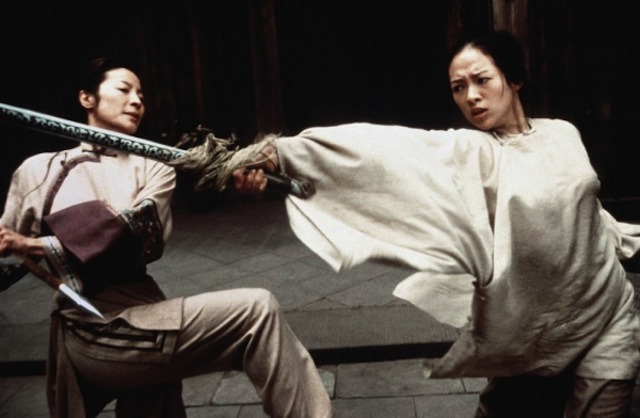
(special shout out to Crouching Tiger Hidden Dragon)
Replied by ZealotX on topic How is rank about academics and not just a popularity contest?
Manu wrote:
Kyrin Wyldstar wrote: Oh really? Because those are the principles that have been pounded into us all since I have been here. But by all means please tell me, what is the function of a knight here?
The inconsistency I see is that in the FAQs, "Rank" is explicitly stated as being related to the amount of study (academics):
Code:[b]Ranking Structure[/b] You can identify the ranks of members by the Rank Bar which can be found underneath their profile picture. These are the types of ranking in the Order: A Status is related to the rights and responsibilities (some legal) a member has. A Rank is related to the amount of study that has been accomplished. An Office is a specific organisational position held by a person. A Clerical Rank is the position within the Clergy.
It does, however, continue to clarify:
Code:[b]Knight - Rank[/b] An Apprentice who has successfully completed their apprenticeship to the satisfaction of their Teaching Master and the Council. [b][color=red]They uphold the principles of Jediism as defined by the Solemn Vow[/color][/b], and have completed the Degree to A.Div level. They can take on Apprentices of their own. A Knight must be at least eighteen years of age (18).
The Solemn Vow states a Knight's commitment to the Order via "uphold the Jedi teachings", and it mentions the duties and responsibilities of a Knight, though it does not define what those are:
Code:"I, [legal name] born on [dd/mm/yyyy], profess before all and without reservation, that I choose to devote myself to the Jedi path. I vow to uphold the Jedi teachings, to fulfil the duties and responsibilities of a knight, and to cultivate an understanding of the Force."
except that related to is not a statement of equivalence. My sister and I are related. We're obviously not the same person or have the same level of education.
What is written is there to give you an idea of "qualifications"... "qualifiers".... that's not definitive. That's like saying that anyone who finishes law school is automatically a lawyer and anyone who finishes med school is automatically a doctor.
If you keep reading the FAQs it states further qualifications (ie. must be at least 16 and must be trained). It never states that TOJO is required to train someone. That is completely at the discretion of the knights. And if I were a knight I would personally take into consideration as a major factor, the character, personality, and disposition of a person before I decided to train them because I would feel responsible for them because it would be a result of my training that would allow them to obtain a certain rank(power) which they could abuse.
So therefore, the qualifications documented are basic qualifiers true for everyone while the rest of the qualifications might change from knight to knight because it's their choice who they decide to train. And honestly, I couldn't agree more with TOJO on how one gets to the rank of knight. Just because people want something doesn't mean they should have it. As someone said, "you can't always get what you want".
(special shout out to Crouching Tiger Hidden Dragon)
Last edit: 08 May 2019 14:25 by ZealotX.
The following user(s) said Thank You: Neaj Pa Bol, Carlos.Martinez3
Please Log in to join the conversation.
08 May 2019 14:24 #338208
by Manu
I agree with you completely. I am just pointing out that it is possible to further clarify things in the FAQ page, so we can have fewer of these conversations.
I find your lack of image pasting skills disturbing. :laugh:
The pessimist complains about the wind;
The optimist expects it to change;
The realist adjusts the sails.
- William Arthur Ward
Replied by Manu on topic How is rank about academics and not just a popularity contest?
ZealotX wrote: So therefore, the qualifications documented are basic qualifiers true for everyone while the rest of the qualifications might change from knight to knight because it's their choice who they decide to train. And honestly, I couldn't agree more with TOJO on how one gets to the rank of knight. Just because people want something doesn't mean they should have it. As someone said, "you can't always get what you want".
I agree with you completely. I am just pointing out that it is possible to further clarify things in the FAQ page, so we can have fewer of these conversations.
ZealotX wrote: (special shout out to Crouching Tiger Hidden Dragon)
https://images.app.goo.gl/AoxFF3mczKBt8xZ99
I find your lack of image pasting skills disturbing. :laugh:
The pessimist complains about the wind;
The optimist expects it to change;
The realist adjusts the sails.
- William Arthur Ward
The following user(s) said Thank You: Carlos.Martinez3
Please Log in to join the conversation.
08 May 2019 14:26 #338209
by ZealotX
Replied by ZealotX on topic How is rank about academics and not just a popularity contest?
fixed! LOL
Thank you.
Thank you.
The following user(s) said Thank You: Carlos.Martinez3
Please Log in to join the conversation.
-
- User
-
Less
More
08 May 2019 14:30 #338210
by
Replied by on topic How is rank about academics and not just a popularity contest?
I can't speak for TOTJO but in other Orders, Knights are expected to be able to continue and escalate their training independently, as well as impart their own training onto prospective students. There's also expectations of a certain standard of behaviour and learning, and adherence to Jedi values.
Please Log in to join the conversation.
-
- User
-
Less
More
09 May 2019 20:48 - 09 May 2019 20:58 #338286
by
Replied by on topic How is rank about academics and not just a popularity contest?
Forgive me, I am new here, but under the Training & Ranking section of the FAQ here it explicitly states:
"A Rank is related to the amount of study that has been accomplished at the Temple."
So, that means that "Rank" should be related to the amount of study one has done, and has nothing to do with popularity at all, no?
"A Rank is related to the amount of study that has been accomplished at the Temple."
So, that means that "Rank" should be related to the amount of study one has done, and has nothing to do with popularity at all, no?
Last edit: 09 May 2019 20:58 by .
Please Log in to join the conversation.
-
- User
-
Less
More
09 May 2019 21:34 - 09 May 2019 21:34 #338291
by
Replied by on topic How is rank about academics and not just a popularity contest?
@Paralel
Certain ranks, for sure. For example, Member to Novice. Maybe even Novice to Initiate, but the ranks of Apprenticeship, Knight, Master, etc., are all based on the judgement of another member or several members in one way or another. At that point it effectively becomes a mixture of promotion by accomplishment and community intervention.
Certain ranks, for sure. For example, Member to Novice. Maybe even Novice to Initiate, but the ranks of Apprenticeship, Knight, Master, etc., are all based on the judgement of another member or several members in one way or another. At that point it effectively becomes a mixture of promotion by accomplishment and community intervention.
Last edit: 09 May 2019 21:34 by .
Please Log in to join the conversation.
09 May 2019 22:22 #338293
by Gisteron
Better to leave questions unanswered than answers unquestioned
Replied by Gisteron on topic How is rank about academics and not just a popularity contest?
And even then that description is technically out of date. By the definitions, Apprentice should be a Status rather than a Rank, since in terms of studies completed there is no difference between an Initiate and an Initiate who agreed with a Training Master to begin an apprenticeship, at least not until the first lesson has begun or concluded.
Though this discussion is more about whether the system works as described, as intended, as both, or as neither. For better or for worse, sometimes the real situation does not quite match the idealized description or prescription to the letter...
Though this discussion is more about whether the system works as described, as intended, as both, or as neither. For better or for worse, sometimes the real situation does not quite match the idealized description or prescription to the letter...
Better to leave questions unanswered than answers unquestioned
Please Log in to join the conversation.
-
- User
-
Less
More
10 May 2019 03:16 #338300
by
Replied by on topic How is rank about academics and not just a popularity contest?
I joined in 2011 and there were questions about rank. I remember seeing threads older than that questioning rank. When I was mostly an observer and lurker here post 2013 there were questions of rank. And when I logged back in from another year hiatus a few days ago what did I see? Another thread about rank, lol.
Good to see some things haven't changed; it was almost like a welcome mat at the front door ushering me back into familiar halls.
But, since it's a legit question, I'll throw my opinion in (and really just point you to what a few others have said that seems to make the most sense to me right now):
Ryu on page 8 and what ZealotX said about the difference between orders and schools.
Good to see some things haven't changed; it was almost like a welcome mat at the front door ushering me back into familiar halls.
But, since it's a legit question, I'll throw my opinion in (and really just point you to what a few others have said that seems to make the most sense to me right now):
Ryu on page 8 and what ZealotX said about the difference between orders and schools.
Please Log in to join the conversation.
10 May 2019 06:20 #338301
by Adder
Replied by Adder on topic How is rank about academics and not just a popularity contest?
I'm not sure rank here has ever been associated to any type of command structure, though I can see how it might be easily misinterpreted as such. Therefore it alone is not really a vehicle for abuse beyond individual grandstanding about it. And hierarchical structures don't necessarily act as command structures anyway, so on paper its not a problem AFAIK. But how people act within them could always be.... so, correlation does not equate causation, any problem might be for other reasons, if its an actual problem at all.
But clearly there are 'powers' in various official roles. In my experience here its the 'offices' with officers that exert different natures of official duties... being functional responsibilities to Temple operations. But these are not always aligned with rank, nor does the office hierarchy afford control over subordinate officers IMO. The hierarchies there seem to be more about incremental increases in responsibility per level or different duties with shared reporting points.
The only association between rank and authority seems to be when its used a part of prerequisites for an official duty - but not all officer roles have them, and so they are not mirrored hierarchies AFAIK.
It might be a reason why the 'Master' rank is not used for teaching masters/teaching mentors. The functional role requires various things, and turned out to be set at a particular rank for other reasons (availability of persons at level to meet demand).
Therefore rank has no ground for abuse of power unless power is given to ranks through things like votes for making decisions etc. Power though is different from abuse of power, so there is more to the discussion in that regard.
So I think power structures are based on other things, and enabled by the powers afforded by virtue of office rather then rank under normal circumstances.... in regards to here. Popularity probably is another one, but not limited to this place.
The wider Jedi stereotype, which impacts all of us in various ways directly or indirectly does tend to associate rank with increased knowledge and skill - as training is the only way to achieve that knowledge and skill and the rank in the fiction represents that obviously... but that is not relevant in real life. At least not relevant beyond an individual having knowledge and skill about themselves, their bias, their beliefs and their own experiences etc. It's useful then IMO to consider expertise being in ones particular way along a path rather then the wider path or even another person path. And I think that is the point of the Apprenticeship, to enable a closer understanding between the two parties such that both can benefit through sharing at a deeper level then can be afforded by normal means. A result of that naturally will be a bond, which can appear as popularity.
Another means to be popular is to have something others covert or admire I suppose. But I don't think being popular or coveted or admired (or not) is necessarily related to abuse of power, but rather just another means which can be abused. So like 'following the money' its good to canvas likely abuse with who has the most power, and then who is the most popular, before asserting it as institutional. Structures inherently cast shadows, and the truth is in the details which are often the hiding in the shadows of structures. So much like with anti-discrimination, it works better when people view rights as being equal access rather then equal participation, and let participation be judged on its merits in ways which can be assessed in relevant terms to the structure, else change the structure or build a different one. In that way if participation is the measure of access, then all that needs to happen is the assessment is equally applied. But things are never that easy, and its not a dogma here so the assessed is not uniform enough to be assessed equally but rather that assessment is equally applied. So rules are made to guide the process as much as possible, most of note to this is the Apprenticeship.
How people relate to being within a hierarchy is a different topic I guess, as the experience can be one of being subordinate to power structures even if the hierarchy does not contain one... for if one is attached to the idea of it having something of value then the structures becomes seen in a light which is all about the result for self - it becomes imbued with a mix of supports and obstacles which can lead a person to assert an identity politics over people which distorts their perceptions and builds high barriers of bias and self fulfilling interactions. But I'm sure there are better ways of doing it, people have been talking about it for years and many people including myself have come up with lots of different ideas on a better working system. It should probably be an ongoing process, but it hasn't changed in any appreciable way in a very long time AFAIK, so its probably due!!
But clearly there are 'powers' in various official roles. In my experience here its the 'offices' with officers that exert different natures of official duties... being functional responsibilities to Temple operations. But these are not always aligned with rank, nor does the office hierarchy afford control over subordinate officers IMO. The hierarchies there seem to be more about incremental increases in responsibility per level or different duties with shared reporting points.
The only association between rank and authority seems to be when its used a part of prerequisites for an official duty - but not all officer roles have them, and so they are not mirrored hierarchies AFAIK.
It might be a reason why the 'Master' rank is not used for teaching masters/teaching mentors. The functional role requires various things, and turned out to be set at a particular rank for other reasons (availability of persons at level to meet demand).
Therefore rank has no ground for abuse of power unless power is given to ranks through things like votes for making decisions etc. Power though is different from abuse of power, so there is more to the discussion in that regard.
So I think power structures are based on other things, and enabled by the powers afforded by virtue of office rather then rank under normal circumstances.... in regards to here. Popularity probably is another one, but not limited to this place.
The wider Jedi stereotype, which impacts all of us in various ways directly or indirectly does tend to associate rank with increased knowledge and skill - as training is the only way to achieve that knowledge and skill and the rank in the fiction represents that obviously... but that is not relevant in real life. At least not relevant beyond an individual having knowledge and skill about themselves, their bias, their beliefs and their own experiences etc. It's useful then IMO to consider expertise being in ones particular way along a path rather then the wider path or even another person path. And I think that is the point of the Apprenticeship, to enable a closer understanding between the two parties such that both can benefit through sharing at a deeper level then can be afforded by normal means. A result of that naturally will be a bond, which can appear as popularity.
Another means to be popular is to have something others covert or admire I suppose. But I don't think being popular or coveted or admired (or not) is necessarily related to abuse of power, but rather just another means which can be abused. So like 'following the money' its good to canvas likely abuse with who has the most power, and then who is the most popular, before asserting it as institutional. Structures inherently cast shadows, and the truth is in the details which are often the hiding in the shadows of structures. So much like with anti-discrimination, it works better when people view rights as being equal access rather then equal participation, and let participation be judged on its merits in ways which can be assessed in relevant terms to the structure, else change the structure or build a different one. In that way if participation is the measure of access, then all that needs to happen is the assessment is equally applied. But things are never that easy, and its not a dogma here so the assessed is not uniform enough to be assessed equally but rather that assessment is equally applied. So rules are made to guide the process as much as possible, most of note to this is the Apprenticeship.
How people relate to being within a hierarchy is a different topic I guess, as the experience can be one of being subordinate to power structures even if the hierarchy does not contain one... for if one is attached to the idea of it having something of value then the structures becomes seen in a light which is all about the result for self - it becomes imbued with a mix of supports and obstacles which can lead a person to assert an identity politics over people which distorts their perceptions and builds high barriers of bias and self fulfilling interactions. But I'm sure there are better ways of doing it, people have been talking about it for years and many people including myself have come up with lots of different ideas on a better working system. It should probably be an ongoing process, but it hasn't changed in any appreciable way in a very long time AFAIK, so its probably due!!
Please Log in to join the conversation.
-
Topic Author
- User
-
Less
More
10 May 2019 17:20 #338316
by
And yet this continues to be one of the most common assertions in this temple by those possessing such ranks. The most recent example of this is a call for "lay sermons" from outside the clergy ranks. "Lay" implying novice or inexperienced vs the "increased knowledge and expertise" of the clergy rank...
Replied by on topic How is rank about academics and not just a popularity contest?
Adder wrote:
The wider Jedi stereotype, which impacts all of us in various ways directly or indirectly does tend to associate rank with increased knowledge and skill -
And yet this continues to be one of the most common assertions in this temple by those possessing such ranks. The most recent example of this is a call for "lay sermons" from outside the clergy ranks. "Lay" implying novice or inexperienced vs the "increased knowledge and expertise" of the clergy rank...
Please Log in to join the conversation.
- Carlos.Martinez3
-
- Away
- Master
-

- Council Member
-

- Senior Ordained Clergy Person
-

Less
More
- Posts: 8036
10 May 2019 18:14 #338318
by Carlos.Martinez3
So, in your opinion , what could be the right term ? I’m all ears now ! I didn’t and don’t ever mean to offend. Ever. If I can get it right I will. What term would be acceptable ? Any ideas ?
Chaplain of the Temple of the Jedi Order
Build, not tear down.
Nosce te ipsum / Cerca trova
Replied by Carlos.Martinez3 on topic How is rank about academics and not just a popularity contest?
On rank -Kyrin Wyldstar wrote:
Adder wrote:
The wider Jedi stereotype, which impacts all of us in various ways directly or indirectly does tend to associate rank with increased knowledge and skill -
And yet this continues to be one of the most common assertions in this temple by those possessing such ranks. The most recent example of this is a call for "lay sermons" from outside the clergy ranks. "Lay" implying novice or inexperienced vs the "increased knowledge and expertise" of the clergy rank...
So, in your opinion , what could be the right term ? I’m all ears now ! I didn’t and don’t ever mean to offend. Ever. If I can get it right I will. What term would be acceptable ? Any ideas ?
Chaplain of the Temple of the Jedi Order
Build, not tear down.
Nosce te ipsum / Cerca trova
Please Log in to join the conversation.
10 May 2019 18:19 #338319
by Ben
B.Div | OCP
Replied by Ben on topic How is rank about academics and not just a popularity contest?
The term ‘lay’ as in ‘layperson’ or ‘laity’ is used in the Christian church simply to mean ‘non-ordained’ or ‘non-Clergy’, and I would imagine that is the spirit in which Carlos intended it.
B.Div | OCP
The following user(s) said Thank You: Carlos.Martinez3
Please Log in to join the conversation.
- Carlos.Martinez3
-
- Away
- Master
-
- Council Member
-
- Senior Ordained Clergy Person
-
Less
More
- Posts: 8036
10 May 2019 18:27 #338320
by Carlos.Martinez3
Chaplain of the Temple of the Jedi Order
Build, not tear down.
Nosce te ipsum / Cerca trova
Replied by Carlos.Martinez3 on topic How is rank about academics and not just a popularity contest?
It is in that spirit - is there another term we can use ? I know people will find things to point and be angry about all day on their own but if I can minimize that on my end - I’m for it. Any ideas ?
Chaplain of the Temple of the Jedi Order
Build, not tear down.
Nosce te ipsum / Cerca trova
Please Log in to join the conversation.