No Holds Barred Bible Study
-
 Topic Author
- User
-

Less
More
19 Jan 2015 14:10 - 19 Jan 2015 14:46 #177823
by
No Holds Barred Bible Study was created by
"The one who does deceitful things will not stay in my home. The one who tells lies will not remain in my presence."
Psalm 101:7
http://biblehub.com/psalms/101-7.htm
"My eyes shall be upon the faithful of the land, that they may dwell with me; He who walks in a blameless way is the one who will minister to me. 7He who practices deceit shall not dwell within my house; He who speaks falsehood shall not maintain his position before me. 8Every morning I will destroy all the wicked of the land, So as to cut off from the city of the LORD all those who do iniquity."
Psalm 101:7
http://biblehub.com/psalms/101-7.htm
"My eyes shall be upon the faithful of the land, that they may dwell with me; He who walks in a blameless way is the one who will minister to me. 7He who practices deceit shall not dwell within my house; He who speaks falsehood shall not maintain his position before me. 8Every morning I will destroy all the wicked of the land, So as to cut off from the city of the LORD all those who do iniquity."
Last edit: 19 Jan 2015 14:46 by .
Please Log in to join the conversation.
-
Topic Author
- User
-
Less
More
19 Jan 2015 14:15 #177824
by
Replied by on topic No Holds Barred Bible Study
◄ Revelation 1 ►
NET Bible
The Prologue
1The revelation of Jesus Christ, which God gave him to show his servants what must happen very soon. He made it clear by sending his angel to his servant John, 2who then testified to everything that he saw concerning the word of God and the testimony about Jesus Christ. 3Blessed is the one who reads the words of this prophecy aloud, and blessed are those who hear and obey the things written in it, because the time is near!
4From John, to the seven churches that are in the province of Asia: Grace and peace to you from “he who is,” and who was, and who is still to come, and from the seven spirits who are before his throne, 5and from Jesus Christ – the faithful witness, the firstborn from among the dead, the ruler over the kings of the earth. To the one who loves us and has set us free from our sins at the cost of his own blood 6and has appointed us as a kingdom, as priests serving his God and Father – to him be the glory and the power for ever and ever! Amen.
7(Look! He is returning with the clouds,
and every eye will see him,
even those who pierced him,
and all the tribes on the earth will mourn because of him.
This will certainly come to pass! Amen.)
8“I am the Alpha and the Omega,” says the Lord God – the one who is, and who was, and who is still to come – the All-Powerful!
9I, John, your brother and the one who shares with you in the persecution, kingdom, and endurance that are in Jesus, was on the island called Patmos because of the word of God and the testimony about Jesus. 10I was in the Spirit on the Lord’s Day when I heard behind me a loud voice like a trumpet, 11saying: “Write in a book what you see and send it to the seven churches – to Ephesus, Smyrna, Pergamum, Thyatira, Sardis, Philadelphia, and Laodicea.”
12I turned to see whose voice was speaking to me, and when I did so, I saw seven golden lampstands, 13and in the midst of the lampstands was one like a son of man. He was dressed in a robe extending down to his feet and he wore a wide golden belt around his chest. 14His head and hair were as white as wool, even as white as snow, and his eyes were like a fiery flame. 15His feet were like polished bronze refined in a furnace, and his voice was like the roar of many waters. 16He held seven stars in his right hand, and a sharp double-edged sword extended out of his mouth. His face shone like the sun shining at full strength. 17When I saw him I fell down at his feet as though I were dead, but he placed his right hand on me and said: “Do not be afraid! I am the first and the last, 18and the one who lives! I was dead, but look, now I am alive – forever and ever – and I hold the keys of death and of Hades! 19Therefore write what you saw, what is, and what will be after these things. 20The mystery of the seven stars that you saw in my right hand and the seven golden lampstands is this: The seven stars are the angels of the seven churches and the seven lampstands are the seven churches.
NET Bible
The Prologue
1The revelation of Jesus Christ, which God gave him to show his servants what must happen very soon. He made it clear by sending his angel to his servant John, 2who then testified to everything that he saw concerning the word of God and the testimony about Jesus Christ. 3Blessed is the one who reads the words of this prophecy aloud, and blessed are those who hear and obey the things written in it, because the time is near!
4From John, to the seven churches that are in the province of Asia: Grace and peace to you from “he who is,” and who was, and who is still to come, and from the seven spirits who are before his throne, 5and from Jesus Christ – the faithful witness, the firstborn from among the dead, the ruler over the kings of the earth. To the one who loves us and has set us free from our sins at the cost of his own blood 6and has appointed us as a kingdom, as priests serving his God and Father – to him be the glory and the power for ever and ever! Amen.
7(Look! He is returning with the clouds,
and every eye will see him,
even those who pierced him,
and all the tribes on the earth will mourn because of him.
This will certainly come to pass! Amen.)
8“I am the Alpha and the Omega,” says the Lord God – the one who is, and who was, and who is still to come – the All-Powerful!
9I, John, your brother and the one who shares with you in the persecution, kingdom, and endurance that are in Jesus, was on the island called Patmos because of the word of God and the testimony about Jesus. 10I was in the Spirit on the Lord’s Day when I heard behind me a loud voice like a trumpet, 11saying: “Write in a book what you see and send it to the seven churches – to Ephesus, Smyrna, Pergamum, Thyatira, Sardis, Philadelphia, and Laodicea.”
12I turned to see whose voice was speaking to me, and when I did so, I saw seven golden lampstands, 13and in the midst of the lampstands was one like a son of man. He was dressed in a robe extending down to his feet and he wore a wide golden belt around his chest. 14His head and hair were as white as wool, even as white as snow, and his eyes were like a fiery flame. 15His feet were like polished bronze refined in a furnace, and his voice was like the roar of many waters. 16He held seven stars in his right hand, and a sharp double-edged sword extended out of his mouth. His face shone like the sun shining at full strength. 17When I saw him I fell down at his feet as though I were dead, but he placed his right hand on me and said: “Do not be afraid! I am the first and the last, 18and the one who lives! I was dead, but look, now I am alive – forever and ever – and I hold the keys of death and of Hades! 19Therefore write what you saw, what is, and what will be after these things. 20The mystery of the seven stars that you saw in my right hand and the seven golden lampstands is this: The seven stars are the angels of the seven churches and the seven lampstands are the seven churches.
Please Log in to join the conversation.
-
Topic Author
- User
-
Less
More
01 Feb 2015 13:54 - 01 Feb 2015 14:27 #179621
by
Replied by on topic Paul was the first anti christ
https://www.facebook.com/pages/Saint-Paul-The-First-Antichrist/233731930000076
http://youtu.be/OmkwcGAt3XQ
http://www.justgivemethetruth.com/paul_was_a_deceiver.htm
I hear a lot of talk about open mindedness by close minded boxheads everywhere I go
Yet I go and go and go and stay and stay and stay with and against the Flow
http://youtu.be/2jVBoPCnQ7c
http://youtu.be/OmkwcGAt3XQ
http://www.justgivemethetruth.com/paul_was_a_deceiver.htm
I hear a lot of talk about open mindedness by close minded boxheads everywhere I go
Yet I go and go and go and stay and stay and stay with and against the Flow
http://youtu.be/2jVBoPCnQ7c
Last edit: 01 Feb 2015 14:27 by .
Please Log in to join the conversation.
-
- User
-
Less
More
01 Feb 2015 16:38 #179643
by
Replied by on topic No Holds Barred Bible Study
What's the discussion you're wanting to have Ghost?
Please Log in to join the conversation.
-
Topic Author
- User
-
Less
More
01 Feb 2015 17:15 - 01 Feb 2015 17:23 #179647
by
Replied by on topic No Holds Barred Bible Study
This is a No Holds Barred Bible Study. The most recent topic is Paul - the first anti-christ.
Paul comes from the Tribe of Benjamin - The Wolf.
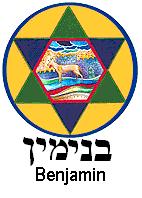

Paul comes from the Tribe of Benjamin - The Wolf.
Last edit: 01 Feb 2015 17:23 by .
Please Log in to join the conversation.

01 Feb 2015 17:34 - 01 Feb 2015 17:39 #179649
by a67
Replied by a67 on topic No Holds Barred Bible Study
I dont look by time factor but the trivia of Paul, yet its far away from now. and john are the one who wrote revelaton. before paul was really bad but when he change of name and CHOOSE to change he was not the same man. you should read the little book of jude just before revelation.
sure he was a persecutor but when he realize what he was doing he change even of name.
sure he was a persecutor but when he realize what he was doing he change even of name.
Last edit: 01 Feb 2015 17:39 by a67. Reason: sorry
Please Log in to join the conversation.
-
- User
-
Less
More
01 Feb 2015 18:53 - 01 Feb 2015 18:54 #179674
by
Replied by on topic No Holds Barred Bible Study
lol, the very first big point made int he first video is that Jesus came to fulfill the law. There are three huge errors in that statement.
The first is that a big deal is made later about Paul never having met Jesus, so how can Paul speak on Jesus' behalf? And yet "evidence" from the Bible (Matthew 5:17) about the true intention of Jesus is presented by an author who... never met Jesus?
Second, if the intention of Jesus was to fulfill the law then why is it mentioned only in Matthew?
Third, this point is tied into the second one, but by simply picking and choosing a passage from the bible and saying "there we go look I'm right" it is entirely failing to take into consideration many of the other factors that were behind the writing of it.
Take for instance that there are four Gospels, and yet each Gospel talks about Jesus in a different way. Mark speaks of Jesus as the Son of Man, Matthew as the King of Jews, Luke as the Saviour of the World and John as the Son of God. So why on earth are they all different? Most likely because they were all targeted at different audiences, in this instance Matthew's target audience was Jewish converts to Christianity. It would be very appealing to Jews to know that they didn't have to change any of their previous practices...
Other miscellaneous points include what exactly "fulfill" means, furhtermore whether there is even a "right" answer to that question. Doesn't all of these presuppose that the "right" answer is whatever Jesus originally intended, begging the question as to how we could ever know what Jesus originally intended?
But you know what? If Jesus was as kind and peace-loving as he is made out to be then that would lead one to hope that such doctrinal distinctions probably don't matter all that much, what matters is being a good person so getting hung up on who said what to whom and who intended what etc does more harm than good?
If Paul was the "anti-christ" (a hugely loaded term) then wouldn't that be second to whether he was a good person?
The first is that a big deal is made later about Paul never having met Jesus, so how can Paul speak on Jesus' behalf? And yet "evidence" from the Bible (Matthew 5:17) about the true intention of Jesus is presented by an author who... never met Jesus?
Second, if the intention of Jesus was to fulfill the law then why is it mentioned only in Matthew?
Third, this point is tied into the second one, but by simply picking and choosing a passage from the bible and saying "there we go look I'm right" it is entirely failing to take into consideration many of the other factors that were behind the writing of it.
Take for instance that there are four Gospels, and yet each Gospel talks about Jesus in a different way. Mark speaks of Jesus as the Son of Man, Matthew as the King of Jews, Luke as the Saviour of the World and John as the Son of God. So why on earth are they all different? Most likely because they were all targeted at different audiences, in this instance Matthew's target audience was Jewish converts to Christianity. It would be very appealing to Jews to know that they didn't have to change any of their previous practices...
Other miscellaneous points include what exactly "fulfill" means, furhtermore whether there is even a "right" answer to that question. Doesn't all of these presuppose that the "right" answer is whatever Jesus originally intended, begging the question as to how we could ever know what Jesus originally intended?
But you know what? If Jesus was as kind and peace-loving as he is made out to be then that would lead one to hope that such doctrinal distinctions probably don't matter all that much, what matters is being a good person so getting hung up on who said what to whom and who intended what etc does more harm than good?
If Paul was the "anti-christ" (a hugely loaded term) then wouldn't that be second to whether he was a good person?
Last edit: 01 Feb 2015 18:54 by .
Please Log in to join the conversation.
-
Topic Author
- User
-
Less
More
01 Feb 2015 18:59 - 01 Feb 2015 19:23 #179675
by
Replied by on topic Paul was the first Anti Christ
Paul was not a good person according to the bible. He was a murderer. Do you know lots of murderers that are good people? Many of them convert and claim to be good people after they get caught or to fulfill certain agendas.
The second video goes more in depth, but also goes off into some stuff I am not interested in.
The second video goes more in depth, but also goes off into some stuff I am not interested in.
Last edit: 01 Feb 2015 19:23 by .
Please Log in to join the conversation.
-
- User
-
Less
More
01 Feb 2015 19:05 #179678
by
If people couldn't redeem themselves, atone for their sins or be forgiven then Jesus must have been wasting his time.
Even if Paul had an agenda we would judge it based on his actions. So we end up talking about what it was Paul did after his experience anyway.
Replied by on topic No Holds Barred Bible Study
ghost dog wrote: Paul was not a good person according to the bible. He was a murderer. Do you know lots of murderers that are good people? Many of them convert and claim to be good people after they get caught or to fulfill certain agendas.
If people couldn't redeem themselves, atone for their sins or be forgiven then Jesus must have been wasting his time.
Even if Paul had an agenda we would judge it based on his actions. So we end up talking about what it was Paul did after his experience anyway.
Please Log in to join the conversation.
-
Topic Author
- User
-
Less
More
01 Feb 2015 19:06 - 01 Feb 2015 19:19 #179679
by
Replied by on topic Paul was the first Anti Christ
http://www.thenazareneway.com/The%20Gospel%20of%20Paul.htm
http://www.thenazareneway.com/concerning_paul_and_the_disciple.htm
http://www.thenazareneway.com/Mary%20Magdalene%20Great%20Mother-Goddess%20Queen.htm
to redeem yourself you have to have a repentance, complete change, but if one's claimed redemption is to continue to destroy something then there was no repentance or desired redemption.
allegory
http://www.thenazareneway.com/concerning_paul_and_the_disciple.htm
Luke-Acts and Revelation were written in Allegory in order to preserve the true story of Jesus the Nazarene and Mary Magdalene.
The Nazarenes were under attack and feared total destruction of their doctrine. Allegory was their only hope of saving their history
from destruction at the hands of their enemy, Saulus, aka "The Apostle Paul. "
http://www.thenazareneway.com/Mary%20Magdalene%20Great%20Mother-Goddess%20Queen.htm
to redeem yourself you have to have a repentance, complete change, but if one's claimed redemption is to continue to destroy something then there was no repentance or desired redemption.
allegory
Last edit: 01 Feb 2015 19:19 by .
Please Log in to join the conversation.
-
Topic Author
- User
-
Less
More
01 Feb 2015 19:21 - 01 Feb 2015 19:22 #179681
by
you are missing the whole point. it seems you are still buying into Saul's lies about who "Jesus" was.
Replied by on topic No Holds Barred Bible Study
If people couldn't redeem themselves, atone for their sins or be forgiven then Jesus must have been wasting his time.
you are missing the whole point. it seems you are still buying into Saul's lies about who "Jesus" was.
Last edit: 01 Feb 2015 19:22 by .
Please Log in to join the conversation.
-
- User
-
Less
More
01 Feb 2015 19:33 #179683
by
Replied by on topic Paul was the first Anti Christ
Ok then, ignoring all the accounts from Paul, who was Jesus and what evidence can we use to inform ourselves that this is an accurate representation?
Please Log in to join the conversation.
-
Topic Author
- User
-
Less
More
01 Feb 2015 19:38 - 01 Feb 2015 19:42 #179684
by
Replied by on topic Paul was the first Anti Christ
The people who actually knew him such as Mary Magdalene.
There is a lot of information here on this website as well as some of the information links in previous post.
http://gnosis.org/library/marygosp.htm
There is a lot of information here on this website as well as some of the information links in previous post.
http://gnosis.org/library/marygosp.htm
Last edit: 01 Feb 2015 19:42 by .
Please Log in to join the conversation.
-
- User
-
Less
More
01 Feb 2015 20:08 #179687
by
That doesn't answer what I asked, and I am not going to trawl through a whole website to try and find it. Point to specific sources please.
What evidence can you provide that the gospel was told by Mary Magdalene herself? Is there evidence to suggest that it was written while Jesus was still alive? Or recorded by someone who met Jesus?
Replied by on topic Paul was the first Anti Christ
ghost dog wrote: The people who actually knew him such as Mary Magdalene.
There is a lot of information here on this website as well as some of the information links in previous post.
http://gnosis.org/library/marygosp.htm
That doesn't answer what I asked, and I am not going to trawl through a whole website to try and find it. Point to specific sources please.
What evidence can you provide that the gospel was told by Mary Magdalene herself? Is there evidence to suggest that it was written while Jesus was still alive? Or recorded by someone who met Jesus?
Please Log in to join the conversation.
-
Topic Author
- User
-
Less
More
01 Feb 2015 20:22 - 01 Feb 2015 20:29 #179695
by
This episode of No Holds Barred Bible Study is about the conflict within the Bible pertaining to the disciples fear, distrust, and identification of who Saul/Paul was. He was an impostor and persecutor not an apostle or disciple according to the Bible.
People largely dismiss all common sense evidence for what happened around a decade ago. We have to work with the evidence we have. The Bible itself provides the evidence for this episode.
Replied by on topic Paul was the first Anti Christ
ghost dog wrote: http://www.thenazareneway.com/The%20Gospel%20of%20Paul.htm
http://www.thenazareneway.com/concerning_paul_and_the_disciple.htm
That is what this post was.
Luke-Acts and Revelation were written in Allegory in order to preserve the true story of Jesus the Nazarene and Mary Magdalene.
The Nazarenes were under attack and feared total destruction of their doctrine. Allegory was their only hope of saving their history
from destruction at the hands of their enemy, Saulus, aka "The Apostle Paul. "
http://www.thenazareneway.com/Mary%20Magdalene%20Great%20Mother-Goddess%20Queen.htm
to redeem yourself you have to have a repentance, complete change, but if one's claimed redemption is to continue to destroy something then there was no repentance or desired redemption.
allegory
This episode of No Holds Barred Bible Study is about the conflict within the Bible pertaining to the disciples fear, distrust, and identification of who Saul/Paul was. He was an impostor and persecutor not an apostle or disciple according to the Bible.
People largely dismiss all common sense evidence for what happened around a decade ago. We have to work with the evidence we have. The Bible itself provides the evidence for this episode.
Last edit: 01 Feb 2015 20:29 by .
Please Log in to join the conversation.
- Carlos.Martinez3
-
- Offline
- Master
-

- Council Member
-

- Senior Ordained Clergy Person
-

Less
More
- Posts: 8057
02 Feb 2015 03:44 - 02 Feb 2015 03:45 #179749
by Carlos.Martinez3
Chaplain of the Temple of the Jedi Order
Build, not tear down.
Nosce te ipsum / Cerca trova
Replied by Carlos.Martinez3 on topic No Holds Barred Bible Study
Question, besides the bible is there evidence of any of this really happening? What is it you are seeking? Answers? Questions? Validations? Knowledge on subject? Which subject? I apologize for my ignorance but my phone can't watch the videos.
Chaplain of the Temple of the Jedi Order
Build, not tear down.
Nosce te ipsum / Cerca trova
Last edit: 02 Feb 2015 03:45 by Carlos.Martinez3.
Please Log in to join the conversation.
02 Feb 2015 05:09 - 02 Feb 2015 05:10 #179755
by Br. John
Founder of The Order
Replied by Br. John on topic No Holds Barred Bible Study
Which Paul ghost-dog? There are four.
Many of the books in the New Testament attributed to Paul were not written by Paul.
See: http://www.biblicalarchaeology.org/daily/people-cultures-in-the-bible/people-in-the-bible/the-quest-for-the-historical-paul/
"Thirteen of the New Testament’s twenty-seven documents are letters with Paul’s name as the author, and a fourteenth, the book of Acts, is mainly devoted to the story of Paul’s life and career—making up over half the total text.[iv] The problem is, these fourteen texts fall into four distinct chronological tiers, giving us our four “Pauls”:
1) Authentic or Early Paul: 1 Thessalonians, Galatians, 1 and 2 Corinthians, Romans, Philippians, and Philemon (50s-60s A.D.)
2) Disputed Paul or Deutero-Pauline: 2 Thessalonians, Ephesians, Colossians (80-100 A.D.)
3) Pseudo-Paul or the Pastorals: 1 and 2 Timothy, Titus (80-100 A.D.)
4) Tendentious or Legendary Paul: Acts of the Apostles (90-130 A.D.)
"Though scholars differ as to what historical use one might properly make of tiers 2, 3, or 4, there is almost universal agreement that a proper historical study of Paul should begin with the seven genuine letters, restricting one’s analysis to what is most certainly coming from Paul’s own hand."
Then there's this.
The books in the New Testament are not placed in the order in which they were written. If they were it would be like this:
By Marcus Borg
Canon Theologian, Trinity Episcopal Cathedra
See: http://www.huffingtonpost.com/marcus-borg/a-chronological-new-testament_b_1823018.html
1) Thessalonians
"The first document in this chronological New Testament is Paul's letter to a Christ-community in Thessalonica, the capital city of Macedonia, a province in northern Greece. It was written around the year 50, possibly a year or two earlier. Somewhat surprisingly, given the movement's origin among Jews in the Jewish homeland, the earliest Christian document is written to a community in Europe, which was largely Gentile." (Evolution of the Word: The New Testament in the Order the Books Were Written)
2) Galatians
"Whether this letter should be second in a chronological New Testament is a toss-up. The other serious candidate is Paul's first letter to Corinth, customarily dated around 54. Because some scholars date Galatians as early as 50 and many others in the first half of the 50s, I have decided to put it before 1 Corinthians." (Evolution of the Word: The New Testament in the Order the Books Were Written)
3) 1 Corinthians
"First Corinthians is the second longest of Paul's letters. Only Romans is longer, and thus this letter comes right after Romans in the canonical New Testament. But in this chronological New Testament, it comes after 1 Thessalonians and Galatians. According to Acts, Paul created a Christ-community in Corinth in southern Greece around the year 50." (Evolution of the Word: The New Testament in the Order the Books Were Written)
4) Philemon
"In the canonical New Testament, Philemon is the last of the 13 letters attributed to Paul because it is the shortest, only 25 verses long, so brief it is not even divided into chapters. But in this chronological New Testament, it comes early, in the middle of the seven letters universally accepted as by Paul himself. Philemon is one of Paul's 'prison letters. From details in the letter, we know that it was a Roman prison. Some scholars think it was in the city of Rome and thus date Philemon to Paul's imprisonment there in the early 60s. But there were Roman prisons throughout the empire, especially in provincial capitals such as Ephesus in Asia Minor. A majority think these two letters were written during an imprisonment in Ephesus in the mid-50s. Because they were written near each other in time, it is arbitrary to place one ahead of the other. For didactic rather than historical reasons, I have put Philemon before Philippians." (Evolution of the Word: The New Testament in the Order the Books Were Written)
5) Philippians
"Philippians is the most consistently affectionate of Paul's letters. Philippi was the capital of ancient Macedonia, in northern Greece. According to Acts 16, it was the first city in Europe in which Paul founded a Christ-community after leaving Asia Minor in the late 40s. We do not know if he had visited it in the years since, though it seems likely, given his visits to Macedonia. In any case, his relationship to the community seems to have been uncomplicated. The tone of the letter is not only affectionate, but filled with gratitude. It also contains important and extraordinary passages. Like Philemon, Philippians was written from a Roman prison, probably from the same imprisonment in Ephesus in the mid-50s. Unlike in the closing of Philemon, in which Paul writes that he hopes to be freed, in his letter he is uncertain about whether his imprisonment might end in execution." (Evolution of the Word: The New Testament in the Order the Books Were Written)
6) 2 Corinthians
"Second Corinthians is not a single letter, but a combination of at least three letters from Paul to the Christ-community in Corinth. Though there is consensus within modern scholarship about its composite character, there is no unanimity about the extent of each letter. The most common divisions are chapters 1-7, 8-9, and 10-13, though probably not in that sequence. The community in Corinth preserved these letters and later combined them into one letter as 2 Corinthians. That this letter combines several letters is important not only for reading and interpreting it, but also because it provides a vivid glimpse of Paul's continuing relationship to one of his communities. Recall that Paul founded the community in Corinth around the year 50 and spent a year or two there. Recall also that 1 Corinthians refers to a previous letter that he had written to the Corinthians and also to a letter he had received from them. Second Corinthians adds to this correspondence." (Evolution of the Word: The New Testament in the Order the Books Were Written)
7) Romans
"Paul's letter to the Christ-communities in Rome is distinctive in many ways. It is his longest letter. Only 1 Corinthians is a serious rival. It is the only letter he wrote to people he didn't know; Paul had never been to Rome. Unlike his other letters, it does not deal with highly specific issues like whether it's acceptable to eat meat sacrificed to idols, for women to prophesy with their heads uncovered, for male Gentile converts to remain uncircumcised, or for a Christian master to have a Christian slave. Except for a brief section near the end on 'weak' and 'strong' within the community, Romans has none of this specificity. It is probably his last letter. Though a small minority of scholars think that the 'prison letters' -- Philippians, Philemon and Colossians -- are later, most think Romans is the last of the universally agreed upon seven genuine letters of Paul. He wrote it from Corinth around the year 58, just before he began what became his final journey to Jerusalem, arrest, imprisonment, and eventual execution in Rome itself." (Evolution of the Word: The New Testament in the Order the Books Were Written)
 Mark (Gospel)
"Around the year 70, an early Christian put the story of Jesus into written form for the first time. Though the location is uncertain, the best guess is a Christ-community near the northern border of Galilee in the Jewish homeland. We call the document 'Mark,' though it is not certain that somebody named 'Mark' wrote it. The gospel does not name the author; he did not write 'The Gospel According to Mark' at the top of the first page. So also the authors of Matthew, Luke, and John do not name themselves. Names were assigned only in the second century when the existence of several gospels required a way of distinguishing among them. Perhaps somebody named 'Mark' wrote the earliest gospel, and perhaps not. It really doesn't matter; its value doesn't depend upon who wrote it. But we will call him and his gospel 'Mark.' (Evolution of the Word: The New Testament in the Order the Books Were Written)
9) James
"The dating and authority of James are inextricably intertwined. The author identifies himself as 'James' (1.1). For centuries, Christian tradition took it for granted that the author was James, the brother of Jesus. According to Acts and Paul, James was the 'leader' or 'head' of the Christian community in Jerusalem. He was executed in the early 60s. If by this James, the letter must have been written before the early 60s, thus making it earlier than any of the gospels. Indeed, some scholars argue that it could have been written in the 40s or 50s, which could make it as early or even earlier than the letters of Paul -- perhaps the earliest document in the New Testament. But the majority of mainstream scholars do not think the author was the brother of Jesus. The author does not say so, but describes himself simply as 'James, a servant of God and of the Lord Jesus Christ.' Moreover, his use of Greek language and grammar is quite sophisticated -- not impossible for a brother of Jesus from the peasant class who native language was Aramaic, but at least somewhat unlikely. If the author was not the brother of Jesus, then its date becomes wide open. There is no scholarly consensus. Estimates range the 70s or 80s to as late as the early 100s. I have decided to place it in the 70s or 80s, later than Mark, but before Matthew, because much of James seems like early tradition." (Evolution of the Word: The New Testament in the Order the Books Were Written)
10) Colossians
"Colossians is almost certainly the earliest of the letters attributed to Paul but not actually written by him. Its strongest literary connections are to Ephesians, whose author most likely knew Colossians. Ephesians was most likely written no later than around the year 90, and thus Colossians must have been written earlier, probably in the 80s." (Evolution of the Word: The New Testament in the Order the Books Were Written)
11) Matthew (Gospel)
"Matthew was written a decade or two after Mark, in the 80s or perhaps early 90s. Along with John, it is one of two gospels named after a disciple of Jesus. According to 9.9, Matthew was a tax collector before Jesus called him to be a disciple. Mark and Luke tell the same story, but name the tax collector 'Levi.' They could be different names for the same person. The name Matthew also appears in all the lists of the 12 disciples in the gospels and Acts. For centuries, it has been taken for granted that this gospel was written by this Matthew, and thus by an eyewitness to the historical life of Jesus. And not just any eyewitness, but one of the inner circle of 12." (Evolution of the Word: The New Testament in the Order the Books Were Written)
12) Hebrews
"The document we know as 'the letter to the Hebrews' is exceptionally rich. Its central and best-known metaphor presents Jesus as the 'great high priest' who offers himself as the 'once for all' sacrifice. Its chapters on faith is one of the most famous in the New Testament. Its creative use of texts from the Jewish Bible, especially from Psalms and the prophets, is powerful. We do not know who wrote it. In the 200s, an early Christian theologian named Origen said that its author 'was known only to God.' In the centuries since, there have been guesses, Around the year 400, Augustine and Jerome suggested it was written by Paul, and thus it has sometimes been called the 14th letter of Paul. But there is no reason to think Paul wrote it, and many reasons to think he did not. Other guesses have included Barnabas, Apollos, and Priscilla. None is persuasive, and modern scholarship agrees with Origen: God only knows who wrote it." (Evolution of the Word: The New Testament in the Order the Books Were Written)
13) John (Gospel)
"Mainline scholars commonly date John around the year 90. Most also think that John has earlier and later layers. The clearest example is that the gospel seems to end twice -- once at the end of chapter 20 and again at the end of chapter 21. The most plausible explanation is that John 21 was added to a 'first edition' that ended with John 20. Scholars have also argued that the author may have had what is commonly called a 'signs source.' Despite uncertainty about what might be earlier and what is likely later, there is a strong consensus that the form in which we have John came from the decade of the 90s. It tells us how Jesus was spoken of in a Christian community near the end of the first century. It does not tell us very much about how Jesus himself spoke." (Evolution of the Word: The New Testament in the Order the Books Were Written)
14) Ephesians
"Like Colossians, Ephesians is one of the 'disputed' letters of Paul. A minority of modern scholars argue that it was written by Paul, but a majority have concluded that it was written by a generation or so after Paul's death. Though it has the typical forms of a Pauline letter and echoes some important themes from the seven genuine letters of Paul, it also differs in a number of ways. The framework for dating it is created by its close parallels to parts of Colossians that indicate that Colossians is earlier; and it seems to have been known by the Christian author Ignatius around the year 100. The suggests a date around 90." (Evolution of the Word: The New Testament in the Order the Books Were Written)
15) Revelation
"Because Revelation refers to persecution, it has been commonly dated either in the mid to late 60s, shortly after Nero's persecution, or in the mid-90s near the end of the reign of the emperor Dormitian (c. 96 CE). But Nero's persecution of Christians was confined to the city of Rome and did not affect Asia Minor, and the historical evidence for official Roman persecution under Dormitian is very weak. Moreover, the document itself does not indicate that large-scale persecution was already under way. The letter to Smyrna warns that suffering is imminent, but has not yet begun: "Do not fear what you are about to suffer. Beware, the devil is about to throw some of you into prison so that you may be tested, and for ten days you will have affliction. Be faithful until death" (2.10). The letter to Pergamum names one Christian who has already been killed (2.13). One of the visions refers to 'those who had been slaughtered for the word of God and for the testimony they had given' and to future persecution of 'their brothers and sisters, who were soon to be killed' (6.9-11). But the massive persecution of which it warns is still future from its point in time. Thus most contemporary scholars affirm that the persecutions in Revelation were unofficial, local, sporadic, and not official Roman persecution. With the link to Roman persecution severed, the primary reason for dating it in the 60s or the 90s is gone. Along with most scholars, I date it no earlier than the 90s, in part because its criticism of Christians in the seven communities sounds as though it is directed to second- or third- generation followers of Jesus who have begun to accommodate to the norms and values of the dominant culture. But it is also possible that it was written in the early decades of the second century." (Evolution of the Word: The New Testament in the Order the Books Were Written)
16) Jude
"Jude is perhaps the strangest document in the New Testament. It is one of the shortest, about a page long,and is the most enigmatic. Its authorship, the community to which it was addressed, and its date involve more 'guesswork' than any other document. The author identifies himself as 'Jude, a servant of Jesus Christ and brother of James' (v.1). Jude (Judas) was a common name in New Testament times. According to Mark 6.3, one of Jesus's brothers was named Jude. Because the author of this letter also identifies himself as 'brother of James,' another brother of Jesus and leader of the Christ-community in Jerusalem, it was taken for granted until recently that the author was also a brother of Jesus. If so, that would make Jude one of the earliest documents in the New Testament. But modern mainline scholars have concluded that it was written much later. The precision is impossible, most date it around 100. It contains nothing that suggests the location of either the author or its recipients." (Evolution of the Word: The New Testament in the Order the Books Were Written)
17) 1 John, 2 John and 3 John
'Three letters are attributed to 'John' in the New Testament. The first is the most substantial and important. Five chapters long, it emphasizes love as much as any document in the New Testament. The other two are less than a page long and are among the shortest documents in Christian scripture. Dating these letters is difficult. There is a consensus that they are later than the gospel of John, most likely written around 100. But there is no way of knowing whether all were written at about the same time or whether they might be separated by a decade or more. I have decided to keep them together without any particularly good reason to do so, just as there is no particularly good reason to do so, just as there is no particularly good reason to separate them chronologically." (Evolution of the Word: The New Testament in the Order the Books Were Written)
18) 2 John
As mentioned in the previous slide, this letter was most likely written around 100.
19) 3 John
As mentioned in the previous slide, this letter was most likely written around 100.
20) Luke (Gospel)
"The gospel of Luke and Acts of the Apostles belong together. For about a century, the conventional wisdom of mainline scholarship has dated Luke and Acts to the late 80s or 90s. But in the last decade, a growing number of scholars have dated them significantly later, in the first decade or two of the second century. Thus there is no consensus about their dating, though probably at least a slight majority still favor the 80s to 90s. They see Luke, like Matthew, as written a decade or two after Mark and thus as a voice from a generation or so later. In this view, there is no compelling reason to date Matthew earlier than Luke or vice versa. Thus Luke and Acts would belong in the first half of the New Testament chronologically -- not long after Mark, roughly contemporary with Matthew, and before John, Revelation, and several letters. Dating them later, as I do, is the exception to the rule that I have sought to follow, which is to reflect consensus conclusion when possible, and, when there is no consensus, to follow majority opinion. The growing movement to date Luke and Acts in the early second century has more than one foundation. Some scholars argue that the author knew passages from the works of Josephus, a Jewish historian who wrote in the 90s, thus making Luke-Acts later than that. Though the evidence that the author dd know the writings of Josephus is not completely persuasive, there is another reason for a date a decade or two later than Matthew, namely, both Luke and Acts emphasize the constant rejection of Jesus by 'the Jews.'" (Evolution of the Word: The New Testament in the Order the Books Were Written)
21) Acts
As mentioned in the previous slide, this letter is dated to the first decade or two of the second century.
22) 2 Thessalonians
"Paul's first letter to the Christ-community in Thessalonica in northern Greece is the earliest document in the New Testament, but 2 Thessalonians is one of the disputed letters of Paul. The majority of mainstream scholars do not think it was written by Paul, but by someone writing in his name some three to four decades after his martyrdom in the 60s." (Pg. 547) (Evolution of the Word: The New Testament in the Order the Books Were Written)
23) 1 Peter
Two letters in the New Testament are attributed to Peter, the most important of Jesus' male disciples, who was executed in Rome around the year 64. But the majority of mainstream scholars do not think that either one was written by Peter. The letters reflect a later historical context. Moreover, they were not written by the same person. Second Peter is significantly later than 1 Peter. There is no unanimity about [1 Peter's] date. Some mainline scholars date it to around 90 or as early as 80s. The reason is that some think that the author of 1 Clement, an early Christian letter not in the New Testament but dated by some to around the year 96, knew of 1 Peter. If so, 95 or so is the latest possible date for 1 Peter. But is is not clear that 1 Clement was written that early. Moreover, because both 1 Clement and 1 Peter were most likely written in Rome, their authors might well have known each other. Given that, similarity of language need not mean literary dependence. Some of its themes, especially its endorsement of Roman authority and imperial conventions about slavery, suggest a date early in the second century." (Evolution of the Word: The New Testament in the Order the Books Were Written)
24) 1 Timothy
"In the canonical New Testament, 1 Timothy is the first of three letters known as the 'pastoral letters' or 'pastoral epistles.' The other two are 2 Timothy and Titus. They are called 'pastoral' in part because they are addressed to two early Christian 'pastors,' Timothy and Titus. 'Pastor' did not yet refer to an official institutional role, but had its ancient meaning of shepherd, leader of the flock. Their themes are also pastoral, providing practical advice for ordering the community's life. Though all three letters claim to be written by Paul, most modern scholars see them as written long after his death in the first decades of the second century. There is a consensus that they were all written by teh same person. But was that person Paul? For more than one reason, authorship by Paul has been rejected." (Evolution of the Word: The New Testament in the Order the Books Were Written)
25) 2 Timothy
As mentioned in the previous slide, along with 1 Timothy, 2 Timothy was composed in the first decades of the second century. (Evolution of the Word: The New Testament in the Order the Books Were Written)
26) Titus
As mentioned in previous slides, along with 1 Timothy and 2 Timothy, it this letter is believed to have been composed in the first decades of the second century.
27) 2 Peter
"There is a strong scholarly consensus that 2 Peter is the last New Testament document to be written. Some date it as late as 150, and most date it between 120 and 150. Among the reasons for its late dating are its references to 1 Peter (3.1), its mention of the letters of Paul (3.15-16), and its use of phrases from the letter of Jude. In addition, it offers an explanation for the delay of the second coming of Jesus (3.3-10)." (Evolution of the Word: The New Testament in the Order the Books Were Written)
Many of the books in the New Testament attributed to Paul were not written by Paul.
See: http://www.biblicalarchaeology.org/daily/people-cultures-in-the-bible/people-in-the-bible/the-quest-for-the-historical-paul/
"Thirteen of the New Testament’s twenty-seven documents are letters with Paul’s name as the author, and a fourteenth, the book of Acts, is mainly devoted to the story of Paul’s life and career—making up over half the total text.[iv] The problem is, these fourteen texts fall into four distinct chronological tiers, giving us our four “Pauls”:
1) Authentic or Early Paul: 1 Thessalonians, Galatians, 1 and 2 Corinthians, Romans, Philippians, and Philemon (50s-60s A.D.)
2) Disputed Paul or Deutero-Pauline: 2 Thessalonians, Ephesians, Colossians (80-100 A.D.)
3) Pseudo-Paul or the Pastorals: 1 and 2 Timothy, Titus (80-100 A.D.)
4) Tendentious or Legendary Paul: Acts of the Apostles (90-130 A.D.)
"Though scholars differ as to what historical use one might properly make of tiers 2, 3, or 4, there is almost universal agreement that a proper historical study of Paul should begin with the seven genuine letters, restricting one’s analysis to what is most certainly coming from Paul’s own hand."
Then there's this.
The books in the New Testament are not placed in the order in which they were written. If they were it would be like this:
By Marcus Borg
Canon Theologian, Trinity Episcopal Cathedra
See: http://www.huffingtonpost.com/marcus-borg/a-chronological-new-testament_b_1823018.html
1) Thessalonians
"The first document in this chronological New Testament is Paul's letter to a Christ-community in Thessalonica, the capital city of Macedonia, a province in northern Greece. It was written around the year 50, possibly a year or two earlier. Somewhat surprisingly, given the movement's origin among Jews in the Jewish homeland, the earliest Christian document is written to a community in Europe, which was largely Gentile." (Evolution of the Word: The New Testament in the Order the Books Were Written)
2) Galatians
"Whether this letter should be second in a chronological New Testament is a toss-up. The other serious candidate is Paul's first letter to Corinth, customarily dated around 54. Because some scholars date Galatians as early as 50 and many others in the first half of the 50s, I have decided to put it before 1 Corinthians." (Evolution of the Word: The New Testament in the Order the Books Were Written)
3) 1 Corinthians
"First Corinthians is the second longest of Paul's letters. Only Romans is longer, and thus this letter comes right after Romans in the canonical New Testament. But in this chronological New Testament, it comes after 1 Thessalonians and Galatians. According to Acts, Paul created a Christ-community in Corinth in southern Greece around the year 50." (Evolution of the Word: The New Testament in the Order the Books Were Written)
4) Philemon
"In the canonical New Testament, Philemon is the last of the 13 letters attributed to Paul because it is the shortest, only 25 verses long, so brief it is not even divided into chapters. But in this chronological New Testament, it comes early, in the middle of the seven letters universally accepted as by Paul himself. Philemon is one of Paul's 'prison letters. From details in the letter, we know that it was a Roman prison. Some scholars think it was in the city of Rome and thus date Philemon to Paul's imprisonment there in the early 60s. But there were Roman prisons throughout the empire, especially in provincial capitals such as Ephesus in Asia Minor. A majority think these two letters were written during an imprisonment in Ephesus in the mid-50s. Because they were written near each other in time, it is arbitrary to place one ahead of the other. For didactic rather than historical reasons, I have put Philemon before Philippians." (Evolution of the Word: The New Testament in the Order the Books Were Written)
5) Philippians
"Philippians is the most consistently affectionate of Paul's letters. Philippi was the capital of ancient Macedonia, in northern Greece. According to Acts 16, it was the first city in Europe in which Paul founded a Christ-community after leaving Asia Minor in the late 40s. We do not know if he had visited it in the years since, though it seems likely, given his visits to Macedonia. In any case, his relationship to the community seems to have been uncomplicated. The tone of the letter is not only affectionate, but filled with gratitude. It also contains important and extraordinary passages. Like Philemon, Philippians was written from a Roman prison, probably from the same imprisonment in Ephesus in the mid-50s. Unlike in the closing of Philemon, in which Paul writes that he hopes to be freed, in his letter he is uncertain about whether his imprisonment might end in execution." (Evolution of the Word: The New Testament in the Order the Books Were Written)
6) 2 Corinthians
"Second Corinthians is not a single letter, but a combination of at least three letters from Paul to the Christ-community in Corinth. Though there is consensus within modern scholarship about its composite character, there is no unanimity about the extent of each letter. The most common divisions are chapters 1-7, 8-9, and 10-13, though probably not in that sequence. The community in Corinth preserved these letters and later combined them into one letter as 2 Corinthians. That this letter combines several letters is important not only for reading and interpreting it, but also because it provides a vivid glimpse of Paul's continuing relationship to one of his communities. Recall that Paul founded the community in Corinth around the year 50 and spent a year or two there. Recall also that 1 Corinthians refers to a previous letter that he had written to the Corinthians and also to a letter he had received from them. Second Corinthians adds to this correspondence." (Evolution of the Word: The New Testament in the Order the Books Were Written)
7) Romans
"Paul's letter to the Christ-communities in Rome is distinctive in many ways. It is his longest letter. Only 1 Corinthians is a serious rival. It is the only letter he wrote to people he didn't know; Paul had never been to Rome. Unlike his other letters, it does not deal with highly specific issues like whether it's acceptable to eat meat sacrificed to idols, for women to prophesy with their heads uncovered, for male Gentile converts to remain uncircumcised, or for a Christian master to have a Christian slave. Except for a brief section near the end on 'weak' and 'strong' within the community, Romans has none of this specificity. It is probably his last letter. Though a small minority of scholars think that the 'prison letters' -- Philippians, Philemon and Colossians -- are later, most think Romans is the last of the universally agreed upon seven genuine letters of Paul. He wrote it from Corinth around the year 58, just before he began what became his final journey to Jerusalem, arrest, imprisonment, and eventual execution in Rome itself." (Evolution of the Word: The New Testament in the Order the Books Were Written)
Mark (Gospel)"Around the year 70, an early Christian put the story of Jesus into written form for the first time. Though the location is uncertain, the best guess is a Christ-community near the northern border of Galilee in the Jewish homeland. We call the document 'Mark,' though it is not certain that somebody named 'Mark' wrote it. The gospel does not name the author; he did not write 'The Gospel According to Mark' at the top of the first page. So also the authors of Matthew, Luke, and John do not name themselves. Names were assigned only in the second century when the existence of several gospels required a way of distinguishing among them. Perhaps somebody named 'Mark' wrote the earliest gospel, and perhaps not. It really doesn't matter; its value doesn't depend upon who wrote it. But we will call him and his gospel 'Mark.' (Evolution of the Word: The New Testament in the Order the Books Were Written)
9) James
"The dating and authority of James are inextricably intertwined. The author identifies himself as 'James' (1.1). For centuries, Christian tradition took it for granted that the author was James, the brother of Jesus. According to Acts and Paul, James was the 'leader' or 'head' of the Christian community in Jerusalem. He was executed in the early 60s. If by this James, the letter must have been written before the early 60s, thus making it earlier than any of the gospels. Indeed, some scholars argue that it could have been written in the 40s or 50s, which could make it as early or even earlier than the letters of Paul -- perhaps the earliest document in the New Testament. But the majority of mainstream scholars do not think the author was the brother of Jesus. The author does not say so, but describes himself simply as 'James, a servant of God and of the Lord Jesus Christ.' Moreover, his use of Greek language and grammar is quite sophisticated -- not impossible for a brother of Jesus from the peasant class who native language was Aramaic, but at least somewhat unlikely. If the author was not the brother of Jesus, then its date becomes wide open. There is no scholarly consensus. Estimates range the 70s or 80s to as late as the early 100s. I have decided to place it in the 70s or 80s, later than Mark, but before Matthew, because much of James seems like early tradition." (Evolution of the Word: The New Testament in the Order the Books Were Written)
10) Colossians
"Colossians is almost certainly the earliest of the letters attributed to Paul but not actually written by him. Its strongest literary connections are to Ephesians, whose author most likely knew Colossians. Ephesians was most likely written no later than around the year 90, and thus Colossians must have been written earlier, probably in the 80s." (Evolution of the Word: The New Testament in the Order the Books Were Written)
11) Matthew (Gospel)
"Matthew was written a decade or two after Mark, in the 80s or perhaps early 90s. Along with John, it is one of two gospels named after a disciple of Jesus. According to 9.9, Matthew was a tax collector before Jesus called him to be a disciple. Mark and Luke tell the same story, but name the tax collector 'Levi.' They could be different names for the same person. The name Matthew also appears in all the lists of the 12 disciples in the gospels and Acts. For centuries, it has been taken for granted that this gospel was written by this Matthew, and thus by an eyewitness to the historical life of Jesus. And not just any eyewitness, but one of the inner circle of 12." (Evolution of the Word: The New Testament in the Order the Books Were Written)
12) Hebrews
"The document we know as 'the letter to the Hebrews' is exceptionally rich. Its central and best-known metaphor presents Jesus as the 'great high priest' who offers himself as the 'once for all' sacrifice. Its chapters on faith is one of the most famous in the New Testament. Its creative use of texts from the Jewish Bible, especially from Psalms and the prophets, is powerful. We do not know who wrote it. In the 200s, an early Christian theologian named Origen said that its author 'was known only to God.' In the centuries since, there have been guesses, Around the year 400, Augustine and Jerome suggested it was written by Paul, and thus it has sometimes been called the 14th letter of Paul. But there is no reason to think Paul wrote it, and many reasons to think he did not. Other guesses have included Barnabas, Apollos, and Priscilla. None is persuasive, and modern scholarship agrees with Origen: God only knows who wrote it." (Evolution of the Word: The New Testament in the Order the Books Were Written)
13) John (Gospel)
"Mainline scholars commonly date John around the year 90. Most also think that John has earlier and later layers. The clearest example is that the gospel seems to end twice -- once at the end of chapter 20 and again at the end of chapter 21. The most plausible explanation is that John 21 was added to a 'first edition' that ended with John 20. Scholars have also argued that the author may have had what is commonly called a 'signs source.' Despite uncertainty about what might be earlier and what is likely later, there is a strong consensus that the form in which we have John came from the decade of the 90s. It tells us how Jesus was spoken of in a Christian community near the end of the first century. It does not tell us very much about how Jesus himself spoke." (Evolution of the Word: The New Testament in the Order the Books Were Written)
14) Ephesians
"Like Colossians, Ephesians is one of the 'disputed' letters of Paul. A minority of modern scholars argue that it was written by Paul, but a majority have concluded that it was written by a generation or so after Paul's death. Though it has the typical forms of a Pauline letter and echoes some important themes from the seven genuine letters of Paul, it also differs in a number of ways. The framework for dating it is created by its close parallels to parts of Colossians that indicate that Colossians is earlier; and it seems to have been known by the Christian author Ignatius around the year 100. The suggests a date around 90." (Evolution of the Word: The New Testament in the Order the Books Were Written)
15) Revelation
"Because Revelation refers to persecution, it has been commonly dated either in the mid to late 60s, shortly after Nero's persecution, or in the mid-90s near the end of the reign of the emperor Dormitian (c. 96 CE). But Nero's persecution of Christians was confined to the city of Rome and did not affect Asia Minor, and the historical evidence for official Roman persecution under Dormitian is very weak. Moreover, the document itself does not indicate that large-scale persecution was already under way. The letter to Smyrna warns that suffering is imminent, but has not yet begun: "Do not fear what you are about to suffer. Beware, the devil is about to throw some of you into prison so that you may be tested, and for ten days you will have affliction. Be faithful until death" (2.10). The letter to Pergamum names one Christian who has already been killed (2.13). One of the visions refers to 'those who had been slaughtered for the word of God and for the testimony they had given' and to future persecution of 'their brothers and sisters, who were soon to be killed' (6.9-11). But the massive persecution of which it warns is still future from its point in time. Thus most contemporary scholars affirm that the persecutions in Revelation were unofficial, local, sporadic, and not official Roman persecution. With the link to Roman persecution severed, the primary reason for dating it in the 60s or the 90s is gone. Along with most scholars, I date it no earlier than the 90s, in part because its criticism of Christians in the seven communities sounds as though it is directed to second- or third- generation followers of Jesus who have begun to accommodate to the norms and values of the dominant culture. But it is also possible that it was written in the early decades of the second century." (Evolution of the Word: The New Testament in the Order the Books Were Written)
16) Jude
"Jude is perhaps the strangest document in the New Testament. It is one of the shortest, about a page long,and is the most enigmatic. Its authorship, the community to which it was addressed, and its date involve more 'guesswork' than any other document. The author identifies himself as 'Jude, a servant of Jesus Christ and brother of James' (v.1). Jude (Judas) was a common name in New Testament times. According to Mark 6.3, one of Jesus's brothers was named Jude. Because the author of this letter also identifies himself as 'brother of James,' another brother of Jesus and leader of the Christ-community in Jerusalem, it was taken for granted until recently that the author was also a brother of Jesus. If so, that would make Jude one of the earliest documents in the New Testament. But modern mainline scholars have concluded that it was written much later. The precision is impossible, most date it around 100. It contains nothing that suggests the location of either the author or its recipients." (Evolution of the Word: The New Testament in the Order the Books Were Written)
17) 1 John, 2 John and 3 John
'Three letters are attributed to 'John' in the New Testament. The first is the most substantial and important. Five chapters long, it emphasizes love as much as any document in the New Testament. The other two are less than a page long and are among the shortest documents in Christian scripture. Dating these letters is difficult. There is a consensus that they are later than the gospel of John, most likely written around 100. But there is no way of knowing whether all were written at about the same time or whether they might be separated by a decade or more. I have decided to keep them together without any particularly good reason to do so, just as there is no particularly good reason to do so, just as there is no particularly good reason to separate them chronologically." (Evolution of the Word: The New Testament in the Order the Books Were Written)
18) 2 John
As mentioned in the previous slide, this letter was most likely written around 100.
19) 3 John
As mentioned in the previous slide, this letter was most likely written around 100.
20) Luke (Gospel)
"The gospel of Luke and Acts of the Apostles belong together. For about a century, the conventional wisdom of mainline scholarship has dated Luke and Acts to the late 80s or 90s. But in the last decade, a growing number of scholars have dated them significantly later, in the first decade or two of the second century. Thus there is no consensus about their dating, though probably at least a slight majority still favor the 80s to 90s. They see Luke, like Matthew, as written a decade or two after Mark and thus as a voice from a generation or so later. In this view, there is no compelling reason to date Matthew earlier than Luke or vice versa. Thus Luke and Acts would belong in the first half of the New Testament chronologically -- not long after Mark, roughly contemporary with Matthew, and before John, Revelation, and several letters. Dating them later, as I do, is the exception to the rule that I have sought to follow, which is to reflect consensus conclusion when possible, and, when there is no consensus, to follow majority opinion. The growing movement to date Luke and Acts in the early second century has more than one foundation. Some scholars argue that the author knew passages from the works of Josephus, a Jewish historian who wrote in the 90s, thus making Luke-Acts later than that. Though the evidence that the author dd know the writings of Josephus is not completely persuasive, there is another reason for a date a decade or two later than Matthew, namely, both Luke and Acts emphasize the constant rejection of Jesus by 'the Jews.'" (Evolution of the Word: The New Testament in the Order the Books Were Written)
21) Acts
As mentioned in the previous slide, this letter is dated to the first decade or two of the second century.
22) 2 Thessalonians
"Paul's first letter to the Christ-community in Thessalonica in northern Greece is the earliest document in the New Testament, but 2 Thessalonians is one of the disputed letters of Paul. The majority of mainstream scholars do not think it was written by Paul, but by someone writing in his name some three to four decades after his martyrdom in the 60s." (Pg. 547) (Evolution of the Word: The New Testament in the Order the Books Were Written)
23) 1 Peter
Two letters in the New Testament are attributed to Peter, the most important of Jesus' male disciples, who was executed in Rome around the year 64. But the majority of mainstream scholars do not think that either one was written by Peter. The letters reflect a later historical context. Moreover, they were not written by the same person. Second Peter is significantly later than 1 Peter. There is no unanimity about [1 Peter's] date. Some mainline scholars date it to around 90 or as early as 80s. The reason is that some think that the author of 1 Clement, an early Christian letter not in the New Testament but dated by some to around the year 96, knew of 1 Peter. If so, 95 or so is the latest possible date for 1 Peter. But is is not clear that 1 Clement was written that early. Moreover, because both 1 Clement and 1 Peter were most likely written in Rome, their authors might well have known each other. Given that, similarity of language need not mean literary dependence. Some of its themes, especially its endorsement of Roman authority and imperial conventions about slavery, suggest a date early in the second century." (Evolution of the Word: The New Testament in the Order the Books Were Written)
24) 1 Timothy
"In the canonical New Testament, 1 Timothy is the first of three letters known as the 'pastoral letters' or 'pastoral epistles.' The other two are 2 Timothy and Titus. They are called 'pastoral' in part because they are addressed to two early Christian 'pastors,' Timothy and Titus. 'Pastor' did not yet refer to an official institutional role, but had its ancient meaning of shepherd, leader of the flock. Their themes are also pastoral, providing practical advice for ordering the community's life. Though all three letters claim to be written by Paul, most modern scholars see them as written long after his death in the first decades of the second century. There is a consensus that they were all written by teh same person. But was that person Paul? For more than one reason, authorship by Paul has been rejected." (Evolution of the Word: The New Testament in the Order the Books Were Written)
25) 2 Timothy
As mentioned in the previous slide, along with 1 Timothy, 2 Timothy was composed in the first decades of the second century. (Evolution of the Word: The New Testament in the Order the Books Were Written)
26) Titus
As mentioned in previous slides, along with 1 Timothy and 2 Timothy, it this letter is believed to have been composed in the first decades of the second century.
27) 2 Peter
"There is a strong scholarly consensus that 2 Peter is the last New Testament document to be written. Some date it as late as 150, and most date it between 120 and 150. Among the reasons for its late dating are its references to 1 Peter (3.1), its mention of the letters of Paul (3.15-16), and its use of phrases from the letter of Jude. In addition, it offers an explanation for the delay of the second coming of Jesus (3.3-10)." (Evolution of the Word: The New Testament in the Order the Books Were Written)
Founder of The Order
Last edit: 02 Feb 2015 05:10 by Br. John.
Please Log in to join the conversation.
-
- User
-
Less
More
02 Feb 2015 14:09 - 02 Feb 2015 14:10 #179784
by
Replied by on topic No Holds Barred Bible Study
As is the case in other writings of the time, the writings of the New Testament were composed over time and by several authors. None of the gospel attributions of authorship are actually part of that gospel, in other words, authorship was added later. The attribution of authorship is now traditional. Writing under a pseudonym was an accepted practice at the time. There are gospels of Mary Magdalene and Judas, as well as, a variety other Apostles. There are about two dozen gospels of which four were thought to be theologically authoritative by the 5th century council that assembled the New Testament.
The letters of Paul are the earliest Christian writings preceding the Gospels. Paul's letters were written a generation after the ministry of Jesus of Nazareth; the gospels two to three generations after. While some scholars may date Luke/Acts as early 2nd century, I would contend that only parts of the gospel were added at that late date. Adding comments and changing text was another standard practice. Our ideas of authorship and intellectual property are modern and not part of the world view that produced the New Testament. There are hundreds of early Christian documents composed before the Council of Nicaea, which have been assembled for scholarship into a multi-volume encyclopedia entitled, The Ante-Nicene Fathers. In these documents one can see the rich diversity of theological opinions regarding the nature and teachings Jesus.
All of these written documents were to express a particular theological perspective. They are not supposed to be factual but rather theological. They are myth which means emphasis was on expressing a theological truth not biographical or historical fact. Also, all of the writings in the New Testament are an assemblage of various smaller units (chapters, paragraphs, sentences, partials of each of these). There are no complete extant writings of any New Testament document.
The letters of Paul are the earliest Christian writings preceding the Gospels. Paul's letters were written a generation after the ministry of Jesus of Nazareth; the gospels two to three generations after. While some scholars may date Luke/Acts as early 2nd century, I would contend that only parts of the gospel were added at that late date. Adding comments and changing text was another standard practice. Our ideas of authorship and intellectual property are modern and not part of the world view that produced the New Testament. There are hundreds of early Christian documents composed before the Council of Nicaea, which have been assembled for scholarship into a multi-volume encyclopedia entitled, The Ante-Nicene Fathers. In these documents one can see the rich diversity of theological opinions regarding the nature and teachings Jesus.
All of these written documents were to express a particular theological perspective. They are not supposed to be factual but rather theological. They are myth which means emphasis was on expressing a theological truth not biographical or historical fact. Also, all of the writings in the New Testament are an assemblage of various smaller units (chapters, paragraphs, sentences, partials of each of these). There are no complete extant writings of any New Testament document.
Last edit: 02 Feb 2015 14:10 by .
Please Log in to join the conversation.
-
- User
-
Less
More
02 Feb 2015 16:00 #179808
by
Replied by on topic No Holds Barred Bible Study
Clarification:
The collected writings of the Ante-Nicene Fathers are mostly polemical discussions, theological treatises, and apologetics against particular groups, for example, pagans, Arians, etc. For the most part this collection of writings are not myth but are theological discussions that reference Christian myth to prove some point. Later, when the Council of Nicaea established the standards that defined orthodox Christianity, some of these writers were declared heretics, for example, Tertullian (one of my favorite early Christian writers).
The collected writings of the Ante-Nicene Fathers are mostly polemical discussions, theological treatises, and apologetics against particular groups, for example, pagans, Arians, etc. For the most part this collection of writings are not myth but are theological discussions that reference Christian myth to prove some point. Later, when the Council of Nicaea established the standards that defined orthodox Christianity, some of these writers were declared heretics, for example, Tertullian (one of my favorite early Christian writers).
Please Log in to join the conversation.
- Carlos.Martinez3
-
- Offline
- Master
-
- Council Member
-
- Senior Ordained Clergy Person
-
Less
More
- Posts: 8057
02 Feb 2015 19:09 #179856
by Carlos.Martinez3
Chaplain of the Temple of the Jedi Order
Build, not tear down.
Nosce te ipsum / Cerca trova
Replied by Carlos.Martinez3 on topic No Holds Barred Bible Study
On top of all that don't forget that in 16oo s there sat a large group to translate and make the existing bibles more relatable and suitable for the masses.
Chaplain of the Temple of the Jedi Order
Build, not tear down.
Nosce te ipsum / Cerca trova
Please Log in to join the conversation.