- Posts: 2014
a question about the value of human life
13 May 2015 17:12 #191907
by Gisteron
Better to leave questions unanswered than answers unquestioned
Replied by Gisteron on topic a question about the value of human life
OB1Shinobi wrote: i think there is such a thing as a "meta-view" of the world and existence and that we all develop one as an automatic psychological process
...
this "meta-view" is basically what i mean when i say "religion"
Name a natural integer equal or smaller the number of posts you made in this thread, counting the first one as three and I shall find you that many quotes of yourself using the word religion in a way inconsistent with either of these definitions, whereby "inconsistent" means one or several of the following:... imo the most functional defition for the word religion is "what a person believes to be true aboutife, existence, and their place with it"
- "directly contradictory"
- "indirectly contradictory"
- "unrelatedly"
- "requiring additional differentia that are of equal or greater amount than the ones provided by one or both given definitions"
Better to leave questions unanswered than answers unquestioned
Please Log in to join the conversation.
-

- User
-

Less
More
13 May 2015 17:51 #191915
by
OB1, this by definition is subjective morality. Objective morality would derive from an external whatever there is and be universally true for all, no matter their experience. Subjective morality would depend on the person, and as we know, a person is a manifestation of the sum of their experiences.
It seems your question "why shouldn't he?" is dependent, by your definition, on his life experiences and therefore cannot and will not be answered through this thread to your satisfaction.
In full disclosure, I agree with you. Morality is subjective and dependent upon the person applying their belief system to their world.
Replied by on topic a question about the value of human life
OB1Shinobi wrote:
LuCrae Jiddu wrote: OB1Shinobi, do you see morals as objective or subjective. Are they seen by you as derived from an external whatever there is or through an internal reasoning?
i dont know
how much of who we are internally is shaped by our environment and our conditioning is something still up for some debate
that a developed personality has a moral inclinationnwhich is not a result of some level of conditioning seems to me very unlikely and impossible to prove anyway since we wouldnt survive infancy without some external care and that experience itself is the begining of or moral conditioning, for better or worse
OB1, this by definition is subjective morality. Objective morality would derive from an external whatever there is and be universally true for all, no matter their experience. Subjective morality would depend on the person, and as we know, a person is a manifestation of the sum of their experiences.
It seems your question "why shouldn't he?" is dependent, by your definition, on his life experiences and therefore cannot and will not be answered through this thread to your satisfaction.
In full disclosure, I agree with you. Morality is subjective and dependent upon the person applying their belief system to their world.
Please Log in to join the conversation.
- OB1Shinobi
-
Topic Author
- Offline
- Banned
-

Less
More
- Posts: 4394
13 May 2015 18:10 #191918
by OB1Shinobi
i agree - the dilemma is this;
who can give him that right and why should not take it if he is able?
this question is the proof of the value of religion as i understand it because at some point we either determine that we and our logic are the sole arbiters of what is right, (in which case having the capability to do the thing would be all the "right" one needs)
or that we are a part of a meaningful whole, which has inherent worth as it is, even if we do not understand it, and which we do not have the right to break, and within which we may even find purpose and value
People are complicated.
Replied by OB1Shinobi on topic a question about the value of human life
Calem wrote:
OB1Shinobi wrote:
Calem wrote:
OB1Shinobi wrote: if a man has the power to kill off 99% of the human population and place himself as supreme emperor of the remaining - and devote the majority of the remaining workforce to ensuring the colonization of space
and the majority of the rest of his personal time to having as many children as posibble
why shouldnt he do it?
Because he hasn't the right to do so.
i agree that he hasnt the right
now i ask you (us) to justify this assertion
No one has given him the right thus he cannot have it.
i agree - the dilemma is this;
who can give him that right and why should not take it if he is able?
this question is the proof of the value of religion as i understand it because at some point we either determine that we and our logic are the sole arbiters of what is right, (in which case having the capability to do the thing would be all the "right" one needs)
or that we are a part of a meaningful whole, which has inherent worth as it is, even if we do not understand it, and which we do not have the right to break, and within which we may even find purpose and value
People are complicated.
Please Log in to join the conversation.
- OB1Shinobi
-
Topic Author
- Offline
- Banned
-
Less
More
- Posts: 4394
13 May 2015 18:17 #191920
by OB1Shinobi
if objective morality exists my thought is that the puishment for immorality is death
thats how i imagine it would work
my question of "why shouldnt he" is certainly one to which the answer can only be presented through the lens of his personal experience
the point of this thread is to explore how the ideas of the collective shape the personal experience of the individual
im not so much attempting to create a religion here as i am opening discourse on its role and its value in society
People are complicated.
Replied by OB1Shinobi on topic a question about the value of human life
LuCrae Jiddu wrote:
OB1Shinobi wrote:
LuCrae Jiddu wrote: OB1Shinobi, do you see morals as objective or subjective. Are they seen by you as derived from an external whatever there is or through an internal reasoning?
i dont know
how much of who we are internally is shaped by our environment and our conditioning is something still up for some debate
that a developed personality has a moral inclinationnwhich is not a result of some level of conditioning seems to me very unlikely and impossible to prove anyway since we wouldnt survive infancy without some external care and that experience itself is the begining of or moral conditioning, for better or worse
OB1, this by definition is subjective morality. Objective morality would derive from an external whatever there is and be universally true for all, no matter their experience. Subjective morality would depend on the person, and as we know, a person is a manifestation of the sum of their experiences.
It seems your question "why shouldn't he?" is dependent, by your definition, on his life experiences and therefore cannot and will not be answered through this thread to your satisfaction.
In full disclosure, I agree with you. Morality is subjective and dependent upon the person applying their belief system to their world.
if objective morality exists my thought is that the puishment for immorality is death
thats how i imagine it would work
my question of "why shouldnt he" is certainly one to which the answer can only be presented through the lens of his personal experience
the point of this thread is to explore how the ideas of the collective shape the personal experience of the individual
im not so much attempting to create a religion here as i am opening discourse on its role and its value in society
People are complicated.
Please Log in to join the conversation.
- OB1Shinobi
-
Topic Author
- Offline
- Banned
-
Less
More
- Posts: 4394
13 May 2015 18:33 - 13 May 2015 18:36 #191928
by OB1Shinobi
People are complicated.
Replied by OB1Shinobi on topic a question about the value of human life
my use of the word religion has not been contradictory or inconsistent
a single word and single idea can have applicability at many different levels of analysis
for instance MATH
math can mean algebra
balancing a checkbook
the sum total of all human knowledge of numbers and equations and their uses
or it can mean "jenny's favorite subject in kindergarten"
which probably doesnt mean any of the above but is still math
so if i say "religion" and i sometimes mean "my personal religion"
and sometimes mean "some religion practiced by someone somewhere"
and sometimes mean "religion as a psychological process of collecting a body of ideas which an individual uses to conceptualize their place within the greater context of life and existence"
and sometimes mean "the history of such ideas"
and sometimes mean "one particular set of such ideas"
and sometimes mean "the potential future shape of these types of ideas"
im still talking about math - or religion - whichever one i was talking about when i first started talking about it
a single word and single idea can have applicability at many different levels of analysis
for instance MATH
math can mean algebra
balancing a checkbook
the sum total of all human knowledge of numbers and equations and their uses
or it can mean "jenny's favorite subject in kindergarten"
which probably doesnt mean any of the above but is still math
so if i say "religion" and i sometimes mean "my personal religion"
and sometimes mean "some religion practiced by someone somewhere"
and sometimes mean "religion as a psychological process of collecting a body of ideas which an individual uses to conceptualize their place within the greater context of life and existence"
and sometimes mean "the history of such ideas"
and sometimes mean "one particular set of such ideas"
and sometimes mean "the potential future shape of these types of ideas"
im still talking about math - or religion - whichever one i was talking about when i first started talking about it
People are complicated.
Last edit: 13 May 2015 18:36 by OB1Shinobi.
Please Log in to join the conversation.
13 May 2015 19:05 - 13 May 2015 19:07 #191930
by Gisteron
Now onto some math, just because you called it
Proposition: Objective morality does not exist.
Proof:
Better to leave questions unanswered than answers unquestioned
Replied by Gisteron on topic a question about the value of human life
False dichotomy fallacy .OB1Shinobi wrote: this question is the proof of the value of religion as i understand it because at some point we either determine that we and our logic are the sole arbiters of what is right, (in which case having the capability to do the thing would be all the "right" one needs)
or that we are a part of a meaningful whole, which has inherent worth as it is, even if we do not understand it, and which we do not have the right to break, and within which we may even find purpose and value
Now onto some math, just because you called it
Proposition: Objective morality does not exist.
Proof:
if objective morality exists my thought is that the puishment for immorality is death
- From 1., assuming the premise and that "is" denotes an equivalence: Therefore, somebody who is never objectively immoral would be immortal.
- By definition: Being conditioned through the point of view of one entity, whatever it may be, is being subjective. Being conditioned by the opinions of a finite and strict subset of the set of all entities is likewise less than being objective.
- Conversely from 3.: Therefore, being objectively immoral requires a consensus among moral agents that someone was indeed immoral.
- Assumption: For every moral matter there exist contemporary or subsequent moral agents P and Q where P is on one side of the issue while Q is not on the same side.
- From 4. and 5.: Therefore, there is never a consensus among all contemporary and subsequent agents, that anybody was being immoral on anything.
- Therefore, we all are immortal.
- Assumption: 7. is false.
- Conclusion: Therefore, objective morality does not exist.
q.e.d
Is that so? Then what was all the fuss about religion all about? And don't give me that by religion you really meant their personal experience all along. Throughout this thread you didn't and I can prove it.my question of "why shouldnt he" is certainly one to which the answer can only be presented through the lens of his personal experience
Didn't say it was. Just that in the context of this thread (and a number of others) you have been using it in a different way than you now claimed you did - and you know it. Also, while words may have multiple meanings, they don't carry all of them at the same time. Just because two things may be called by the same name, doesn't make them the same thing. We call this the fallacy of equivocation and confusing the map for the place , respectively.my use of the word religion has not been contradictory or inconsistent
Better to leave questions unanswered than answers unquestioned
Last edit: 13 May 2015 19:07 by Gisteron.
Please Log in to join the conversation.
- OB1Shinobi
-
Topic Author
- Offline
- Banned
-
Less
More
- Posts: 4394
13 May 2015 23:17 - 14 May 2015 00:41 #191949
by OB1Shinobi
People are complicated.
Replied by OB1Shinobi on topic a question about the value of human life
most of whats being said here is not addressing the fundamental question
so far the submissions have been
to which my response is
and
is there anyone who feels that my responses do not sufficiently address the answers others have given?
anyone agree that they do?
the essence of my point there is that its perfectly logical and logically justifiable to kill 95-99% of the human population and enslave the survivors
logic does not indicate that there is anything wrong with this
or does it?
how?
that is the next evolution of my question; how does logic justify the value of life or the appropriateness of morality without religious thought?
this is an important question
so far it seems the most thoughtful answer is..
but i wanrt to simplify and specifically address this
the REASON this is such an important issue is because that type of logic justifies THIS type of logic (which was a part of the above Conner response)
the importance of this discussion is that more and more with every year - month - day we have the ability to produce Connors volcano (ITS NOT YOUR FAULT CONNER!) :silly:
the proverbial "button" that we dont want nutjobs to be able to push
but if the very most fundamental indoctrination of our most esteemed intellectual institutions encourage the idea that the world might even be a better place if someone DID push the button, then we dont just have to worry about the nutjobs - we have to worry about the most intelligent and well educated people in the world - you know, the ones who get to become president and stuff like that (i guess i have to strike the word INTELLIGENT if we're going to talk about presidents) maybe the ones who get to run ENRON and HALIBURTON
or the ones who get government funding to experiment with the ebola virus
next we have this
which is an evasion, but it is a relevant one which i intend to address as soon as we have established that the first point of the discussion is settled
and
a false dichotomy requires a valid third alternative
or a functional "grey" area between the two extremes
as of yet no one has established this third alternative
you could even say thats the whole point of this topic
also
religion is developed as a result of personal experience
so yes, i ALSO have been referring to religion as a personal experience throughout
who here believes they would have invented the scientific method if they had been born into a highly religious and even superstitious and xenophobic culture?
personal experience and frankly THE LUCK OF THE DRAW are possibly more responsible for any of us even knowing the WORD "logic" than any great logical ability on our parts
OB1Shinobi wrote: if a man has the power to kill off 99% of the human population and place himself as supreme emperor of the remaining - and devote the majority of the remaining workforce to ensuring the colonization of space
and the majority of the rest of his personal time to having as many children as possible
why shouldnt he do it?
so far the submissions have been
Kamizu wrote: Limiting the gene pool is very limiting for an organism. Diversity is a big component to survival
Calem wrote: The value of life is inherit to all of us if we care to listen to our natural instincts because without other people we won't survive and the instinct to keep our species alive is just as strong in humans as in other animals and organisms.
to which my response is
OB1Shinobi wrote: one percent of the worlds current population is still a lot of genes
the number could be raised to five percent [meant to say NINETY-FIVE percent]
add the condition that the man collect from a wide range of attributes or that he use whatever criteria could best be suggested as having the greatest chance for survival
if there is a single thing which can be done to ensure the continuation of the species that it is to effectively migrate off planet
and
OB1Shinobi wrote: in a relatively equal society, where everyone is basically dependent on everyone else or at least someone else, then yes, cooperation and general respect are in order and are justified by logic and reason
but
[what about] in a technological society where innovation has produced the ability to change the social structure virtually over night (consider the intentional release of a biological agent, for example) and where one person or group may see the legitimate opportunity to re-write the existing social structure and place themselves tyrannically above it (nazi germany or stalin or any other terrible regimes or dictatorships you might name) - the need for respect of life drops exponentially in relative proportion to the total numbers of the individuals and logistics involved - i.e. "we only need X number of you - as slaves - and the rest can die". ?
is there anyone who feels that my responses do not sufficiently address the answers others have given?
anyone agree that they do?
the essence of my point there is that its perfectly logical and logically justifiable to kill 95-99% of the human population and enslave the survivors
logic does not indicate that there is anything wrong with this
or does it?
LuCrae Jiddu wrote: I also do not see myth (religion) as the foundation of human morality
I too am interested in why and how, but do not see a need for religion or science to direct my morality as much as reason and logic.
how?
that is the next evolution of my question; how does logic justify the value of life or the appropriateness of morality without religious thought?
this is an important question
so far it seems the most thoughtful answer is..
Locksley wrote:
Well, in order to answer this I'd suggest that we need to start way back along the road, somewhere around the question: "what is morality". I mean we're looking at this issue and trying to decide basically if there is some sort of underlying reason why killing people is wrong, or if it's solely the product of environment - jumping back to the early point about ulterior motives, the idea that there needs to be a social construct to train morality would seem to be the actual central argument in the lining. I'm frankly not entirely certain that that is incorrect - however that does not in any way mean that the social construct need be a religion or any form of spiritual organization, it could well be any code of social conduct implemented in the populace at the youngest possible age. This view sees it as simply social conditioning. It's also still missing something fundamental, which I still feel can be best considered by trying to figure out the root cause of the dilemma itself: morality (what is right and what is wrong). We can argue that a social construct is what gives the individuals in a society their general moral guidelines, but that society could just as easily be raised to believe that genocide is dandy as it could to believe that all life deserves to live.
but i wanrt to simplify and specifically address this
Connor L. wrote: No.. Science does not offer a good reason why life shouldn't be eradicated.
Science is completely apathetic to everything. It simply does.
the REASON this is such an important issue is because that type of logic justifies THIS type of logic (which was a part of the above Conner response)
Connor L. wrote: In fact, Mother Earth might be happier if we all ended up in the maw of a volcano. hahaha. We've been so horrible to her.
the importance of this discussion is that more and more with every year - month - day we have the ability to produce Connors volcano (ITS NOT YOUR FAULT CONNER!) :silly:
the proverbial "button" that we dont want nutjobs to be able to push
but if the very most fundamental indoctrination of our most esteemed intellectual institutions encourage the idea that the world might even be a better place if someone DID push the button, then we dont just have to worry about the nutjobs - we have to worry about the most intelligent and well educated people in the world - you know, the ones who get to become president and stuff like that (i guess i have to strike the word INTELLIGENT if we're going to talk about presidents) maybe the ones who get to run ENRON and HALIBURTON
or the ones who get government funding to experiment with the ebola virus
next we have this
Gisteron wrote: No structure of thought is so failure-proof that it would stop everyone from massacring the entire planet.
which is an evasion, but it is a relevant one which i intend to address as soon as we have established that the first point of the discussion is settled
and
Gisteron wrote:
False dichotomy fallacy .OB1Shinobi wrote: this question is the proof of the value of religion as i understand it because at some point we either determine that we and our logic are the sole arbiters of what is right, (in which case having the capability to do the thing would be all the "right" one needs)
or that we are a part of a meaningful whole, which has inherent worth as it is, even if we do not understand it, and which we do not have the right to break, and within which we may even find purpose and valueGisteron wrote: False dichotomy fallacy .
Then what was all the fuss about religion all about? And don't give me that by religion you really meant their personal experience all along. Throughout this thread you didn't and I can prove it.
a false dichotomy requires a valid third alternative
or a functional "grey" area between the two extremes
as of yet no one has established this third alternative
you could even say thats the whole point of this topic
also
religion is developed as a result of personal experience
so yes, i ALSO have been referring to religion as a personal experience throughout
who here believes they would have invented the scientific method if they had been born into a highly religious and even superstitious and xenophobic culture?
personal experience and frankly THE LUCK OF THE DRAW are possibly more responsible for any of us even knowing the WORD "logic" than any great logical ability on our parts
People are complicated.
Last edit: 14 May 2015 00:41 by OB1Shinobi.
Please Log in to join the conversation.
- OB1Shinobi
-
Topic Author
- Offline
- Banned
-
Less
More
- Posts: 4394
13 May 2015 23:42 #191950
by OB1Shinobi
People are complicated.
Replied by OB1Shinobi on topic a question about the value of human life
Khaos - i enjoyed the vids and the link
i actually agree with the essential point being made
im not denying the negatives of misused religion
i am acknowledging the positives of what i consider functional healthy religion
which i think is the only reason we appear to be on "opposing" sides of this issue
i dont claim that religion (or more precisely, PEOPLE who use religion) has done no harm
i am saying that it has also done good and can continue to do so
i actually agree with the essential point being made
im not denying the negatives of misused religion
i am acknowledging the positives of what i consider functional healthy religion
which i think is the only reason we appear to be on "opposing" sides of this issue
i dont claim that religion (or more precisely, PEOPLE who use religion) has done no harm
i am saying that it has also done good and can continue to do so
People are complicated.
Please Log in to join the conversation.
-
- User
-
Less
More
14 May 2015 01:34 - 14 May 2015 02:40 #191959
by
Hi Obi!!
Well there is no clear answer. If I were to say that science is both useful and a process. Devoid of any human values. However it is also not an isolated subject and a holistic view is that Science is a 'process' to find truth and that process includes everything that defines humanity such as art, science, philosophy, maths and other scientific subjects.
Because humans wanted knowledge to improve their chances of success, they tried to merge and combine ideas language and semantics was born and became important in philosophy and were both the tools to compartmentalised and defined or refined the many human ideas. So Science is also a philosophy. This idea merging wasn't always beneficial! The problem-solving principle devised by William of Ockham (1287–1347). The principle 'occams razor' explained that competing hypotheses that both predicted equally well, the one with the fewest assumptions should be selected.
Occams razor kick started the Renaissance and all this subjectivity and superstitions that had migrated from Alchemy ultimately was stripped away of useless assumptions and science was born. However during the renaissance the lines between art and science merged and so science has a distinctly human touch. The time of the great revival of art and literature, and learning in Europe. It showed that culture is important for emotional beings to inspire themselves to achieve scientific breakthroughs.
Back in ancient times such as Greece they pursued knowledge for the sake of knowledge. There was a development of ethics which was a major development for social cohesion. In philosophical thought the subject called geometry was a major academic subject for all citizens. They were able to make water flow up hill with geometry and used special aqueducts to transport water and invested many man hours, slaves and money to help create and sustain a larger population. Because humans realised, they needed 'man power' and that was the paradigm of such a successful civilisation. The primary reason for the success of the race (which was absolutely necessary) was to grow the population, for hard military power and to act as a buffer for the losses of humans through death.
Therefore science encompasses all academic subjects and if you truly understood chemistry you would understand that it is also merging with history, psychology, biology.
Simply said science is created by humans who placed their values upon it, it is our human thought that must embrace the nature of being human and that the we are biologically adapted to favour bigger societies. Part of that science and thought is competing with other ideas in philosophy which question the inherent value of humans or rather the necessity of larger populations. Removing 95% of humans would drastically increase the value of individual humans.
Yet such Eugenics is quickly becoming a pseudo-science. Because we can have the best of both worlds to perfect the species while maintaining strength in numbers and the benefits of social cultural society. With Large populations individual human value 'reduces' and human labour becomes 'cheaper' which is in the best interests of an emperor which is fantastic. Also maintaining a large gene pool is logical.
It's a great risk to expose humanity to the dangers of reducing the population by 95% because a virus could easily wipe you out and you cannot afford many human losses. Humans would become so precious and vulnerable that they would be treated like expensive commodities 'wrapped in bubble wrap'.
There is no clear answer, while we have strength in numbers in larger populations the balance of power would be difficult to alter and maintain. Larger societies the individual becomes insignificant. In smaller societies it would be the rise of 'individualism' individuals could have more autonomy and control and create favourable conditions for ourselves with abundant wealth and we wouldn't rely as heavily upon 'man power' yet there are consequences.
Humans in a favourable state of affairs would cease to develop themselves and become immortal. Since it is adversity and difficulty that is the mother of invention and the basis of evolution we would have to redesign ourselves but could a small population really have the will power to achieve this? It would require lots more work which would be easier with more people. There is a film that addresses this problem, with a small population we would need technological solutions and this is best described in a film called 'WALL E' made by Disney in 2008.
There are other potential questions such as 'what meaning do individual humans have', the answer they have no meaning. It is within in our nature to reproduce and multiply it is what drives life and all of human progress, to destroy the population would be opposite of what life and progression is about.
And this can be described in a 'Bugs Life' a film created by Disney/Pixar in 1998 a story of an ant who wants 'individualism' seeking meaning as an individual. The leader of the solider ants also wants 'individualism' to perfect the ant species but ultimately 'we are the colony' and to destroy 'the colony' would be self destructive the leader ant nearly wiped out every ant and was left with a few useless elites that were no longer elite.
In today's world it is not possible to replace humans yet... since our level of technology requires hard labour from other humans such as in agriculture. However the automation of mass manufacturing has removed the need for many humans and as Adolf Hitler called them 'useless eaters'. Humans are a liability and an expense economically its not logical to limit the amount of workers.
umm let me know what you think
Replied by on topic a question about the value of human life
OB1Shinobi wrote: if a man has the power to kill off 99% of the human population and place himself as supreme emperor of the remaining - and devote the majority of the remaining workforce to ensuring the colonization of space
and the majority of the rest of his personal time to having as many children as posibble, does science offer any reason that he should NOT do it?
Hi Obi!!
Well there is no clear answer. If I were to say that science is both useful and a process. Devoid of any human values. However it is also not an isolated subject and a holistic view is that Science is a 'process' to find truth and that process includes everything that defines humanity such as art, science, philosophy, maths and other scientific subjects.
Because humans wanted knowledge to improve their chances of success, they tried to merge and combine ideas language and semantics was born and became important in philosophy and were both the tools to compartmentalised and defined or refined the many human ideas. So Science is also a philosophy. This idea merging wasn't always beneficial! The problem-solving principle devised by William of Ockham (1287–1347). The principle 'occams razor' explained that competing hypotheses that both predicted equally well, the one with the fewest assumptions should be selected.
Occams razor kick started the Renaissance and all this subjectivity and superstitions that had migrated from Alchemy ultimately was stripped away of useless assumptions and science was born. However during the renaissance the lines between art and science merged and so science has a distinctly human touch. The time of the great revival of art and literature, and learning in Europe. It showed that culture is important for emotional beings to inspire themselves to achieve scientific breakthroughs.
Back in ancient times such as Greece they pursued knowledge for the sake of knowledge. There was a development of ethics which was a major development for social cohesion. In philosophical thought the subject called geometry was a major academic subject for all citizens. They were able to make water flow up hill with geometry and used special aqueducts to transport water and invested many man hours, slaves and money to help create and sustain a larger population. Because humans realised, they needed 'man power' and that was the paradigm of such a successful civilisation. The primary reason for the success of the race (which was absolutely necessary) was to grow the population, for hard military power and to act as a buffer for the losses of humans through death.
Therefore science encompasses all academic subjects and if you truly understood chemistry you would understand that it is also merging with history, psychology, biology.
Simply said science is created by humans who placed their values upon it, it is our human thought that must embrace the nature of being human and that the we are biologically adapted to favour bigger societies. Part of that science and thought is competing with other ideas in philosophy which question the inherent value of humans or rather the necessity of larger populations. Removing 95% of humans would drastically increase the value of individual humans.
Yet such Eugenics is quickly becoming a pseudo-science. Because we can have the best of both worlds to perfect the species while maintaining strength in numbers and the benefits of social cultural society. With Large populations individual human value 'reduces' and human labour becomes 'cheaper' which is in the best interests of an emperor which is fantastic. Also maintaining a large gene pool is logical.
It's a great risk to expose humanity to the dangers of reducing the population by 95% because a virus could easily wipe you out and you cannot afford many human losses. Humans would become so precious and vulnerable that they would be treated like expensive commodities 'wrapped in bubble wrap'.
There is no clear answer, while we have strength in numbers in larger populations the balance of power would be difficult to alter and maintain. Larger societies the individual becomes insignificant. In smaller societies it would be the rise of 'individualism' individuals could have more autonomy and control and create favourable conditions for ourselves with abundant wealth and we wouldn't rely as heavily upon 'man power' yet there are consequences.
Humans in a favourable state of affairs would cease to develop themselves and become immortal. Since it is adversity and difficulty that is the mother of invention and the basis of evolution we would have to redesign ourselves but could a small population really have the will power to achieve this? It would require lots more work which would be easier with more people. There is a film that addresses this problem, with a small population we would need technological solutions and this is best described in a film called 'WALL E' made by Disney in 2008.
There are other potential questions such as 'what meaning do individual humans have', the answer they have no meaning. It is within in our nature to reproduce and multiply it is what drives life and all of human progress, to destroy the population would be opposite of what life and progression is about.
And this can be described in a 'Bugs Life' a film created by Disney/Pixar in 1998 a story of an ant who wants 'individualism' seeking meaning as an individual. The leader of the solider ants also wants 'individualism' to perfect the ant species but ultimately 'we are the colony' and to destroy 'the colony' would be self destructive the leader ant nearly wiped out every ant and was left with a few useless elites that were no longer elite.
In today's world it is not possible to replace humans yet... since our level of technology requires hard labour from other humans such as in agriculture. However the automation of mass manufacturing has removed the need for many humans and as Adolf Hitler called them 'useless eaters'. Humans are a liability and an expense economically its not logical to limit the amount of workers.
umm let me know what you think
Last edit: 14 May 2015 02:40 by .
Please Log in to join the conversation.

14 May 2015 02:57 #191962
by Adder
Replied by Adder on topic a question about the value of human life
The science of statistics could argue he would not have the resources to move everyone offworld, the science of engineering might say its impossible to maintain safe offworld habitats at the moment, and so the 'science' of history(?) would say that he would be toppled by popular uprising when people realize these things LOL, and the science of commonsense might say he'd never get to be in that position in the first place. Ok, i might be inventing fields of science...
His decision would be logical in a set of certain parameters, but that itself is a limitation. There are plenty of reasons why it would be illogical... logic is just a tool, like language, IMO, even if it turned out to be the language of 'everything' ie empirical. Those parameters seem to define the nature of the arbitration around a decision's 'logic', hence why I think it is a good description of a language - it defines in accurate terms a/broader set of relationship/s.... and the accuracy then allows more effective decision making - provided the parameters are appropriate and correct.
So the 'value' of human life is just another parameter in which to define an accurate interpretation of somethings relationship within a defined relationship. What would a parameter look like!!? I mean the value of life is what you make it, it's what they make it, it's the potential, so I think a parameter would have at least two attributes, perhaps a 'type' and a 'value'? So perhaps the value-type of human life is that it is alive, and its value-value is any subjective interrelation.
Like determining a quanta in time, it has three attributes, say for example the charge represents the 'type', and the value is the relationship between its physical location (mass, relative) and its 'spin' (a 2d momentum?)!
Just playing with concepts, I dunno enough about quantum mechanics to be making such associations but its fun enough for me :side:
His decision would be logical in a set of certain parameters, but that itself is a limitation. There are plenty of reasons why it would be illogical... logic is just a tool, like language, IMO, even if it turned out to be the language of 'everything' ie empirical. Those parameters seem to define the nature of the arbitration around a decision's 'logic', hence why I think it is a good description of a language - it defines in accurate terms a/broader set of relationship/s.... and the accuracy then allows more effective decision making - provided the parameters are appropriate and correct.
So the 'value' of human life is just another parameter in which to define an accurate interpretation of somethings relationship within a defined relationship. What would a parameter look like!!? I mean the value of life is what you make it, it's what they make it, it's the potential, so I think a parameter would have at least two attributes, perhaps a 'type' and a 'value'? So perhaps the value-type of human life is that it is alive, and its value-value is any subjective interrelation.
Like determining a quanta in time, it has three attributes, say for example the charge represents the 'type', and the value is the relationship between its physical location (mass, relative) and its 'spin' (a 2d momentum?)!
Just playing with concepts, I dunno enough about quantum mechanics to be making such associations but its fun enough for me :side:
Please Log in to join the conversation.
14 May 2015 10:01 #191976
by Gisteron
There isn't one. People with no will to go on living often do not go on living. People with no survival instinct don't survive. Unless, that is, they care about others. In kids' ethics courses the question of "would you give your life to save someone else's or multiple other lives?" comes up time and time again. Well, I wouldn't. Not because I value myself more than them, but because I feel that I have the potential to be of more use to the world if I continue on rather than if I leave, after which I'd be guaranteed never to contribute to this world again.
In the short run much of the planet's biosphere may indeed be better off without us. In a very short run, that is, because beyond that we have no grounds to speculate because the sheer number of unknwon variables cannot remotely be estimated. Butterfly effect and so on, you get my point. The intellectual elites, if you will, understand this full well. And most of them also kind of sort of don't quite want to die or watch everything they love die. So the danger of all or near-all mankind going extinct comes from exactly two places: A psychopath who is empathetic enough to deceive all of us long enough to get close to the button or a full scale zombie outbreak. If you wish to say either of those is a possibility that it is worthhile to consider, be my guest.
History is rife with people like that, too.
Better to leave questions unanswered than answers unquestioned
Replied by Gisteron on topic a question about the value of human life
Logic doesn't justify anything. Logic is purely a mechanism to draw necessary conclusions from premises that cannot not lead to those conclusions. Logic is not concerned with the reality of things but exclusively with the validity of thought. I can prove logically and inescapably that you are a unicorn and there is no amount of logic you can throw back that would break the proof. Still won't make it true.OB1Shinobi wrote: that is the next evolution of my question; how does logic justify the value of life or the appropriateness of morality without religious thought?
This also works on smaller scales. What's morally wrong about suicide? If you think the world would be better off without you in a particular moment, what is your reason not to eat a bullet?but if the very most fundamental indoctrination of our most esteemed intellectual institutions encourage the idea that the world might even be a better place if someone DID push the button, then we dont just have to worry about the nutjobs - we have to worry about the most intelligent and well educated people in the world - you know, the ones who get to become president and stuff like that (i guess i have to strike the word INTELLIGENT if we're going to talk about presidents) maybe the ones who get to run ENRON and HALIBURTON
There isn't one. People with no will to go on living often do not go on living. People with no survival instinct don't survive. Unless, that is, they care about others. In kids' ethics courses the question of "would you give your life to save someone else's or multiple other lives?" comes up time and time again. Well, I wouldn't. Not because I value myself more than them, but because I feel that I have the potential to be of more use to the world if I continue on rather than if I leave, after which I'd be guaranteed never to contribute to this world again.
In the short run much of the planet's biosphere may indeed be better off without us. In a very short run, that is, because beyond that we have no grounds to speculate because the sheer number of unknwon variables cannot remotely be estimated. Butterfly effect and so on, you get my point. The intellectual elites, if you will, understand this full well. And most of them also kind of sort of don't quite want to die or watch everything they love die. So the danger of all or near-all mankind going extinct comes from exactly two places: A psychopath who is empathetic enough to deceive all of us long enough to get close to the button or a full scale zombie outbreak. If you wish to say either of those is a possibility that it is worthhile to consider, be my guest.
How is this an evasion? You asked where the obligation to not murder everyone would come from. How is this not an answer? And how was this not one of your very first questions so you have to first clear up something prior?next we have this
Gisteron wrote: No structure of thought is so failure-proof that it would stop everyone from massacring the entire planet.
which is an evasion, but it is a relevant one which i intend to address as soon as we have established that the first point of the discussion is settled
Ask and ye shall receive:Gisteron wrote:
False dichotomy fallacy .OB1Shinobi wrote: this question is the proof of the value of religion as i understand it because at some point we either determine that we and our logic are the sole arbiters of what is right, (in which case having the capability to do the thing would be all the "right" one needs)
or that we are a part of a meaningful whole, which has inherent worth as it is, even if we do not understand it, and which we do not have the right to break, and within which we may even find purpose and value
...
Then what was all the fuss about religion all about? And don't give me that by religion you really meant their personal experience all along. Throughout this thread you didn't and I can prove it.
a false dichotomy requires a valid third alternative
or a functional "grey" area between the two extremes
as of yet no one has established this third alternative
- We could be both part of a meaningful whole with inherent worth and still be the sole arbiters of what is right.
- We could neither be the sole arbiters of what is right and still not be part of anything greater, inherently meaningful.
- We could be part of a greater whole that still has no worth or meaning, ultimately.
- We could be part of a worthy greater, meaningful whole and still have every right to break any part of it.
- We could be part of a meaningful whole with inherent worth and no right to break it where it would still never grant us either purpose or value.
- Our logic could be the sole arbiter of what is right but we might not be required for it.
- We could be the sole arbiters of what is right but logic could have nothing to do with it.
- We and our logic could be the sole arbiters of what is right and might alone could still not make right.
- We and our logic could be the sole arbiters of what is right and we could be ignorant of that fact and thus think we needed more than we had.
*Raises hand*who here believes they would have invented the scientific method if they had been born into a highly religious and even superstitious and xenophobic culture?
History is rife with people like that, too.
Knowing "the WORD" is not the same as or a requirement for understanding the concept. You are, again, mistaking the map for the territorry, sir. Logic is not cultural. It is universal. It is also, at least on its own, rather useless. Which brings us to this point that you keep bringing up:personal experience and frankly THE LUCK OF THE DRAW are possibly more responsible for any of us even knowing the WORD "logic" than any great logical ability on our parts
Yes, we can see that this is your point and, I'm sorry to say, you are wrong. Logic does not deal in commandments, it deals in propositions. An action cannot be logical, only reasoning can. Logic is also not in the business of justifying actions. If anything, one could say it justifies conclusions, given premises, but "to justify" is really not a good word for this, given its other colloquial usages and connotations.the essence of my point there is that its perfectly logical and logically justifiable to kill 95-99% of the human population and enslave the survivors
That is correct. Something that has nothing to do with ethics wouldn't have much to do with ethics...logic does not indicate that there is anything wrong with this
Better to leave questions unanswered than answers unquestioned
Please Log in to join the conversation.
14 May 2015 14:24 #191997
by Gisteron
Source, please...
Better to leave questions unanswered than answers unquestioned
Replied by Gisteron on topic a question about the value of human life
Science, as it stands now, is not a process to find truth. It is not designed to that end nor can claim credit for succeeding at that task. Art, likewise, is not concerned with truth and only some fields of philosophy are. Maths would be the closest we can get to a discipline searching for truth. Art, philosophy and maths are also not scientific subjects. Only scientific subjects are scientific subjects.Ariane wrote: ... a holistic view is that Science is a 'process' to find truth and that process includes everything that defines humanity such as art, science, philosophy, maths and other scientific subjects.
Linguistics and semantics are not sciences. Pending a definition of philosophy they might qualify as that and so might science, but the latter does not follow from the former.Because humans wanted knowledge to improve their chances of success, they tried to merge and combine ideas language and semantics was born and became important in philosophy and were both the tools to compartmentalised and defined or refined the many human ideas. So Science is also a philosophy.
Source, please...Occams razor kick started the Renaissance...
Source, please...In philosophical thought the subject called geometry was a major academic subject for all citizens.
Source, pl... you know what? Never mind that. This is false. Geometry does not generate energy. Magic might. Replace geometry with magic in that statement, and then we can have a discussion.They were able to make water flow up hill with geometry...
Which is why for most of our history we had been living in tribes of like twenty people as do all animals most related to us and as we do to this day wherever global civilization didn't reach yet. Source, please. Best would be a paper on the genetic tendency for large societies, please, and about how stress and sickness from large amounts of people around are an illusion.... we are biologically adapted to favour bigger societies.
No, it wouldn't. Value is not inherent. Us valuing individual humans more would increase their value. Some people value the rare. Others don't. Some even value the abundant, which is why books sell so much better if you claim they are bestsellers or from bestselling authors than if you don't, even if both those claims are strictly false.Removing 95% of humans would drastically increase the value of individual humans.
Is it? I mean, is it in any way other than the one in which, say, chicken soup is political?... Also maintaining a large gene pool is logical.
You are presuming that the supreme leader responsible for the population reduction is concerned with either their own or anyone else's survival. What if they aren't? See, value is not strictly a function of availability... Or should I perhaps call it supply? There is also demand, you see...It's a great risk to expose humanity to the dangers of reducing the population by 95% because a virus could easily wipe you out and you cannot afford many human losses. Humans would become so precious and vulnerable that they would be treated like expensive commodities 'wrapped in bubble wrap'.
You are presuming that a society is what the psychotic tyrant is after. Not speaking for OB, but I don't think he meant a scenario with just reduced numbers but also one where the emperor dictates the survivors' lives. That's different.In smaller societies it would be the rise of 'individualism' individuals could have more autonomy and control and create favourable conditions for ourselves with abundant wealth and we wouldn't rely as heavily upon 'man power' yet there are consequences.
:blink:Humans in a favourable state of affairs would cease to develop themselves and become immortal.
Source, please...
With all due respect, and with all love toward Disney, I really don't feel like that should be anyone's source on questions of biology. Populations don't evolve more slowly when they are small, but more rapidly, because small changes are propagated faster in a small group than in a large one. The exception to this is when after a bottleneck situation the population has too little genetic diversity in which case it only survives for as long as the environment stays reasonably constant. This also applies to ideas. This is not a matter of individual will either.Since it is adversity and difficulty that is the mother of invention and the basis of evolution we would have to redesign ourselves but could a small population really have the will power to achieve this? It would require lots more work which would be easier with more people. There is a film that addresses this problem, with a small population we would need technological solutions and this is best described in a film called 'WALL E' made by Disney in 2008.
Source, please.There are other potential questions such as 'what meaning do individual humans have', the answer they have no meaning. ...
Better to leave questions unanswered than answers unquestioned
Please Log in to join the conversation.
-
- User
-
Less
More
14 May 2015 16:35 #192011
by
It is the speed of reproduction that increases the speed of adaptation such as in bacteria they adapt much faster and only happens if the bacteria has a large colony with many. Changes do propagate faster in a smaller gene pool yet they would lack the diversity for greater change.
Nihilism philosophical thought life has no inherent meaning. There are competing philosophies such as Aesthetics where you learn to appreciate the beauty and ugliness of nature, humans and so on..
Replied by on topic a question about the value of human life
With all due respect, and with all love toward Disney, I really don't feel like that should be anyone's source on questions of biology. Populations don't evolve more slowly when they are small, but more rapidly, because small changes are propagated faster in a small group than in a large one.[/quote]Gisteron wrote:
Ariane wrote:
Science, as it stands now, is not a process to find truth. It is not designed to that end nor can claim credit for succeeding at that task. Art, likewise, is not concerned with truth and only some fields of philosophy are. Maths would be the closest we can get to a discipline searching for truth. Art, philosophy and maths are also not scientific subjects. Only scientific subjects are scientific subjects.[/maths]
There are two methods or views like 'Aesthetic' value and 'Empirical' value, I would consider empiricism to be much more calculative in science, yet there is also an Aesthetic value in science. A good aesthetic value which became a scientific principle is Occam's razor. It was religion and the arts that placed an Aesthetic logical meaning upon finding truth, while the principle is not irrefutable it still describes how subjects merge like science and art. There are other Aesthetic values in science like 'normative' to be the normal or correct way of doing something. 'Informative' the desire to be accurate 'identification' to fit observation into particular roles or create identity. Since these values are subjective and personal to human values and views.
Source, please...Occams razor kick started the Renaissance...
Well maybe that was an exaggeration my statement should be 'aesthetics kick started the renaissance' but that's just my opinion.
Source, please...In philosophical thought the subject called geometry was a major academic subject for all citizens.
umm im not explaining how geometry was important in ancient greece
Source, pl... you know what? Never mind that. This is false. Geometry does not generate energy. Magic might. Replace geometry with magic in that statement, and then we can have a discussion.They were able to make water flow up hill with geometry...
The roman's used the inverted siphon which didn't generate huge amounts of energy yet it allowed water to flow up hill.
No, it wouldn't. Value is not inherent. Us valuing individual humans more would increase their value. Some people value the rare. Others don't. Some even value the abundant, which is why books sell so much better if you claim they are bestsellers or from bestselling authors than if you don't, even if both those claims are strictly false.Removing 95% of humans would drastically increase the value of individual humans.
Your making this subjective, its unreasonable to suggest that everyone has different opinions which they do and they could be ignorant enough not to value humans yet this goes against self preservation which is not a 'normative' aesthetic value.
Is it? I mean, is it in any way other than the one in which, say, chicken soup is political?... Also maintaining a large gene pool is logical.
Provide a logical argument or I wont respond to straw man arguments.
You are presuming that a society is what the psychotic tyrant is after. Not speaking for OB, but I don't think he meant a scenario with just reduced numbers but also one where the emperor dictates the survivors' lives. That's different.In smaller societies it would be the rise of 'individualism' individuals could have more autonomy and control and create favourable conditions for ourselves with abundant wealth and we wouldn't rely as heavily upon 'man power' yet there are consequences.
Oh i see my mistake thanks for your correction.
:blink:Humans in a favourable state of affairs would cease to develop themselves and become immortal.
Source, please...
hmm its a 'hypothetical' perhaps immortality isn't favourable to some people. Yet I would consider this an example of a favourable state of affairs, its a solution to the problem of viruses and other sickness which would put the population at risk yet even if this was achieved would that population possess the will power to adapt? In such a dictatorship as you Gisteron suggests it would seem people would be uninspired and this could hinder human progress.
It is the speed of reproduction that increases the speed of adaptation such as in bacteria they adapt much faster and only happens if the bacteria has a large colony with many. Changes do propagate faster in a smaller gene pool yet they would lack the diversity for greater change.
Source, please.[/quote]There are other potential questions such as 'what meaning do individual humans have', the answer they have no meaning. ...
Nihilism philosophical thought life has no inherent meaning. There are competing philosophies such as Aesthetics where you learn to appreciate the beauty and ugliness of nature, humans and so on..
Please Log in to join the conversation.
-
- User
-
Less
More
14 May 2015 16:42 - 14 May 2015 16:46 #192012
by
There are two methods or views in science like 'Aesthetic' and 'Empirical' value, I would consider empiricism to be much more calculative in science, yet there is also an Aesthetic value in science. A good aesthetic value which became a scientific principle is Occam's razor. It was religion and the arts that placed an Aesthetic logical meaning upon finding truth, while the principle is not irrefutable it still describes how subjects merge like science and art. There are other Aesthetic values in science like 'normative' to be the normal or correct way of doing something. 'Informative' the desire to be accurate 'identification' to fit observation into particular roles or create identity. Since these values are subjective and personal to human values and views.
Well maybe that was an exaggeration my statement should be 'aesthetics kick started the renaissance' but that's just my opinion.
umm im not explaining how geometry was important in ancient greece
The roman's used the inverted siphon which didn't generate huge amounts of energy yet it allowed water to flow up hill.
Your making this subjective, its unreasonable to suggest that everyone has different opinions which they do and they could be ignorant enough not to value human life yet this goes against self preservation which is not a 'normative' aesthetic value.
Provide a logical argument or I wont respond to straw man arguments.
Oh i see my mistake thanks for your correction.
hmm its a 'hypothetical' situation perhaps immortality isn't favourable to some people. Yet I would consider this an example of a favourable state of affairs, its a solution to the problem of viruses and other sickness which would put the population at risk. Yet even if this was achieved would that population possess the will power to adapt? In such a dictatorship as you Gisteron suggests it would seem people would be uninspired and this could hinder human progress.
It is the speed of reproduction that increases the speed of adaptation such as in bacteria they adapt much faster due to this and it happens much faster if the bacteria has a large colony with many. Changes do propagate faster in a smaller gene pool yet they would lack the diversity for greater change.
Nihilism philosophical thought life has no inherent meaning. There are competing philosophies such as Aesthetics where you learn to appreciate the beauty and ugliness of nature, humans and so on..
umm i dont need sources..
Replied by on topic a question about the value of human life
Gisteron wrote: Science, as it stands now, is not a process to find truth. It is not designed to that end nor can claim credit for succeeding at that task. Art, likewise, is not concerned with truth and only some fields of philosophy are. Maths would be the closest we can get to a discipline searching for truth. Art, philosophy and maths are also not scientific subjects. Only scientific subjects are scientific subjects.
There are two methods or views in science like 'Aesthetic' and 'Empirical' value, I would consider empiricism to be much more calculative in science, yet there is also an Aesthetic value in science. A good aesthetic value which became a scientific principle is Occam's razor. It was religion and the arts that placed an Aesthetic logical meaning upon finding truth, while the principle is not irrefutable it still describes how subjects merge like science and art. There are other Aesthetic values in science like 'normative' to be the normal or correct way of doing something. 'Informative' the desire to be accurate 'identification' to fit observation into particular roles or create identity. Since these values are subjective and personal to human values and views.
Occams razor kick started the Renaissance...
Source, please...
Well maybe that was an exaggeration my statement should be 'aesthetics kick started the renaissance' but that's just my opinion.
In philosophical thought the subject called geometry was a major academic subject for all citizens.
Source, please...
umm im not explaining how geometry was important in ancient greece
They were able to make water flow up hill with geometry...
Source, pl... you know what? Never mind that. This is false. Geometry does not generate energy. Magic might. Replace geometry with magic in that statement, and then we can have a discussion.
The roman's used the inverted siphon which didn't generate huge amounts of energy yet it allowed water to flow up hill.
Removing 95% of humans would drastically increase the value of individual humans.
No, it wouldn't. Value is not inherent. Us valuing individual humans more would increase their value. Some people value the rare. Others don't. Some even value the abundant, which is why books sell so much better if you claim they are bestsellers or from bestselling authors than if you don't, even if both those claims are strictly false.
Your making this subjective, its unreasonable to suggest that everyone has different opinions which they do and they could be ignorant enough not to value human life yet this goes against self preservation which is not a 'normative' aesthetic value.
... Also maintaining a large gene pool is logical.
Is it? I mean, is it in any way other than the one in which, say, chicken soup is political?
Provide a logical argument or I wont respond to straw man arguments.
In smaller societies it would be the rise of 'individualism' individuals could have more autonomy and control and create favourable conditions for ourselves with abundant wealth and we wouldn't rely as heavily upon 'man power' yet there are consequences.
You are presuming that a society is what the psychotic tyrant is after. Not speaking for OB, but I don't think he meant a scenario with just reduced numbers but also one where the emperor dictates the survivors' lives. That's different.
Oh i see my mistake thanks for your correction.
Humans in a favourable state of affairs would cease to develop themselves and become immortal.
:blink:
Source, please...
hmm its a 'hypothetical' situation perhaps immortality isn't favourable to some people. Yet I would consider this an example of a favourable state of affairs, its a solution to the problem of viruses and other sickness which would put the population at risk. Yet even if this was achieved would that population possess the will power to adapt? In such a dictatorship as you Gisteron suggests it would seem people would be uninspired and this could hinder human progress.
Populations don't evolve more slowly when they are small, but more rapidly, because small changes are propagated faster in a small group than in a large one.
It is the speed of reproduction that increases the speed of adaptation such as in bacteria they adapt much faster due to this and it happens much faster if the bacteria has a large colony with many. Changes do propagate faster in a smaller gene pool yet they would lack the diversity for greater change.
There are other potential questions such as 'what meaning do individual humans have', the answer they have no meaning. ...
Source, please.
Nihilism philosophical thought life has no inherent meaning. There are competing philosophies such as Aesthetics where you learn to appreciate the beauty and ugliness of nature, humans and so on..
umm i dont need sources..
Last edit: 14 May 2015 16:46 by .
Please Log in to join the conversation.
-
- User
-
Less
More
14 May 2015 17:54 - 14 May 2015 18:20 #192015
by
Replied by on topic a question about the value of human life
Oh why not then I will explain geometry:
Pythagoras founded a cult of mathematical spirituality where numbers held meaning such as divine proportion, PHI. The geometry was considered sacred such sacred geometry was a big in theological and philosophical thought for hundreds of years.
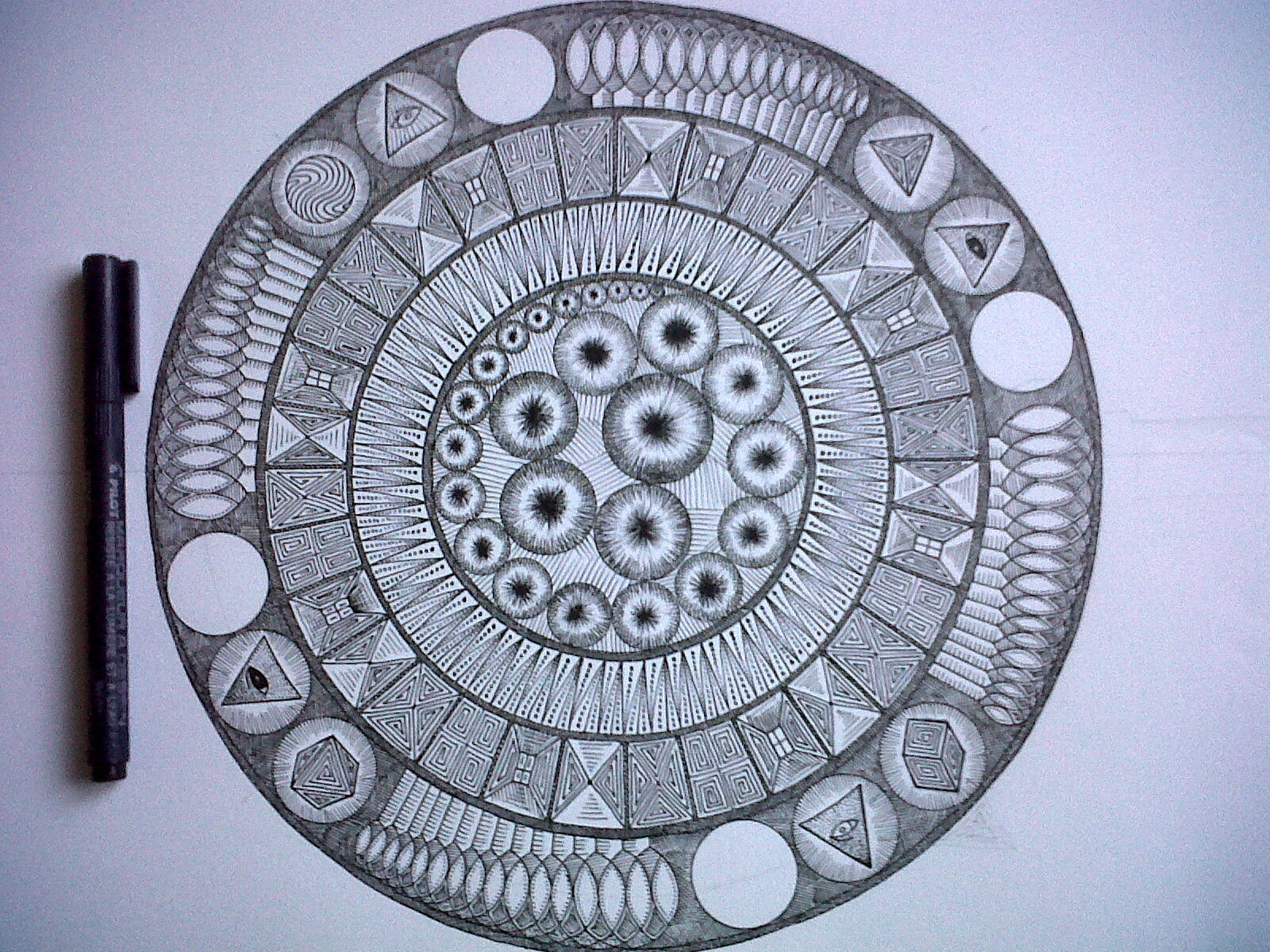
Pythagoras founded a cult of mathematical spirituality where numbers held meaning such as divine proportion, PHI. The geometry was considered sacred such sacred geometry was a big in theological and philosophical thought for hundreds of years.
Last edit: 14 May 2015 18:20 by .
Please Log in to join the conversation.
-
- User
-
Less
More
15 May 2015 07:41 - 15 May 2015 09:45 #192065
by
Replied by on topic a question about the value of human life
A message to Gisteron:
Firstly thanks for your time and you should post back your response i am have been a little unclear.
You cannot compare human values to chicken soup.
For example its like saying: 'My Ferrari is better than your apple or grape...' It is simply not a comparative. Whilst they can be compared and that they grapes, apples and Ferrari do have their own intrinsic, extrinsic value. Much like chicken soup does also have extrinsic and intrinsic value.
Yet you cannot compare them or emphasise one value as or superior to another. Much like you cannot devalue humanity or their values because while people can dehumanise or disassociate and remove the image or sense of value that value is intrinsic and implicit to everyone.
Anyone who removes value from their species or individual humans has a cognitive disorder which most humans do have some form of disorder we are never entirely functional and can be dysfunctional but logically humans have both intrinsic and extrinsic worth albeit similar value to that of much needed refreshing cup of tea. Yet human value is a product an object a thing that can grow or fade much like the rise and fall of gold value. However there will always be a value to every human some people are worth less and some more, even the most immoral human has rights and value.
Also Math and Science are more than just well to look at it as a tool to find truth there is great Aesthetic value in science and math and it can be compared with much like the ecclesiasticism and ecstatic height of spiritual truth. That such truth of Mathematics and science, rightly viewed, possesses not only truth, but supreme beauty — a beauty cold and austere, like that of sculpture, without appeal to any part of our weaker nature, without the gorgeous trappings of painting or music, yet sublimely pure, and capable of a stern perfection such as only the greatest art can show. The true spirit of delight, the exaltation, the sense of being more than Man, which is the touchstone of the highest excellence, is to be found in mathematics and science as surely as poetry.
Steven Hawking said with a smile on his face, in his book - A Brief History of Time - "Only Scientists can be Philosophers".
Firstly thanks for your time and you should post back your response i am have been a little unclear.
You cannot compare human values to chicken soup.
For example its like saying: 'My Ferrari is better than your apple or grape...' It is simply not a comparative. Whilst they can be compared and that they grapes, apples and Ferrari do have their own intrinsic, extrinsic value. Much like chicken soup does also have extrinsic and intrinsic value.
Yet you cannot compare them or emphasise one value as or superior to another. Much like you cannot devalue humanity or their values because while people can dehumanise or disassociate and remove the image or sense of value that value is intrinsic and implicit to everyone.
Anyone who removes value from their species or individual humans has a cognitive disorder which most humans do have some form of disorder we are never entirely functional and can be dysfunctional but logically humans have both intrinsic and extrinsic worth albeit similar value to that of much needed refreshing cup of tea. Yet human value is a product an object a thing that can grow or fade much like the rise and fall of gold value. However there will always be a value to every human some people are worth less and some more, even the most immoral human has rights and value.
Also Math and Science are more than just well to look at it as a tool to find truth there is great Aesthetic value in science and math and it can be compared with much like the ecclesiasticism and ecstatic height of spiritual truth. That such truth of Mathematics and science, rightly viewed, possesses not only truth, but supreme beauty — a beauty cold and austere, like that of sculpture, without appeal to any part of our weaker nature, without the gorgeous trappings of painting or music, yet sublimely pure, and capable of a stern perfection such as only the greatest art can show. The true spirit of delight, the exaltation, the sense of being more than Man, which is the touchstone of the highest excellence, is to be found in mathematics and science as surely as poetry.
Steven Hawking said with a smile on his face, in his book - A Brief History of Time - "Only Scientists can be Philosophers".
Last edit: 15 May 2015 09:45 by .
Please Log in to join the conversation.
15 May 2015 13:38 - 15 May 2015 13:42 #192090
by Gisteron
Better to leave questions unanswered than answers unquestioned
Replied by Gisteron on topic a question about the value of human life
So.. In my opinion "intrinsic value" is an oxymoron. Value is necessarily subjective and if there were no subjects to value things, things would not have value, by definition. Of course, by implication, from a perspective like my own, if I cannot take the premise that value is something independant of the process of valuing, an argument about a direct correlation between supply and value gets no traction. Even from an economic standpoint, demand is a much more essential factor than supply is, in the sense that without supply demand still determines value, but without demand, supply doesn't. Maybe what you mean by intrinsic and value respectively is something else and we are talking past each other. That's fine, clearing up things and exchanging ideas is why we are here.
In the same sense, when I read or write "logical", what I mean is "of or according to the rules of logic or formal argument". So when you say that humans have intrinsic value, whether that is true or not, it is not "logical" in that sense of the word. That is also why I compared the statement "maintaining a large gene pool is logical" to "chicken soup is political". I did not misrepresent your saying, I just meant to express how it sounds to me. Chicken soup has naught to do with politics and in that same way I feel that the maintenance of particular gene pool sizes has nothing to do with logic either. It can be a wise decision to make given premises about our condition and our desires, but it is if and only if all of these conditions are met in full and with no exception, that it follows that particular gene pool sizes are preferable.
Also, when I say that science is not concerned with truth, what I mean is what I say. There is no step in the scientific process as defined and practiced today, where truthiness of a proposition comes into consideration or where beauty does, unless simplicity is a measure of beauty. Whether something that is true comes out of the process I shall leave to the philosophers to debate, and whether something beautiful is generated in the meantime shall be up to the artists and while many scientists may express how close they feel to a truth they seek or how inspired they are by the beauty they find, neither of those feelings are - eventhough often present - strictly relevant to their scientific work and that is why they tend to write more about those feelings in their books than they do in their research papers.
And to keep with the recent tradition, a few words about geometry: My particular inquiry was - and admittedly I should have been more clear - whether geometry was, as you put it, "a major academic subjects to all citizens" (emphasis added), since I had no luck confirming this. In either case, and even with the inverted siphon, no geometry of a device can actually make water flow uphil. You can push water through all kinds of shapes, and you can employ gravity to push water higher than it used to be, but you have to either lift something before that yourself, or, in the case of the siphon, have water at a higher level pushing down to level out that on the lower level. I could say I can make rocks fall upwards and omit that I am just throwing them toward the sky and that it took energy out of myself and that for better or worse the rock will eventually fall back down.
It is true that some early findings in geometry were rather inspiring to the peoples who found them and that back in their superstitious day they readily credited their gods and spirits with inventing those correlations of which we now know that they follow inescapably from assuming little more than the empty set. Many modern day woo peddlers will point to pictures like the flower of life and claim how uber spiritual and ancient it is and that it has some meaning outside of what I drew back when I got my hands on a compass for the first time in third grade.
Granted, there is some elegance to that flower, and beauty and symmetry, but pretty is really all it is.
Now a few pictures from least to most pretty.
This is a burning bush:

This is the flower of life:

This speaks for itself:

This is the eagle nebula:

And this is geometry:

In the same sense, when I read or write "logical", what I mean is "of or according to the rules of logic or formal argument". So when you say that humans have intrinsic value, whether that is true or not, it is not "logical" in that sense of the word. That is also why I compared the statement "maintaining a large gene pool is logical" to "chicken soup is political". I did not misrepresent your saying, I just meant to express how it sounds to me. Chicken soup has naught to do with politics and in that same way I feel that the maintenance of particular gene pool sizes has nothing to do with logic either. It can be a wise decision to make given premises about our condition and our desires, but it is if and only if all of these conditions are met in full and with no exception, that it follows that particular gene pool sizes are preferable.
Also, when I say that science is not concerned with truth, what I mean is what I say. There is no step in the scientific process as defined and practiced today, where truthiness of a proposition comes into consideration or where beauty does, unless simplicity is a measure of beauty. Whether something that is true comes out of the process I shall leave to the philosophers to debate, and whether something beautiful is generated in the meantime shall be up to the artists and while many scientists may express how close they feel to a truth they seek or how inspired they are by the beauty they find, neither of those feelings are - eventhough often present - strictly relevant to their scientific work and that is why they tend to write more about those feelings in their books than they do in their research papers.
And to keep with the recent tradition, a few words about geometry: My particular inquiry was - and admittedly I should have been more clear - whether geometry was, as you put it, "a major academic subjects to all citizens" (emphasis added), since I had no luck confirming this. In either case, and even with the inverted siphon, no geometry of a device can actually make water flow uphil. You can push water through all kinds of shapes, and you can employ gravity to push water higher than it used to be, but you have to either lift something before that yourself, or, in the case of the siphon, have water at a higher level pushing down to level out that on the lower level. I could say I can make rocks fall upwards and omit that I am just throwing them toward the sky and that it took energy out of myself and that for better or worse the rock will eventually fall back down.
It is true that some early findings in geometry were rather inspiring to the peoples who found them and that back in their superstitious day they readily credited their gods and spirits with inventing those correlations of which we now know that they follow inescapably from assuming little more than the empty set. Many modern day woo peddlers will point to pictures like the flower of life and claim how uber spiritual and ancient it is and that it has some meaning outside of what I drew back when I got my hands on a compass for the first time in third grade.
Granted, there is some elegance to that flower, and beauty and symmetry, but pretty is really all it is.
Now a few pictures from least to most pretty.
This is a burning bush:
This is the flower of life:
This speaks for itself:
This is the eagle nebula:
And this is geometry:
Better to leave questions unanswered than answers unquestioned
Last edit: 15 May 2015 13:42 by Gisteron.
The following user(s) said Thank You: Kit
Please Log in to join the conversation.
-
- User
-
Less
More
15 May 2015 16:58 - 15 May 2015 17:50 #192108
by
Replied by on topic a question about the value of human life
Thank you.
Well I understand you Gisteron, and my arguments are more refined because of you, I agree. Those pictures are both ugly and beautiful thanks for sharing. One point about the inverted siphon is that it was an essential thing to develop to control water to increase population size, because there was a demand for more babies. However Romans were the overachievers of their time and managed to transport water anywhere even a transfer of water over long distances using gravity down hill but their comes a time when they reach a hill and then they took out their inverted siphon and used gravity to push the water up the hill, yes it is clever using the force of gravity to do such things.
I agree that demand is the 'motivator' of value as is 'exclusivity' and 'necessity' yet 'supply' can add or detract from that value perhaps like the opposite way that demand works. For Example there are diamonds the size of houses in space a huge supply, but they are practically worthless. That is if I tried to actually sell them on Ebay as of tonight (perhaps that would be a long term investment .
.
But does that mean those diamonds have no value? Perhaps that is why without supply there cannot be a demand, and we humans are as a populous effectively a supply of resources in itself. We as human resources are also the demand of such resource. So does that mean that 'human value' has a third criteria a 'transcendent' quality that we may have the 'will' to invest in that value? That we humans will always demand of ourselves or die. That is why demand is not a primary factor in 'human value'. I suggested we humans have implicit value, as opposed to value being created by our subjective beliefs of such worthiness like 'desire'?
We as humans it is in our nature to favour ourselves and species we cannot remove our inherent individual value unless we are dysfunctional enough to sacrifice ourselves to oblivion. Humans have an inheritance the cosmos we are the most valued of all resources but our individual self worth might not be realised.
Just a thought...
Love and Light
Well I understand you Gisteron, and my arguments are more refined because of you, I agree. Those pictures are both ugly and beautiful thanks for sharing. One point about the inverted siphon is that it was an essential thing to develop to control water to increase population size, because there was a demand for more babies. However Romans were the overachievers of their time and managed to transport water anywhere even a transfer of water over long distances using gravity down hill but their comes a time when they reach a hill and then they took out their inverted siphon and used gravity to push the water up the hill, yes it is clever using the force of gravity to do such things.
I agree that demand is the 'motivator' of value as is 'exclusivity' and 'necessity' yet 'supply' can add or detract from that value perhaps like the opposite way that demand works. For Example there are diamonds the size of houses in space a huge supply, but they are practically worthless. That is if I tried to actually sell them on Ebay as of tonight (perhaps that would be a long term investment
.But does that mean those diamonds have no value? Perhaps that is why without supply there cannot be a demand, and we humans are as a populous effectively a supply of resources in itself. We as human resources are also the demand of such resource. So does that mean that 'human value' has a third criteria a 'transcendent' quality that we may have the 'will' to invest in that value? That we humans will always demand of ourselves or die. That is why demand is not a primary factor in 'human value'. I suggested we humans have implicit value, as opposed to value being created by our subjective beliefs of such worthiness like 'desire'?
We as humans it is in our nature to favour ourselves and species we cannot remove our inherent individual value unless we are dysfunctional enough to sacrifice ourselves to oblivion. Humans have an inheritance the cosmos we are the most valued of all resources but our individual self worth might not be realised.
Just a thought...
Love and Light
Last edit: 15 May 2015 17:50 by .
Please Log in to join the conversation.
15 May 2015 17:40 #192117
by Gisteron
Better to leave questions unanswered than answers unquestioned
Replied by Gisteron on topic a question about the value of human life
Yea, I can see where you're coming from now... Still, I don't think that inherent value is the solution. Ultimately not only the magnitude of value (trying to find fitting words, bear with me :silly:), but value itself are subject to agents who can value things. If we didn't exist, probably nobody would value us, but then existence alone also doesn't fill anything with value. Valuing agents do. So if nobody valued us, we wouldn't have value.
On the other hand, if value is an actual property, nobody acknowledging it doesn't make it go away, I suppose...
Still, to say something has value when nothing values it makes little sense and something having value when nothing values it is likewise more or less meaningless. For that reason, in every practical sense, having value and being valued are equivalent. We do have value, or rather, it does make sense to ascribe value to us, and that is because and only because there is someone around to value us, be that ourselves or otherwise.
On the other hand, if value is an actual property, nobody acknowledging it doesn't make it go away, I suppose...
Still, to say something has value when nothing values it makes little sense and something having value when nothing values it is likewise more or less meaningless. For that reason, in every practical sense, having value and being valued are equivalent. We do have value, or rather, it does make sense to ascribe value to us, and that is because and only because there is someone around to value us, be that ourselves or otherwise.
Better to leave questions unanswered than answers unquestioned
Please Log in to join the conversation.
-
- User
-
Less
More
15 May 2015 18:11 #192118
by
I'm glad you qualified the statement.
Replied by on topic a question about the value of human life
Gisteron wrote: be that ourselves or otherwise.
I'm glad you qualified the statement.
Please Log in to join the conversation.